
Keeping Piranha, Alligator eels and Scavengers together, who gets the last laugh? Why?
Piranha, alligator eel and scavenger raised together

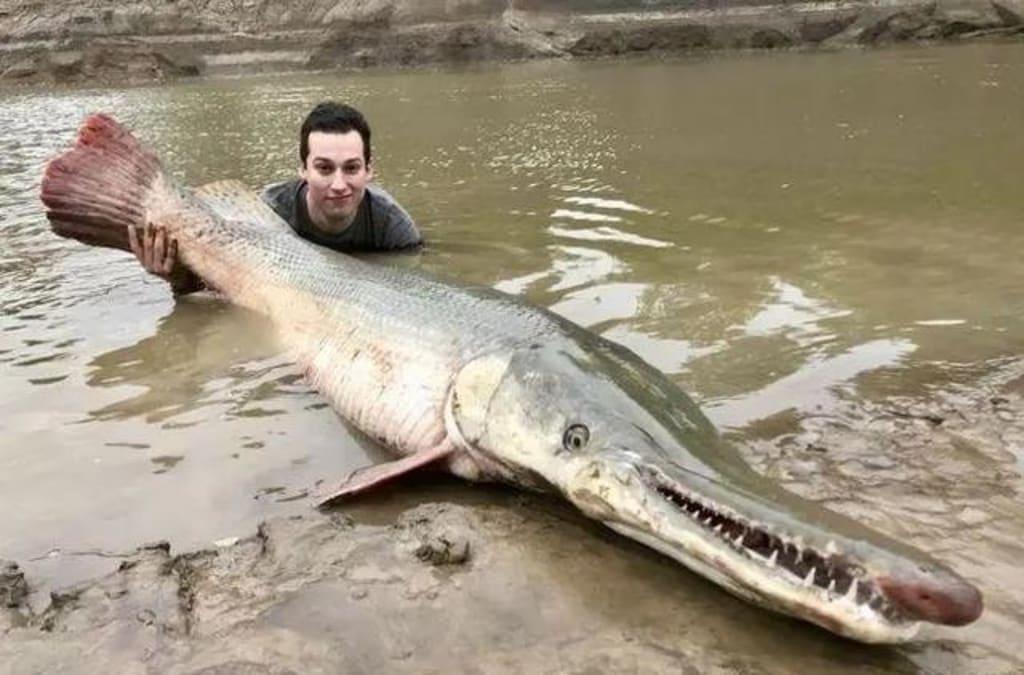
Piranha, crocodile eel, and scavenger are invasive species, and these three fish are known for their "viciousness", once it appears in a new body of water, it is likely to bring about the destruction of aquatic life. So, if these three fish are put together, what will be the result? Let's take a brief look at these three fish.
First is the scavenger
Qing Dao Fu is more familiar to everyone because it has formed a certain wild population in the waters of many places in China. The scientific name of the scavenger is leopard fat catfish, a fish native to the freshwater basins of South America. Because of its alien appearance and the boasting of some merchants about its "tank cleaning ability", the scavenger is a must-have fish in almost every fish tank.
But in fact, the scavenger will only eat some microorganisms on the bottom and inside wall of the tank, as for another fish excrement, unless it is hungry, it will not ask.
In terms of size, the adult scavenger is about 30 cm long on average, with a maximum length of up to 40 cm. In terms of habit, the scavenger is an omnivorous fish, which means that the scavenger has neither a large size nor sharp teeth. There are two main factors.
First: is the body armor. The scavenger is a scleractinian fish, in addition to the internal scleractinian, their body surface is also relatively hard, and there are sharp barbs on the back, forming a very good defense, plus their narrow body and very little meat, which makes them no natural enemies in our body of water.
Second: crazy egg eaters. Scavengers have a sucker-like mouth, which makes them suitable for adsorption on some objects in the water, including fish, once it is sucked, the fish skin is easy to infection, and ulceration, so the fish tank to keep scavengers non-but clean up the garbage effect is not very good, but also threaten ornamental fish.
Of course, the biggest threat to fish scavengers is not in the adsorption of other fish, but in eating eggs, scavenger very much like to eat the eggs of other fish, most fish will lay eggs in the water and let them go, once found by the scavenger, it will be like sucking jelly to eat all the eggs.
Because of this, once the scavenger enters our water bodies, it will frantically feed on the eggs of native fish, eventually leading to a great decline in fish fertility and forming a dominant family situation, seriously endangering the normal survival and reproduction of native fish.
Therefore, do not release scavengers, and make sure to kill them directly once you find or catch them.
Next is Piranha
Piranha is commonly known as piranha, but it is not the name of a fish, but a collective name for a variety of carnivorous fish under the family of sawfish, with more than 40 species, the most well-known of which is the genus sawfish, Pygocentrusnattereri (commonly known as red-bellied piranha).
Red-bellied piranhas are native to South America and are widely distributed in the freshwater waters of South America, most often in the Amazon and Orinoco rivers, and are characterized by their bright red bellies and sharp teeth. The average length of the red-bellied piranha is about 20 cm, although they are not large, but they are typical of schooling fish, as few as a few dozen, more than hundreds of collective activities, once the wind blows, they will be out of the nest.
Red-bellied piranhas mainly rely on water fluctuations to lock prey, so even if people, cattle, and other large animals once accidentally fall into the water, will be surrounded by red-bellied piranhas, in the Amazon basin, someone once used cattle for experiments, and the results of less than an hour, a group of piranhas will be a cow gnawed into a skeleton, it is because of the ferocious habits, the former President of the United States Roosevelt in his book Through the Brazilian Rainforest", the former President of the United States Roosevelt in his book "Through the Brazilian Rainforest" has the description of "piranhas are the most brutal fish in the world".
Because of their ornamental qualities, piranhas have been introduced to the world from South America, and with their swarming and ferocious habits, they have become an invasive species in some areas.
Finally, let's learn about the crocodile eel
The crocodile eel is very "hot" recently, because they have been found in some water bodies in many places in China, and piranhas and scavengers, the crocodile eel is not our native species, its scientific name is Fu crocodile, native to Central and North America, but the first two fish are pure freshwater fish, but the crocodile eel is different, they can survive in freshwater, however, the first two fish are pure freshwater fish, but the alligator eel is different, they can survive in freshwater, and can live well in salty water, and the swim bladder of the alligator eel is similar to a lungfish, which has the same function as a lung, which allows them to get oxygen directly from the air, which makes their survival ability stronger.
The crocodile eel has a long, slender mouth, which is somewhat similar to that of a crocodile, and this is the origin of its name. The crocodile eel's long mouth is covered with tiny and sharp teeth, and this tooth structure predestines it to be a fierce carnivorous fish, and it is, the crocodile eel can eat almost any aquatic animal smaller than itself in the water body.
In addition to its large size and aggressiveness, the crocodile eel is also very defensive, because it is covered with a diamond-shaped enamel layer of hard scales (similar to the enamel of teeth), which acts as a hard armor to protect the crocodile eel.
In addition to the external defense, the crocodile eel has an important defense - poison. Alligator eels have poisonous internal organs and eggs, which makes people who like to eat fish discourage them, while the eggs are poisonous, they can greatly increase the hatching rate in invasive areas, plus a female alligator eel can lay up to 200,000 eggs a year, so once the alligator eel takes root in our wild waters, it will become a nightmare for native fish.
What happens when three kinds of fish are mixed?
If these three species of fish are mixed, soon we will only see crocodile eels, as piranha and scavengers are dead at the hands of crocodile eels, why do you say so?
First, let's look at the piranha and scavenger. The origin of piranha and scavenger is overlapping, and they will also appear in the same waters at the same time, but from the current study, there is no predatory relationship between the two, the reason for this is related to the habits of piranha, piranha belongs to a group of fish, they hunt prey is usually larger, and scavenger such meat less, the small size of fish is not in their recipes.
And the armor of the scavenger is not piranhas can break open, so the piranhas do not attack the scavenger, as for the scavenger by the suction cup is no way to take the piranhas. You can search online for piranhas and scavengers, even in the tank, the two will be mixed, they are also well water, the reason is that the two do not compete and scavengers are not the ideal prey for piranhas.
Next, let's look at how the crocodile eel eats scavengers and piranhas. The adult crocodile eel is easily more than 1.5 meters long, and in the crocodile eel's recipe, as long as the body length does not exceed 25% of its body length, it will be able to eat each other, and piranha 20 cm in length is not in the conversation, although the scavenger is longer, but also within the control of the crocodile eel.
See here, many partners will ask: can the crocodile eel bite the scavenger? The answer is no, the crocodile eel indeed can not bite the scavenger, after all, its teeth are relatively small, and the bite force is also general, but the crocodile eel's feeding teeth are only a fixed tool when it bites the prey, will slowly move the upper and lower jaws will swallow the whole prey, so that even if the scavenger has "armor", but also can not stop the crocodile eel digestive juices.
Write in the end
The adult crocodile eel is almost no pressure in the face of fish less than 40 cm in length, and in their native country, they are feeding on fish below 40 cm, so piranhas and scavengers will not be the opponent of crocodile eels, and even a group of piranhas will be helpless in the face of crocodile eels with hard scales, and eventually fall into the prey of crocodile eels.
This shows that the crocodile eel is indeed a big killer, while nowadays the crocodile eel is mainly found in artificial water in China, we must be vigilant, do not release it, otherwise, it is a big ecological disaster.
About the Creator
Keep reading
More stories from Mark Rovich and writers in FYI and other communities.
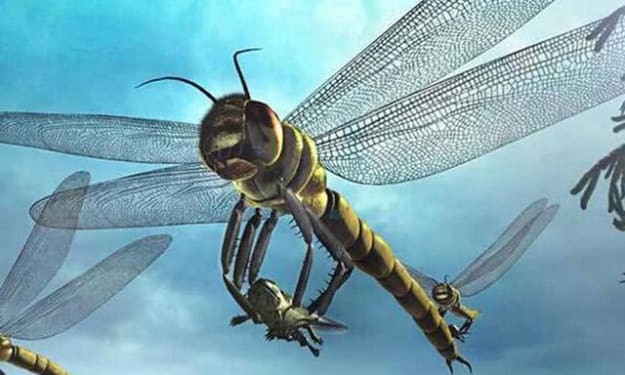
Extinct 9 kinds of giant animals, dragonflies as big as airplanes, ancient giant lizards as if from science fiction films
Throughout the evolutionary history of life on Earth, billions of years have passed through several mass extinctions of life and great reproduction processes, giving birth to countless species of various lifeforms.
By Mark Rovich3 years ago in FYI
The Fall of the Iranian Regime Will Destroy Russia
A lot has been happening in the world of geopolitics lately. We’re not even three weeks into 2026, and we’ve already seen wars, bombings, regime changes, capitulations, and escalating unrest across multiple regions. The year has opened at full throttle, and one of the next countries that appears to be teetering on the edge is Iran.
By Lawrence Leasea day ago in FYI
Wild Card Weekend Recap: What Happens Now?
I think I figured out why I love Wild Card Weekend so much. It's because it's the first playoff anything of the calendar year. The NFL season starts in the fall, and once upon a time, the champion was crowned either on or slightly before New Year's. The evolution of the NFL schedule has resulted in the playoffs starting just into the New Year, and currently, the final week of the season falls on the first weekend of the New Year, with Wild Card Weekend coming a week after that. So yes, chronologically, the NFL's Wild Card Weekend serves as the first playoff anything of the calendar year.
By Clyde E. Dawkins6 days ago in Unbalanced



Comments
There are no comments for this story
Be the first to respond and start the conversation.