
Inside the Chichijima incident: How The Japanese Cannibalized Their Prisoners of War
The story of the Chichijima incident

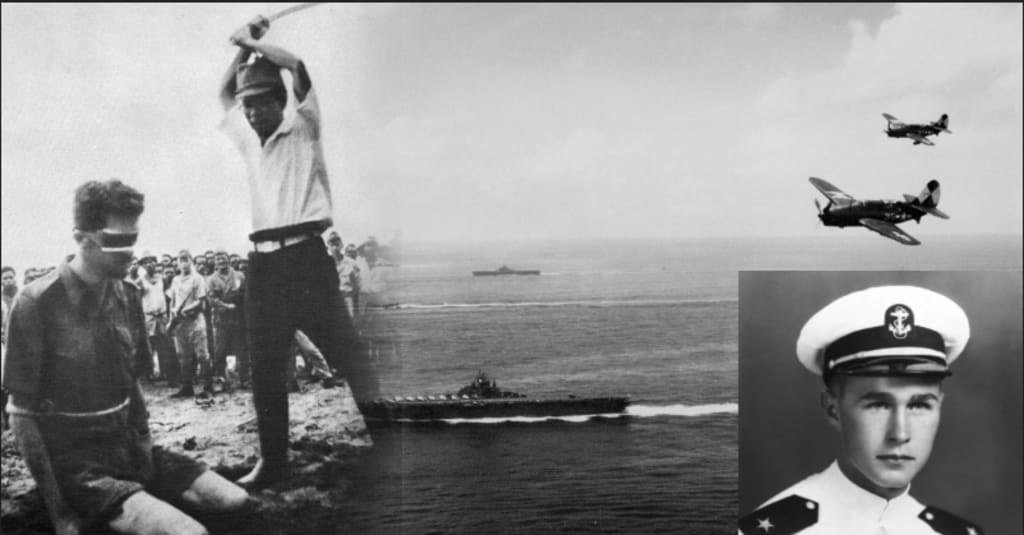
The image above that shows a man being beheaded is not from the Chichijima incident, I discovered the error after I have put up the image and now I can't edit it.
In late 1944, an incident known as the Chichijima incident or Ogasawara incident took place in which eight American airmen were killed by Japanese soldiers on Chichi Jima, located in the Bonin Islands. Shockingly, four of the airmen were also cannibalized by the Japanese soldiers.
Background Story
For a considerable period, the U.S. Navy had been interested in the island of Chichijima, despite its small size of only twice that of Central Park. This was due to its crucial strategic location, being around 500 miles away from Japan, and the fact that its radio tower facilitated long-range communication for the Japanese. As a result, the Americans had planned to seize control of the island.
In June 1944, American aircraft carriers encircled Chichijima and dispatched pilots to demolish the radio tower. However, the Japanese forces fiercely resisted, with 25,000 troops guarding the island and an anti-aircraft defense system that was capable of destroying American planes.
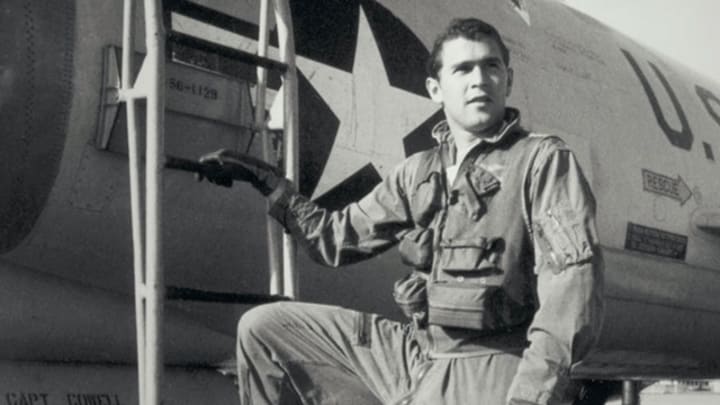
On September 2, 1944, the Americans made a second attempt to destroy the radio tower. The group of pilots scheduled to fly that morning included George H.W. Bush, who was then only 20 years old and one of the youngest pilots in the U.S. Navy. They took off at 7:15 a.m., hoping this time to succeed in their mission to take out Chichijima's radio tower.
However, the Japanese forces quickly retaliated, and the island's anti-aircraft defense system fired at the American planes. Approximately one hour into the mission, George H.W. Bush realized that his aircraft had sustained damage from the attack.
Despite the dire situation, George H.W. Bush continued to fly his plane despite it being on fire and the cockpit filling with smoke.
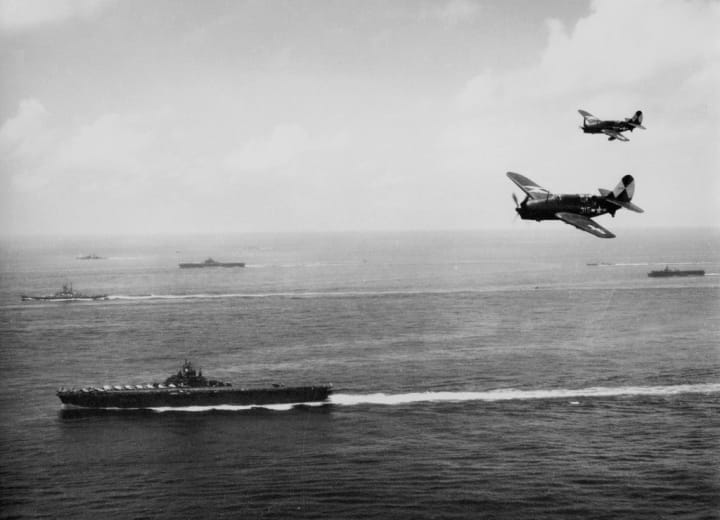
Nevertheless, Bush remained focused on his mission. He successfully dropped two bombs on the radio tower and then steered the plane back towards the open ocean.
George H.W. Bush had made a decision to fly as far as possible from Chichijima before bailing out of the plane, hoping to increase his chances of avoiding capture. He believed that this tactic might give him an edge in escaping, which turned out to be correct. He then instructed his radio operator and gunner to jump from the plane when it became impossible to wait any longer.
Unfortunately, only George H.W. Bush was able to successfully escape from the plane. One of the other men was unable to inflate his parachute, and the other was unable to jump from the plane. Bush witnessed the tragic scene as their plane crashed into the ocean, leaving him to descend alone onto the waves.
The Fate of Other Pilots
Similar to George H.W. Bush, several other American pilots were compelled to abandon their planes and make emergency water landings. However, unlike Bush, they were immediately captured by the Japanese.
The captured airmen were subjected to unspeakable atrocities on the island of Chichijima, including torture, beatings, and executions. In one particularly horrific instance, a radio operator was led to a freshly dug grave, blindfolded, and beheaded with a sword. Other prisoners were killed with sharpened bamboo spears or were clubbed to death.
However, the true horror of the Chichijima Incident unfolded after the airmen had been killed.
Following the execution of one of the prisoners, Japanese General Yoshio Tachibana made an inebriated proposal to exhume the body and utilize it as food. Tachibana demanded that everyone demonstrate their "fighting spirit" by consuming human flesh.
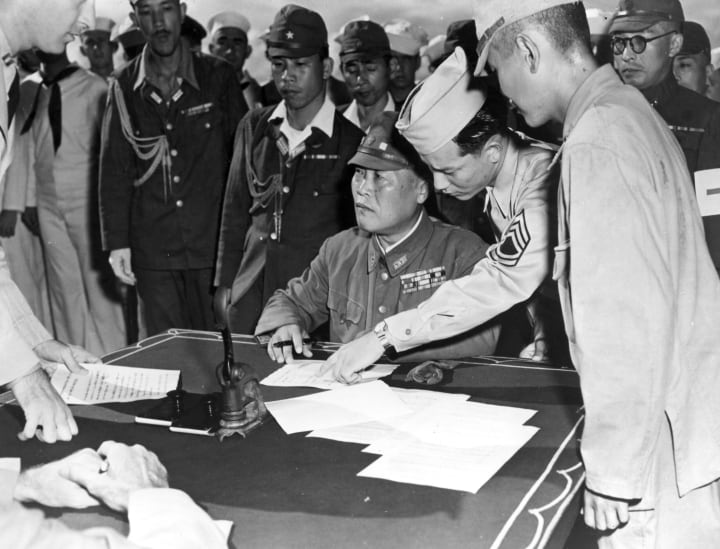
The Chichijima Incident was investigated in 1947 as a war crime, and 30 Japanese soldiers were prosecuted. Of those, four officers, including Lieutenant General Tachibana were found guilty and sentenced to death by hanging.
About the Creator
Rare Stories
Our goal is to give you stories that will have you hooked.
This is an extension of the Quora space: Rare Stories
X(formerly Twitter): Scarce Stories
Writers:
....xoxo
Keep reading
More stories from Rare Stories and writers in FYI and other communities.
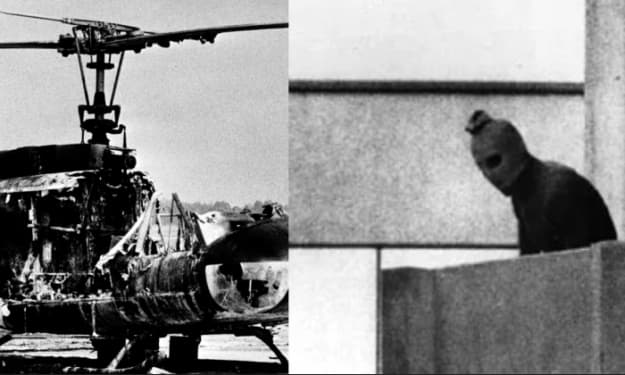
The Munich Massacre- How Untrained Police Officers Led To The Deaths of Eleven Israeli Athletes
On September 5, 1972, a 23-hour long terrorist attack resulted in the deaths of eleven members of Israel's Olympic team and four Arab terrorists. The incident commenced with an invasion of the Olympic Village by the terrorists, which culminated in a shootout at a military airport located 15 miles away. The terrorists had been preparing to fly to Cairo with their Israeli hostages at the time of the confrontation.
By Rare Stories3 years ago in FYI
Europe Commercial Greenhouse Market Size and Forecast 2025–2033
The Europe Commercial Greenhouse Market is set for dynamic expansion over the coming decade, reflecting the region’s accelerating transition toward sustainable, technology-driven agriculture. According to Renub Research, the market is projected to reach US$ 22.67 billion by 2033, rising from US$ 11.5 billion in 2024, at a robust CAGR of 7.83% during 2025–2033. This growth is being driven by increasing demand for year-round crop production, the rapid adoption of Controlled Environment Agriculture (CEA), and a strong policy push toward climate-resilient and resource-efficient farming.
By Renub Research3 days ago in FYI



Comments
There are no comments for this story
Be the first to respond and start the conversation.