
Injured on labour hire in QLD: who’s actually responsible?
If your payslips say one company but your injury happened on someone else’s site, here’s how the “who do I claim against?” question usually plays out.

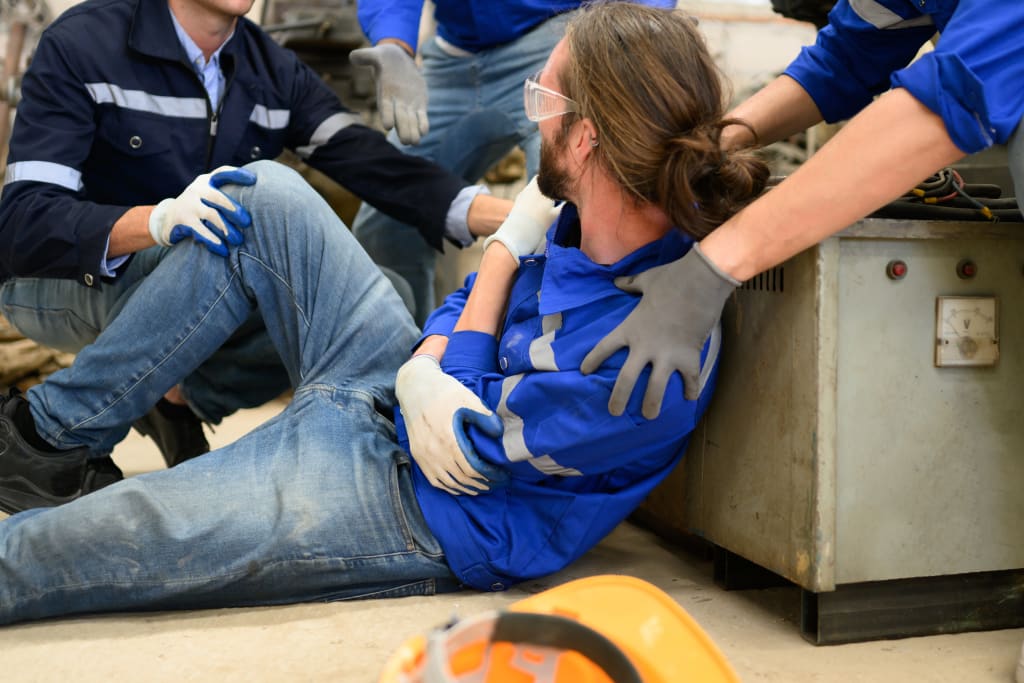
Being hurt at work is hard enough.
Being hurt at work on labour hire is its own special kind of confusing. Because the first question everyone asks you—your family, the supervisor, the insurer, sometimes even the doctor—is the one you can’t cleanly answer:
“Who do you work for?”
Payslips say the labour hire company. Day-to-day instructions came from the host site. PPE might’ve been the host’s. Induction might’ve been rushed. Or never happened properly. And now there’s an injury, a stack of forms, and this nagging feeling that someone’s going to point the finger at someone else until you give up.
Here’s the deal in Queensland: more than one party can have responsibilities. And the right “path” depends on what you’re trying to do—get weekly payments and treatment covered, or pursue a negligence-style damages claim (or both, in the right sequence).
This is a fresh, plain-English guide to how it usually works.
First: labour hire is normal these days… but it creates blurry lines
Honestly, most people don’t realise how many industries run on labour hire now. Construction, warehousing, cleaning, manufacturing, health, mining, transport, events—pretty much everywhere.
It makes sense for businesses. Flexible workforce, less admin, scale up and down.
But for injured workers? It can be a bit of a headache. Because the “boss” on site isn’t always the legal employer on paper.
And when things go wrong—lack of training, dodgy equipment, unsafe systems—it becomes a real question: who wears it?
The short answer (that still annoys people): workers comp and “suing” are different lanes
A lot of people mash these together.
- Workers compensation is the lane that covers weekly payments (if you’re off work or reduced capacity) and medical/treatment expenses. In Queensland, it’s a no-fault scheme—meaning you don’t have to prove someone stuffed up to get those statutory benefits.
- Common law / damages is the lane where negligence matters. That’s where you’re talking about who breached a duty of care and what losses flow from it.
Same injury. Different rules. Different paperwork. Different timelines.
Who is your “employer” if you’re labour hire?
Most of the time, in Queensland, the labour hire company is the legal employer. That usually means the workers’ compensation policy you claim against is the labour hire company’s WorkCover policy.
This is the part that feels odd: you get hurt at the host employer’s workplace, but the workers comp paperwork often runs through the labour hire employer’s insurance.
Worth noting: Queensland has a labour hire licensing regime (the source points to the Labour Hire Licensing Act 2017 (Qld)), which is meant to lift standards and compliance. One feature mentioned in the source is that labour hire providers need appropriate workers’ compensation insurance as part of licensing.
So in practical terms, when an injury happens on placement, the “first response” claim is usually:
- lodge with WorkCover under the labour hire employer’s policy
- start treatment and wage support through that system
“But the host site caused it.” Yep. That can matter later.
This always surprises people: the fact you claim workers comp through the labour hire employer doesn’t mean the host employer is off the hook.
It just means the statutory benefits pathway usually runs through the labour hire employer’s policy first.
In some situations, insurers sort out contributions between themselves afterwards. That’s not your job to manage. It’s insurer-to-insurer stuff.
Your job is to get the injury reported, treated, and properly documented.
Okay, so can the host employer be sued?
Sometimes, yes. But it’s not as simple as “they weren’t the employer, so they’re untouchable”… or “it happened on their site, so they’re automatically liable”. It usually sits somewhere in the messy middle.
Queensland has pre-court procedures for negligence-style personal injury claims, and which legislation applies can depend on who is being pursued and what kind of claim it is. That’s why people hear different acronyms thrown around and feel like they’re being bounced between systems.
In plain terms, if the injury happened because the host’s setup was unsafe—poor training, unsafe procedures, broken gear, no supervision, pressure to rush—there may be a negligence pathway to pursue compensation beyond statutory workers comp benefits. But it’s evidence-driven. It’s not a “tick the box and it pays out” situation.
Also worth noting: Queensland’s Civil Liability Act 2003 (Qld) can affect what damages can be recovered and how costs work in some circumstances. So the “headline number” people imagine isn’t always how it plays out in the real world.
Common law in the workers comp context: labour hire or host… sometimes either
There’s another layer here.
Depending on the facts, a common law claim (in the work injury sense) might be directed at:
- the host employer (if their system of work was negligent), or
- the labour hire employer (if they failed in their own obligations—placement decisions, training, safety oversight), or
- in messy cases, arguments can bounce between both.
This is the part people find understandably confusing. Because it isn’t just “who signed the payslip”.
It’s questions like:
- Who controlled the work you were doing on the day?
- Who provided training and supervision?
- Who supplied equipment?
- Who set the pace, the procedure, the safety rules?
- Were risks obvious and reasonably foreseeable?
- Who had the ability (and responsibility) to fix the risk?
And sometimes, the answer is “more than one party”.
Real-world examples
Example 1: warehouse placement, rushed induction
Someone gets placed into a warehouse. Minimal induction, told to “just follow the others”. Forklift traffic, poor pedestrian separation, tight deadlines. Injury happens.
Workers comp claim? Usually against labour hire employer’s policy.
Negligence angle? Host employer’s site systems may be front and centre.
Example 2: construction site, wrong task for the role
Someone is hired as a general labourer, then gets directed into a task requiring specific training or licensing. Injury follows.
Workers comp? Again, typically labour hire.
Negligence? Could be host direction/supervision issues, but also questions about whether the labour hire employer should’ve checked suitability and safe placement.
Example 3: injury + “everyone blames everyone”
Host says, “Not our employee.” Labour hire says, “We weren’t on site.” Worker sits in the middle.
That’s where evidence is everything: rosters, inductions, toolbox talks, texts, emails, incident reports, CCTV, witness details.
Boring paperwork. Big consequences.
What should be done straight after the injury? (This is the bit that saves claims)
Pro tip: don’t wait for it to “sort itself out”. People do that because they don’t want to make waves. Totally human.
But the longer it sits, the easier it is for everyone to argue about the story—what happened, when it happened, whether it was work, whether it was “pre-existing”, whether you even reported it. And once that starts, it’s painful to unwind.
A simple checklist that helps (and doesn’t take all day):
- Tell the host site supervisor and the labour hire contact.
- Put it in writing if you can (even a short email/text: “hurt at work today, injury was X, happened at Y time/location”).
- See a doctor and make sure the certificate/notes actually record it as a work injury.
- Keep the paper trail: incident report, roster, induction record, photos, any messages.
- Write down witness names. Even one line: “Dave saw it” is better than nothing.
And don’t sign anything you don’t understand “just to keep the peace”.
Time limits and process: it’s not just “decide later”
These matters have deadlines. Some are short. Some are surprisingly strict. And missing them can change what options exist.
Plus, many of these claims resolve through negotiation/mediation rather than a dramatic court showdown. But to negotiate from strength, the foundation has to be right: correct parties, correct paperwork, solid evidence.
That’s also why the “who do I sue?” question is often the wrong first question.
Better first question: “Which claim pathway applies to me right now, and which party needs to be notified?”
That’s where the right lawyer makes a difference.
In this sort of labour hire setup, Workers Compensation Lawyers can help work out the right pathway early—before deadlines and finger-pointing make it harder than it needs to be.
So what does this mean for you?
If you’re labour hire and injured at a host site, the usual pattern is:
- Start with workers compensation (wages + treatment), typically through the labour hire employer’s policy.
- Then assess negligence options (host and/or labour hire), if the facts support it and the thresholds/process allow it.
- Don’t assume it’s one or the other. It can be sequential and evidence-based.
And don’t get too hung up on the labels. “Employer” isn’t the only word that matters. Control, supervision, training, and safe systems matter.
FAQ: what people actually ask when labour hire injuries happen
Who do you make a workers comp claim against if you’re labour hire in QLD?
Usually, the paperwork runs through the labour hire employer’s WorkCover policy, because that labour hire company is typically treated as the employer on paper. Weird, but common.
Can you sue the host employer if they weren’t your employer?
Sometimes. If the host’s system of work was unsafe and that caused the injury, there may be a separate negligence-style claim pathway. The key word there is prove—it’s about evidence, not vibes.
Does claiming workers comp stop you from making a negligence claim?
Not necessarily. Workers comp is the “get treatment and wages sorted” lane. Negligence/damages is the “someone breached a duty” lane. They can interact, and the order matters, so it’s usually worth getting the strategy checked early.
What if the host employer and labour hire company blame each other?
Happens all the time. It turns into a game of “not it”.
That’s why the focus has to stay on facts: who trained you, who supervised you, who told you to do the task, what safety system existed (if any), and what exactly happened in the lead-up.
What evidence matters most?
The boring stuff that nobody wants to collect when they’re injured:
- incident reports
- rosters and timesheets
- induction/toolbox records
- photos (including the area/equipment)
- witness names and short notes
- messages/emails about the task or hazards
- medical records that clearly connect the injury to work
Neutral next step
If a labour hire injury has happened, get the claim pathway checked early—who the policy is under, which party needs notice, what deadlines apply, and what evidence should be locked in now. It’s much easier to steer the matter early than to rescue it later.
Legal disclaimer
This article is general information only and does not constitute legal advice. It does not take into account individual circumstances. For advice about your situation, obtain advice from a qualified Australian lawyer.
About the Creator
Dan Toombs
Providing strategic support for legal, financial, and healthcare sectors through evidence-based planning and smart execution — built to meet what’s next.
Keep reading
More stories from Dan Toombs and writers in FYI and other communities.
Search warrants in QLD: what police can (and can’t) do at your place
Getting police at the door is a proper adrenaline moment. Doesn’t matter if you’ve done nothing wrong. The heart still goes. The brain still blanks. And suddenly every sentence sounds either too defensive… or too chatty… or weirdly angry.
By Dan Toombsabout 4 hours ago in FYI
Dead and Wearing Green
She was wearing that green dress when I first saw her, five years ago to the day. Flowing meadow fabric draped over long legs, thick auburn hair flowing down her back. That smile. Of course, she is still beautiful now. But now she is no longer alive.
By Karen Cave6 days ago in Fiction



Comments
There are no comments for this story
Be the first to respond and start the conversation.