
How To Be Assertive
Learn to stand up for yourself.


Are you assertive? Everybody is a little assertive in some ways. But do you wish you were more assertive? This article will show you six ways to become more assertive without much effort.
Assertiveness: Definition
According to most dictionaries, being assertive is the act of stating positively something with great confidence. Additionally, assertiveness is behaving confidently and not being frightened to say what you want or believe.
When a person is assertive, he is confident, self-assured, and certain of his abilities and value.
Examples of Assertiveness
You can refuse to go shopping with your friends if you don't want to do so, or if you have previous plans. Being assertive means telling your neighbors that you cannot babysit their children without feeling guilty. Being assertive means having the confidence to question your boss about a project he wants you to undertake. It doesn't mean that you don't want to do the assignment. It merely means you want him to consider some things that will be more effective.
Being assertive means questioning those in authority with confidence. You have the right to question your doctors, lawyers, and public employees about things that affect you and your well-being. There is nothing wrong with that, especially since you are paying them for their services.
Your Right to Be Assertive
You have a right to be assertive about receiving faulty merchandise, a bad meal in a restaurant, or when the auto mechanic has overcharged you. Some people don't speak up because they're unsure of how to do so with confidence.
Recently, I used Uber for the very first time. Since I was not in the habit of doing so, I waited outside my house a full 13 minutes after I was notified on my smartphone that the driver was on the way. When I reviewed my account afterward, I saw I had been charged an extra $0.40 for being late. I couldn't believe what I was seeing on my account because I was not late. The overcharge would not have been an issue if I had actually been late, but I was early.
I contacted customer service to dispute the charge for something that didn't happen. It wasn't the small amount that concerned me. It was the principle of the thing. Besides, if I hadn't spoken up about it this time, it could become a pattern.
The representative was very kind and said there would be a credit on my account. As soon as I got off the phone, I checked my online bank account. Just as the rep had promised, the $0.40 refund was in my account.
Most people would have dismissed the issue because it was such a small amount. I was bold enough to inform the company because it was within my rights to do so.
Practice Assertiveness in These Six Ways
1. Control
You should be in control when you explain your expectations to others. Let others know what you expect from them.
2. Consider
Consider the other person's side of the matter, and be clean what they can and cannot offer.
3. Communicate
Communicate clearly what you want. It wouldn't hurt to state your reasons for wanting what you want.
4. Clarify
Don't beat around the bush or sugarcoat your desires. Be clear by stating exactly what you want the other person to do or not do.
5. Consequences
State the reward or benefit for getting what you want. Also, reveal any possible consequences if you don't get what you are asking for.
6. Correct Timing
Make your request known at the correct time. If you think you deserve a raise, don't ask your boss for it when he is tied up with a major project, when he first gets to work on a Monday morning, or when he is packing up to leave the office on a Friday evening.
Don't Confuse Assertiveness With Aggressiveness
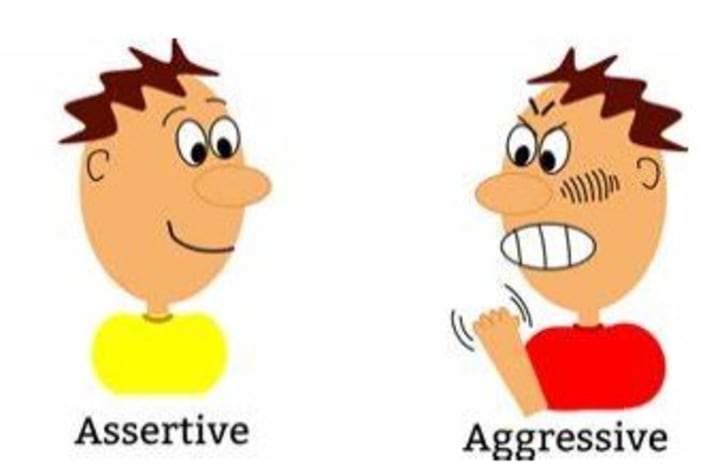
There is a big difference between being assertive and being aggressive. An aggressive person demands things from others without regard to their feelings, wants, and needs.
The most important word in being assertive is the word "I." It is learning to ask yourself one or more of the following questions:
- "What do I want?"
- "What do I need?"
- "What am I entitled to ask for?"
- "How can I ask for something without making a demand?"
Being assertive does not mean being aggressive, rude, or selfish. It does not mean insulting, offending, or belittling family members and friends, thinking it will make you look good. Assertiveness does not involve pushing people out of the way or stabbing co-workers in the back just so you can get ahead. On the other hand, being assertive means expressing your own feelings in a loving way. It is letting others know in a kind way what you expect from them.
Based on the information shared above, are you as assertive as you want to be? Are you aggressive when it is better to be assertive?
About the Creator
Margaret Minnicks
Margaret Minnicks has a bachelor's degree in English. She is an ordained minister with two master's degrees in theology and Christian education. She has been an online writer for over 15 years. Thanks for reading and sending TIPS her way.
Keep reading
More stories from Margaret Minnicks and writers in FYI and other communities.
The Neuroscience of Ritual: Bridging Ancient Practice and Modern Science
The Lesser Banishing Ritual of the Pentagram (LBRP) traces its lineage to a Hebrew prayer for protection. Over centuries, this modest invocation transformed into a formalized practice within the Hermetic Order of the Golden Dawn in the late nineteenth century — a practice that now resonates in esoteric traditions and neuroscience.
By Vongani Bandi4 days ago in FYI
Ludacris and Nelly draw backlash over bookings at MAGA-coded music festival
Ludacris and Nelly headlining a mostly right-wing event is good for them. It’s also great for the genre of hip hop. The two rap veterans have showcased their talents on other stages. Why can’t they perform for mostly MAGA folks and grab that bag?
By Skyler Saunders2 days ago in Beat



Comments
There are no comments for this story
Be the first to respond and start the conversation.