

I think it's safe to say America likes to be forgetful, and to leave pertinent histories undisclosed. This has become increasingly apparent over the last year, with a plethora of information coming to light and mass movements gaining momentum to protect our waters and BIPOC. What I'm sharing today is part of a short research project I took on for an environmental studies class at my local community college, addressing some of these issues. For this report I was to use the National Inventory of Dams and other resources to identify and compare two dams of different sizes, listing their benefits and drawbacks, age, safety risks, whether or not they include a fish passage to travel upriver, the habitats they flood, recreation opportunities, etc. The two dams I chose are both significant to me, and both of which have caused much conflict with and heavily impact Native populations (human, animal, and plant life). And honestly the more I read about all this, the more it seems that this is not unique to these dams alone. This makes sense because life exists from and by water, and so of course the choices of American society and industry would violate the sacred grounds of many First Peoples.

The first dam is local to me in the Castaic region, CA00052-Pyramid. It was finished in 1974, making it 46 years old and currently being serviced to increase its longevity. Let's keep in mind that 50 years is the average life expectancy of dams prior to collapse.

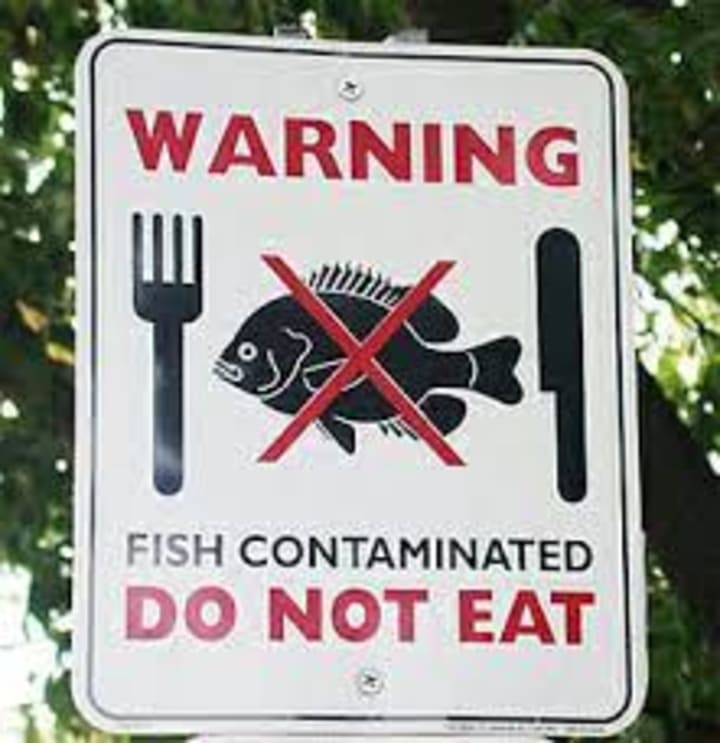
Pyramid Dam is rockfilled and standing at 422 ft, currently holding 211,167,000 cubic meters (max 220mil cubic m) of water for Los Angeles County, and the lake floods a total land area of 1,297 acres including a substantial portion of US Route 99 (now replaced by the I-5). How are we submerging highways and expecting healthy lakes? The recreational opportunities listed on the Pyramid Lake website are boating, fishing, jet skiing, picnicking, and some sparse hiking availability in nearby campgrounds. Swimming is not readily listed as a recreational activity, as the lake crew frequently struggles with managing algae dead zones, making it unsafe for animals, humans, and aquatic life. It was advised from October 12, 2019-November 8, 2019 not to consume the fish from certain areas of the lake (as if they don't swim in the entire lake...).
While most of the water that fills this reservoir is pumped from central CA, Piru Creek contributes to it as well. Piru Creek is a 71 mile tributary stream beginning northwest of Pyramid Lake, somewhere in Ventura County’s Frazier Mountain and joins the mainstem of Santa Clara River just south of the town of Piru. Frazier Mountain is home to several closed gold and borax mining sites in the old town of Stauffer, but there is no data on whether or not this has affected or still affects the watershed with pollutants from these sites.

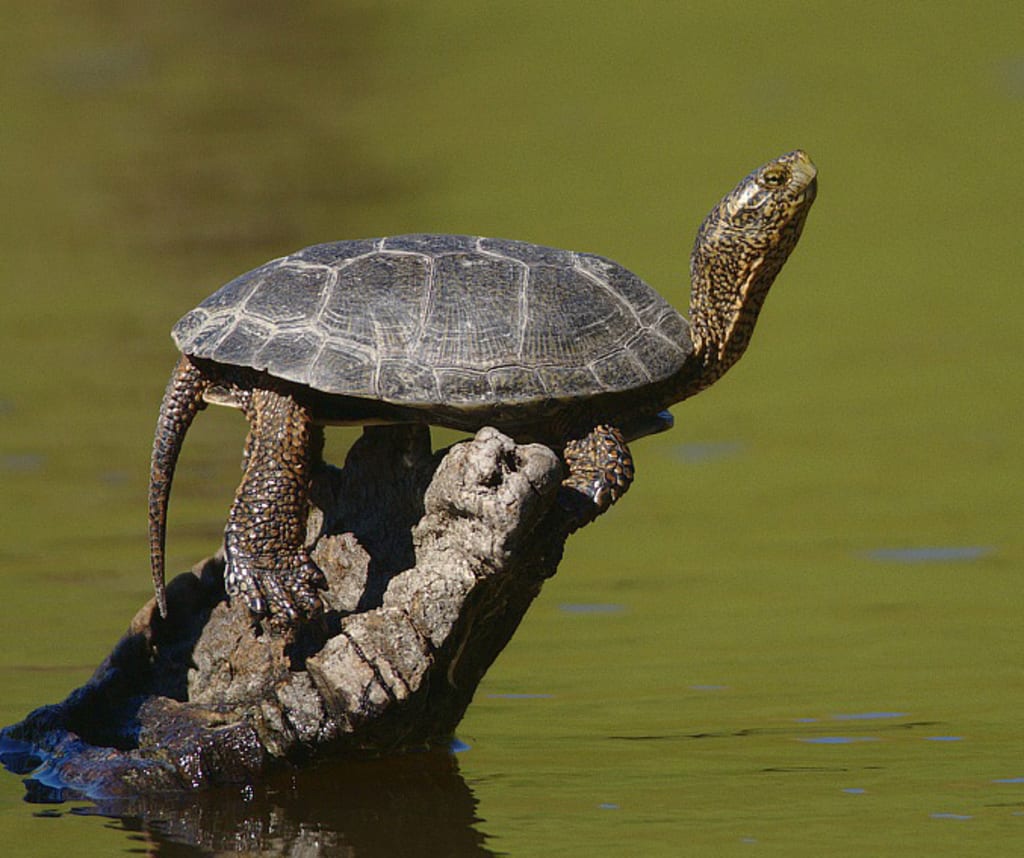
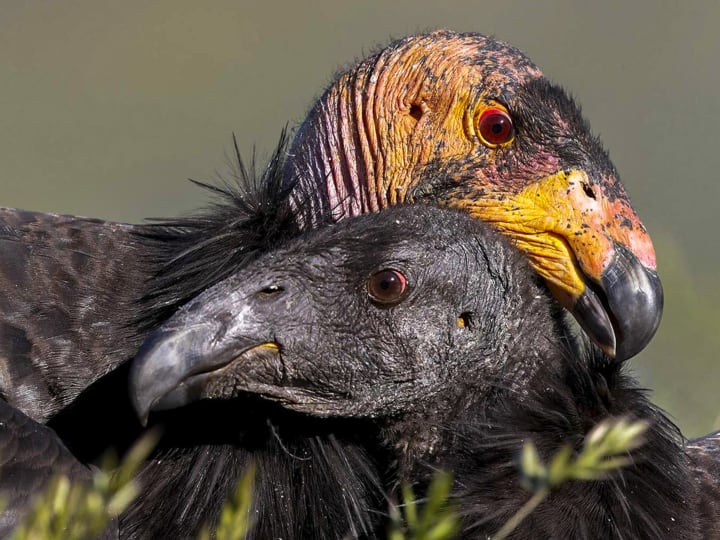
Pyramid Dam is one of two dams on the creek, the second being the Santa Felicia Dam that creates Lake Piru just 15 miles downstream.The name Piru was given by the Tataviam natives for the tule reeds growing along the creek, which were used to make things like baskets and small boats to navigate the local creeks and rivers. Piru creek is one of two streams in the Angeles National Forest being managed for wild trout by the CA Dept of Fish & Game, but is also supplied by undisclosed hatcheries (possibly Fillmore fish hatchery—it would make sense since it’s local). The creek ecosystem supports species including the Southwestern Willow Flycatcher, Bell’s Vireo, California Condor, endangered Arroyo Toad, sensitive pond turtle, Santa Ana Sucker, and CA red-legged frog.
Pyramid Dam is not hydroelectric in itself, but in combination with the turbines from Castaic Lake it creates pumped storage power. LADWP uses excess energy from solar power and wind turbines to pump water 7.5 miles uphill through pipes from Castaic Lake to Pyramid Lake during the day. When energy needs spike in the evening the water is released back down the same pipes, creating energy for about 83k homes. Using the lakes as “giant batteries” is seen as a more sensible and sustainable use of the surplus energy than to sell the excess or store it in lithium ion batteries. Take note that to power the same 83k homes, it would take 139 lithium ion batteries. So...it makes sense I suppose. LADWP’s largest chemical battery, which is a 20 megawatt lithium ion battery, can power about 600 homes over a day. (83,000/600=138.3333—>139 batteries)*.

Like many native tribes, there isn't much remaining recorded history of the Piru Tataviam. Of course, much of their population began dwindling when the Spanish missionaries came in the 1760s. They were sent for indoctrination at established missionary schools and then were sent to work in the fields. I’m not sure that there is any correlation, but I want to note that the town of Piru has the highest percentage of agricultural workers and second-highest percentage of manufacturing workers in Ventura County. 32% have occupations in manufacturing, while 28% are employed in the agricultural sector.

Moving onto the second dam, I learned about CA10186-Shasta Dam in October of 2019 while traveling to Oregon. I was stopped from visiting Panther Meadows by the Winnemem Wintu Tribe who were holding their once-a-year sacred river ceremony on what was once their tribe’s traditional land—well IT STILL IS but that fact is not federally recognized. I spent a little more time with them at the entry of the trail to get to learn what I could. I listened to their tribe’s creation story, where they bubbled out of the McCloud River with all the other animals, and most importantly the Chinook salmon. They told me that in the building of this dam their homeland was flooded, and they were forced to move further down into the valley, where they now reside in Redding, CA. The Winnemem once numbered approximately 14,000; and by 1910, after several decades of conflict with settlers, that number had been reduced to 400. Today the tribe's population is approximately 150. Archeological studies indicate that their people have lived in the region for over 6,000 years. Part of their creation story is that they were almost held back from emerging from the river, because they needed more time to develop, but lucky for them the salmon offered up their voice so the humans could be here and communicate. From then on the Winnemem Wintu always vowed to speak for the salmon—a vow they have not broken even while being displaced from their true home.
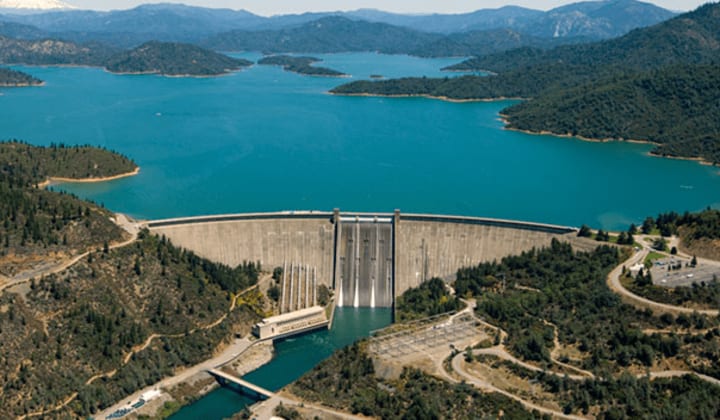
The 602 ft dam was completed in 1945, making it well past the 50 year life expectancy, at 75 years old! Shasta’s reservoir holds 4,661,860 acre feet of water received from the Upper Sacramento River (15%), McCloud River (20%), Pit River & Squaw Creek (52%), which is about 17% of California’s total man-made water storage capacity. The surface area of the lake is 30,000 acres, and in the depths lurk 7 different mining towns including Kennett, CA (1852-1923). At the peak of its existence with a 10k population it operated 40 saloons, trade stores, a hotel, hospital, schoolhouse, and even an opera house. With all this including some train cars and tracks, it is no surprise that the CA Office of Environmental Health Hazard Assessment has a safe eating advisory for fish caught in the lake due to mercury and PCB levels. Besides fishing, other recreational opportunities include boating, water-skiing, swimming, camping, picnicking, hiking, hunting, and mountain biking.
Speaking of fish, you may think that a dam this size would have a fish passage, but it does not. There are, however, efforts being made to keep certain fish populations in existence. Shasta Dam does provide timed cold water releases for fish downstream. Also, 9 miles down from Shasta Dam is 157 ft Keswick Dam, constructed to control river fluctuations from the Shasta Powerplant and also serves to capture Chinook salmon between 15 and 25 lbs that make their way up its elevator and into the waiting Coleman National Fish Hatchery tanker trucks. In 2018 about a million Chinooks were captured and held in tanks at the hatcheries, and about 12 million were released back into “the wild” at different times throughout the year. This is the current practice for population maintenance, however, the US Bureau of Reclamation sponsored a contest in 2017 for individuals to send strategic proposals for fish passages at Shasta Dam. Briana Conners won the $10,000 prize for her passage idea to get the salmon to once again reach their historical habitat of the McCloud River.

Meanwhile, the Federal government (Trump admin) seemingly in tandem with the Westland’s Water District (the nation’s largest agricultural irrigation district in the SJV) have been pushing a plan to raise the almost century-old dam’s height by 18.5 ft to increase its storage capacity by 14%—but there has been quite the pushback. The Wintu, environmentalists, fisherman have all protested against this $1.3 billion project by reminding the govt that this proposal violates several laws including California’s 1972 Wild & Scenic Rivers Act. Researchers suggest that the $1.3 billion would be of better use in reservoir re-operation and groundwater banking, as the natural aquifers under the San Joaquin Valley have the capacity to store 10-100x more water than the Shasta Reservoir, even with the raise. Who knew that nature had the technology to supply us with even more than we could have done ourselves?! Sounds to me like the agricultural producers in that area simply need a lesson or two in soil regeneration so that proposals like these no longer need to be made. The Shasta Powerplant is able to produce 663,000 kW of power, 1,935 GWh annually, and is seen as extremely important for the western United States as the sale of this electricity produces over $50 million dollars in revenue annually to the federal government.

Although it is seen as “highly unlikely”, failure of Shasta Dam would create disastrous floods all the way to Sacramento, and overtop many waterways and levees on the way to the Bay-Delta.
We wonder where we would be without technologies like these, and if it is even possible to “regress” from things like this—or truly advance from them. After all, transporting fish in trucks is lightyears away from being ideal, yet without workers like them, we may no longer be seeing those fish in the numbers we do today.
About the Creator
Keep reading
More stories from Lucy Whitesell and writers in FYI and other communities.
Downtown Memphis Is Having a Moment — And the City’s Soul Has Never Shined Brighter
Memphis has always been more than a dot on the map. It is a feeling, a rhythm, a lived experience rooted in resilience, creativity, and community. In recent years, downtown Memphis has reemerged as the heartbeat of that spirit—a place where history and progress walk hand in hand, where independent voices are being amplified, and where people are coming together to build something meaningful. For anyone paying attention, downtown Memphis is not just alive; it is thriving.
By The Blacksheepkid Collective by: El Pablo 1xabout 5 hours ago in FYI



Comments
There are no comments for this story
Be the first to respond and start the conversation.