
Google Rolls Out AI Summaries in Discover Feed: What Users Should Know
A closer look at Google’s AI-powered news summaries in Discover and how this update affects the way we consume information.

1. The New AI Feature in Google Discover
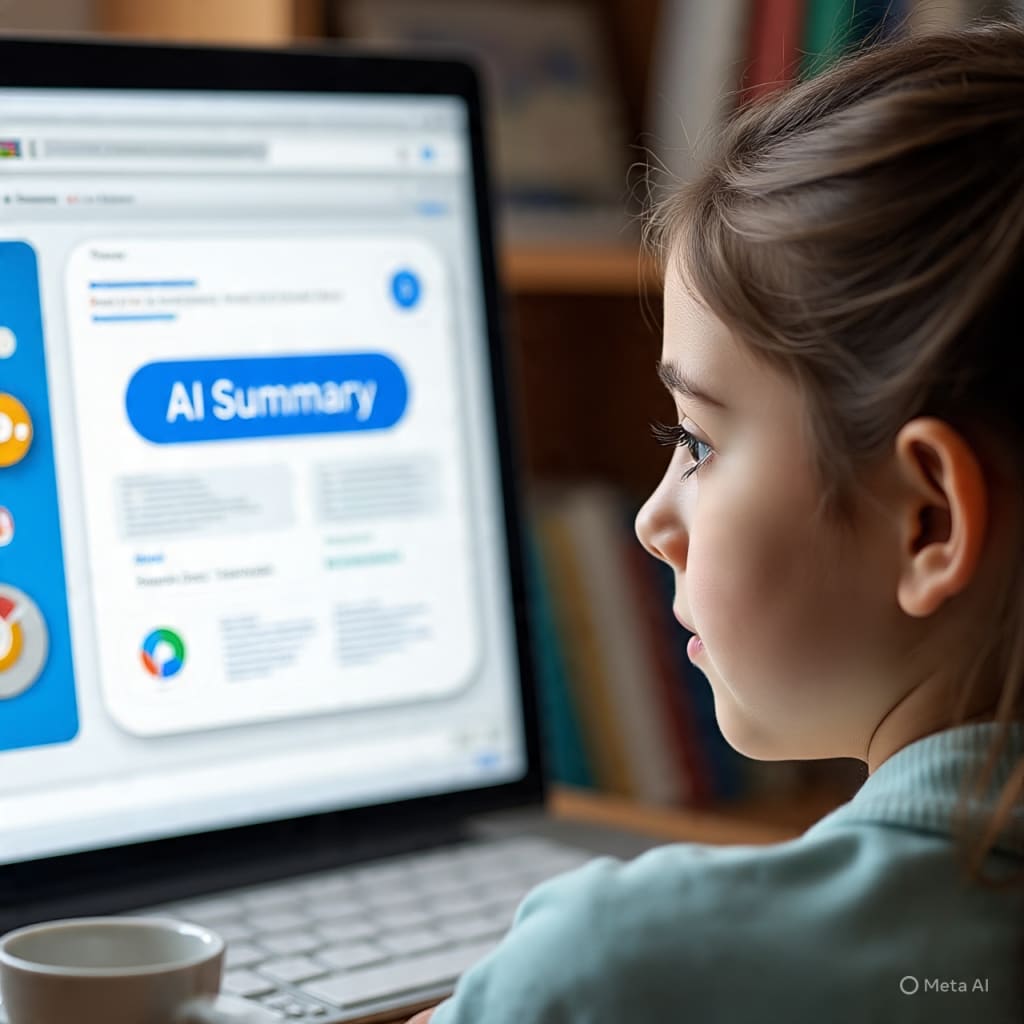
Google has recently introduced a feature in its Discover feed that automatically generates AI-powered summaries for news articles. Discover, a mobile feed on Android and iOS devices, provides users with news, personalized content, and articles based on their interests. The addition of AI summaries aims to give readers a quick overview of stories without requiring them to open each article fully.
These summaries appear below the headline and thumbnail image of the article and give a short, concise explanation of the content. Google says the AI summaries are meant to complement full articles, not replace them, allowing readers to scan multiple stories efficiently and decide which ones they want to read in detail.
2. How the Summaries Work
The summaries are generated using Google’s Gemini AI, part of the company’s growing suite of large language models. The AI analyzes the article text, extracts key points, and produces a brief summary in plain language.
The process is designed to be automatic and neutral, providing factual overviews without editorial bias. Users can tap on the summary to expand it or read the full article if they want more context.
Currently, this feature is in its experimental phase, available only for selected articles and languages. Google is collecting feedback from users to improve accuracy and usefulness before a wider rollout.
3. Why Google Introduced AI Summaries
The main goal behind this feature is to help readers manage information overload. With thousands of news stories published every day, scrolling through the Discover feed can be time-consuming. AI summaries allow users to quickly gauge the importance of a story and decide whether it warrants a full read.
Another purpose is improving accessibility. Users who may not have the time, language proficiency, or background knowledge to understand a full article can rely on summaries to get the essential information. This aligns with Google’s broader goal of making information “useful and accessible” to as many people as possible.
4. Benefits for Users
AI summaries in Discover offer several advantages:
Time-saving: Users can quickly understand the core of a news story without reading the full article.
Ease of scanning: Summaries allow readers to browse more stories efficiently.
Better decision-making: Readers can choose which articles to prioritize based on a clear overview.
Accessibility: Simplified summaries help users who are new to a topic or have limited time for in-depth reading.
For regular Discover users, this means a faster, more streamlined news consumption experience, particularly on mobile devices.
5. Concerns and Challenges
Despite the benefits, the feature has sparked discussions about potential drawbacks.
Accuracy and context are primary concerns. While AI can extract key points, it may oversimplify complex stories or miss critical nuances. There is also a risk that readers might rely solely on summaries and not access the full article, potentially reducing engagement with original publishers.
Transparency is another challenge. Google labels the summaries as AI-generated, but ensuring users understand the distinction between AI summaries and journalist-written content remains essential to maintain trust.
Finally, impact on publishers is a consideration. If AI summaries reduce clicks to full articles, ad revenue and audience engagement could be affected. Google has stated that the summaries are meant to complement articles rather than replace them, but the balance will need to be monitored carefully.
6. Implications for the Media Ecosystem
This rollout reflects a broader trend where AI is increasingly shaping how news is delivered and consumed. By offering quick summaries, Google is influencing which stories users read and how they interact with content.
For publishers, this creates both opportunities and challenges. A well-written article might reach a wider audience if its key points are highlighted by AI summaries. On the other hand, publishers may need to rethink how they structure articles so that AI tools accurately capture the story’s essence without misrepresentation.
The integration of AI in news consumption is also likely to influence user behavior, such as reduced time spent reading full articles, increased reliance on curated feeds, and selective engagement with content.
7. Looking Ahead
As Google collects feedback, the AI summary feature is expected to improve in terms of accuracy, clarity, and user experience. Future updates could include:
Enhanced multilingual support to cover more regions and languages.
Options for users to personalize summary length or level of detail.
Better safeguards against misinformation or misinterpretation.
This development also signals a broader shift in how technology companies are integrating AI into everyday tools, blending convenience with the challenge of preserving editorial quality.
8. Tips for Users
For now, readers can benefit from AI summaries while remaining mindful of their limitations:
Use summaries as a preview, not a replacement for the full article.
Check the source of the article before drawing conclusions.
Provide feedback to Google when summaries are unclear or inaccurate.
Combine AI summaries with other news sources to maintain a balanced perspective.
Conclusion
Google’s AI summaries in Discover represent a significant step in the evolution of digital news. They offer users convenience, speed, and improved accessibility while raising questions about accuracy, context, and the role of publishers.
For readers, this feature provides a practical way to navigate an overwhelming amount of information. For publishers and journalists, it highlights the need to adapt in a landscape where AI increasingly influences how content is consumed.
Ultimately, Google’s AI summaries demonstrate both the potential and challenges of integrating artificial intelligence into everyday media consumption, offering a glimpse into the future of digital news..
About the Creator
Saad
I’m Saad. I’m a passionate writer who loves exploring trending news topics, sharing insights, and keeping readers updated on what’s happening around the world.


Comments
There are no comments for this story
Be the first to respond and start the conversation.