
France's Government Faces Collapse Amid Historic No Confidence Vote
A Historic No-Confidence Vote Topples Michel Barnier’s Government, Leaving Emmanuel Macron to Navigate France’s Deepening Political Crisis.

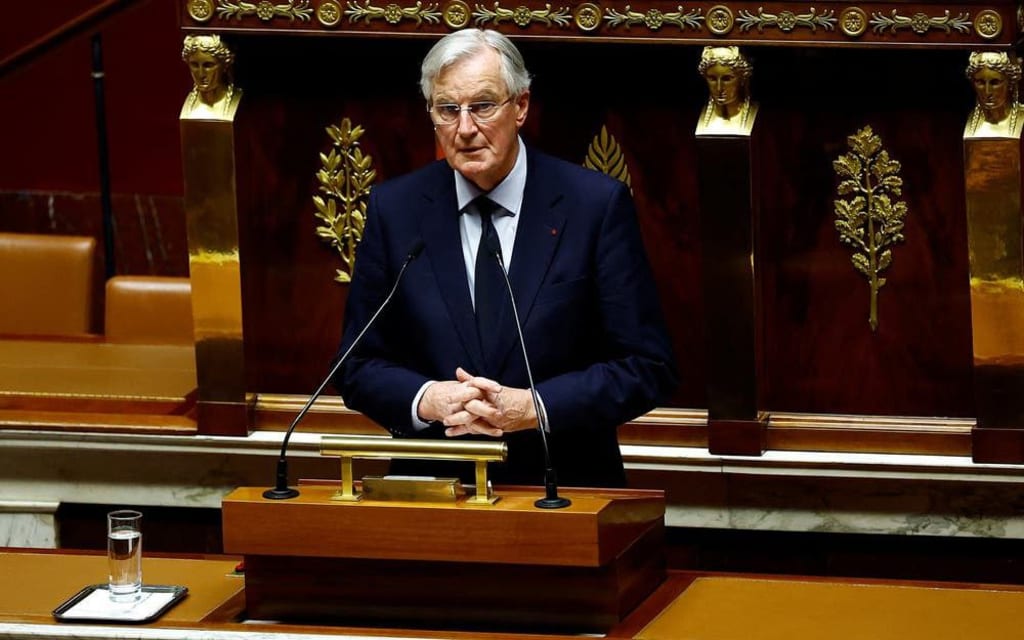
France's Government Faces Collapse Amid Historic No Confidence Vote
In a political earthquake that has rocked France, Prime Minister Michel Barnier has been ousted from power after a no-confidence vote in the French Parliament. This dramatic event marks the first time since 1962 that a French prime minister has been brought down by such a motion. The vote, held in the National Assembly, saw 331 Members of Parliament (MPs) side against Barnier’s government, signaling the fall of the embattled leadership and throwing France into a state of deep political uncertainty.
A Historic Collapse
For many, this was a long-expected but still shocking moment. With 331 MPs voting against Barnier, the outcome was decisive. The French political landscape, already polarized and fragmented, has now entered a new era of instability. Barnier, who has served as prime minister in a tenure marred by economic strife and public dissatisfaction, is now the shortest-serving prime minister in the Fifth Republic's history, which began in 1958. His government, which has struggled with mounting national debt and internal divisions, is now history.
This historic event leaves the country grappling with questions about the future direction of its government and economy. With a government now in freefall, Barnier must submit his resignation to President Emmanuel Macron, who will need to navigate a complex and unprecedented situation.
Political Deadlock and Economic Chaos
The collapse of Barnier’s government could not come at a worse time for France, already struggling with political fragmentation and economic turmoil. The country has faced increasing economic difficulties in recent years, with mounting debt and a ballooning deficit. The controversial budget proposed by Barnier, which many saw as an austerity measure, was one of the key reasons behind the vote of no confidence. The budget was slated to impose severe cuts to public spending, including in critical sectors such as healthcare and climate action, leading to widespread public discontent.
Political analysts predict that the failure to pass this budget will have severe consequences. The French economy, already fragile, is expected to suffer as a result of the uncertainty surrounding the country’s financial policies. With no clear path forward for the budget, there are fears that France’s debt levels will continue to rise, further complicating efforts to stabilize the nation’s finances. As France enters yet another phase of political instability, questions loom about whether the nation can avoid a full-blown financial crisis.
What’s Next for France?
The immediate future for France is clouded in uncertainty. Michel Barnier’s resignation is likely to set off a scramble for power within the French political establishment. President Macron, who has returned from a trip to Saudi Arabia, now faces a monumental challenge. His options are limited, and the nation’s already divided political climate only makes his task more difficult.
Political commentators suggest that Macron may need to consider appointing a technocratic government, composed of non-political figures who can steer the country through the economic storm. However, this is a highly unconventional approach for France, where politics is often dominated by ideological battles. The idea of a government made up of technocrats is almost unheard of in the country’s modern political culture, making it an uneasy solution at best.
For now, Macron’s priority will be to find a suitable replacement for Barnier, a task made all the more complicated by the fractious nature of the French Parliament. The current political landscape is deeply divided, with factions on the left, right, and center clashing over nearly every issue. No single political force has enough power to unify the country, and the resulting political deadlock is only expected to worsen.
The Road Ahead: Uncertainty and Instability
In the wake of Barnier’s ouster, the future of France remains unclear. The French Parliament, which has become a battleground of ideological conflict, now faces an even more uncertain path forward. With the fall of the prime minister and the potential rejection of the national budget, France could soon be forced to implement emergency measures to keep the country functioning. Special laws may need to be passed to address critical areas such as pensions and public services, but these would be stopgap solutions rather than a long-term fix.
Macron’s ability to regain control and form a functioning government will be put to the test in the coming days and weeks. His critics are already calling for his resignation, blaming him for the current political paralysis and the growing divide within the country. However, Macron has firmly resisted calls to step down, insisting that he remains the guarantor of stability for the French Republic.
The uncertainty in France is far from over. While Barnier’s departure marks a significant shift in the political landscape, it also signals the beginning of a new phase of instability. The next few months will be crucial as Macron attempts to navigate through the political and economic challenges ahead. Whether France can find a way out of this crisis remains to be seen, but the road ahead is sure to be a turbulent one.
For now, France faces the challenge of not just finding a new prime minister but also restoring faith in a political system that has become increasingly fractured. The next steps are critical, and the world will be watching closely as one of Europe’s most influential countries enters uncharted political waters.
About the Creator
Keep reading
More stories from Cherub Kane and writers in FYI and other communities.
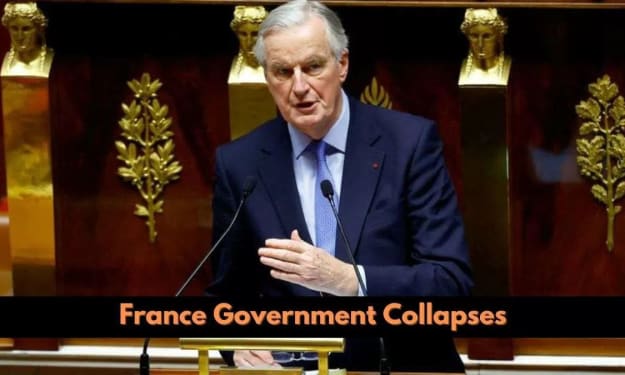
Political Crisis in France: Government Collapses After No-Confidence Vote
Political Crisis in France: Government Collapses After No-Confidence Vote France has plunged into political and financial uncertainty after a historic no-confidence vote toppled Prime Minister Michel Barnier’s government. This marks the first time since 1962 that a French government has been ousted in such a manner. The move, spearheaded by a rare alliance between the left-wing bloc and Marine Le Pen’s far-right National Rally, has left the nation in turmoil, with President Emmanuel Macron scrambling to restore stability.
By Cherub Kaneabout a year ago in FYI
Europe Commercial Greenhouse Market Size and Forecast 2025–2033
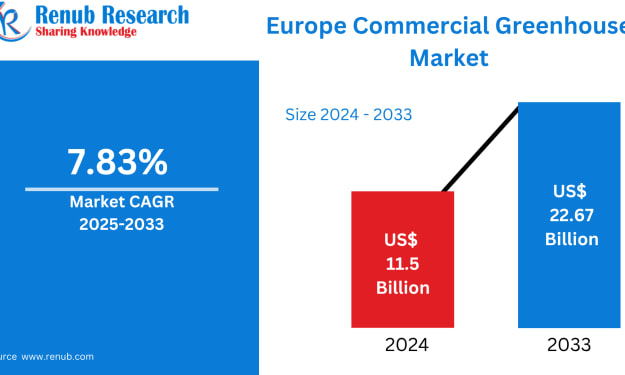
The Europe Commercial Greenhouse Market is set for dynamic expansion over the coming decade, reflecting the region’s accelerating transition toward sustainable, technology-driven agriculture. According to Renub Research, the market is projected to reach US$ 22.67 billion by 2033, rising from US$ 11.5 billion in 2024, at a robust CAGR of 7.83% during 2025–2033. This growth is being driven by increasing demand for year-round crop production, the rapid adoption of Controlled Environment Agriculture (CEA), and a strong policy push toward climate-resilient and resource-efficient farming.
By Renub Researcha day ago in FYI


Comments
There are no comments for this story
Be the first to respond and start the conversation.