
Four interesting things about the world you might not know
May be you might be knowing:)


There are many such things about our world that have settled in our mind so much that we never ask questions about them. We assume that what we know will be right. But this is not necessary. Scientist Matt Brown, who writes about facts related to the world, in his book "Everything You Neu About Planet Earth Is Rong" (Everything You Know About Earth Is Wrong) mentions some things that you know about yourself. But to force a question.
1. 2060 square kilometers of No Man's Land
You will be aware of 'no man's land' in many places on the earth among the countries fighting among themselves for land, beach, power and business. According to international law, it is an empty area between the borders of two countries, which no country legally controls. However, it can be claimed legally. But there is a place in Africa on which no country wants its right. This area, named Bir Tawil, is 2,060 square kilometers and is between the borders of Egypt and Sudan. This area came into existence in the beginning of the 20th century when Egypt and Sudan made their borders in such a way that this area did not belong to either of them.
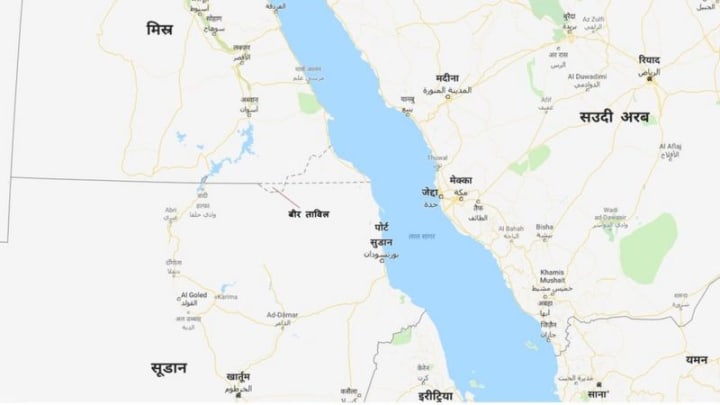
Bir Tawil is a drought-prone area and the land here is barren. So no one wants to claim it. But this area has also attracted many people.
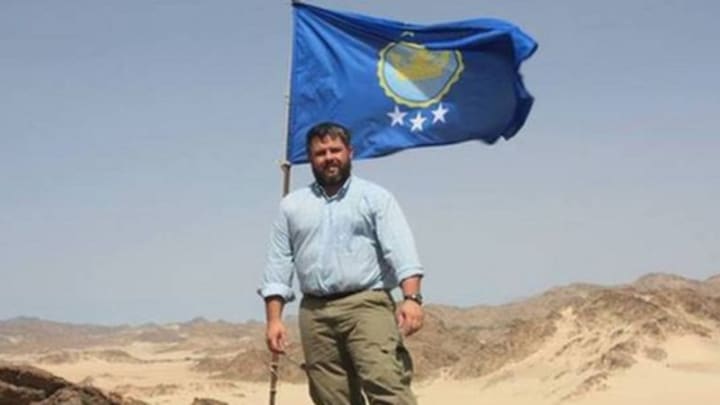
In 2014, a farmer in Virginia, USA, planted a flag here and declared himself the governor of the "Kingdom of North Sudan". He wanted his daughter to become a princess.
2. The first person to visit the world?
Was the Portuguese explorer Ferdinand Magellan the first person to visit the world, and did he give his name to the world's largest sea?
It's not like that. However, it cannot be denied that Ferdinand Magellan, born in 1480, was the first European to cross the Pacific Ocean.
In 1519 Magellan set out with his entourage to find the island of Spice by the sea. After passing through many countries, after three years, this team returned to the same place from where it had gone.
However, very few people were left alive to celebrate this journey from Spain. When this journey started with a crew of 270 people, only 18 people were left alive. Magellan also died during the visit.

During this journey, Magellan reached the east coast of the Philippines in the year 1521. The natives took them to the island of Cebu.
Magellan and his crew members became good friends of those living in Cebu. Such a deep friendship happened that Magellan agreed to save his friends from the invasion of his enemies living in the neighboring island.
He prepared to attack and the troop was led by Magellan himself. But Magellan was soon injured. He was struck by an arrow drenched in poison, after which he died.
The people who went with Magellan wanted to return to the same path after finding the island of Spice, but after changing their path, they returned to Spain by a short route.
Magellan called this route the Pacific Ocean but he was not the first European to see it.
Years later, Spanish explorer Vasco Núñez de Balboa reached the shores of the Pacific Sea via Panama and claimed to have discovered it by waving his sword in the air.

3. On the shore of the sea is land?
We believe that the other end of the sea filled with water may not be known, but it definitely has at least one edge.
Many seas are surrounded by land from all sides, such as the Mediterranean Sea and the Black Sea. Sometimes it happens that where the seas are found in the ocean is not known, but in such a case, if we add the garlands of the islands, then it can also be known.
But there is a sea with no land on any side. This is the Sargasso Sea.
It is to the west of the Atlantic Sea, and only one side of the north Atlantic waves forms its boundary.
The water of the Sargasso Sea remains calm due to the twisting waves of the Atlantic.
Where on earth did water come from?
Life on Earth will end then ...

4. Earthquake measured on the Richter scale?
In schools, we have learned that earthquake intensity is measured on the Richter scale. But the real thing is that it does not give completely accurate information.
In 1930, geophysicists Charles Richter and Beno Guttenberg created it only to measure the energy generated by the earthquake in California. It was a seismograph of sorts.
For this reason, a new system was invented in 1970, which geologists use today as a standard. This is called seismological scale.

The use of Sismolic Scale is largely but due to the difficult name it is written in the form of a Richter Scale.
So next time you read somewhere about the earthquake of 8 intensity on the Richter Scale, let's know that it means from the Symalogical Scale.
The growing fever of the earth will come!
About the Creator
Zeeshan Mushtaq Lone
I'm a student and I also have conducted a marketing survey with ITC Limited. Multinational conglomerate company.
Keep reading
More stories from Zeeshan Mushtaq Lone and writers in FYI and other communities.
The US President on whom impeachment began, but what happened next?
Donald Trump has become the first president in American history to face impeachment twice in the same term. Impeachment is the process by which the President can be removed from office in America.
By Zeeshan Mushtaq Lone5 years ago in FYI
Which Military Patch Is Best: Embroidered, PVC, or Woven?
Military patches serve as powerful symbols of pride, honor, and identity. These small yet significant emblems proudly represent specific units, ranks, missions, and achievements, carrying stories that extend well beyond mere fabric and thread. When it comes to selecting the best type of military patch, however, one crucial question often arises: Should you opt for embroidered, PVC, or woven patches?
By Willamsone7 days ago in FYI
The BAFTA Awards
By now, in a stunning departure from recent years, most of the world is aware of what happened at the BAFTA film awards. Social Media Headlines will tell you the bare bones: that John Davidson, a Tourette's Syndrome advocate, shouted a racial slur at two Actors of Colour, Michael B Jordan and Delroy Lindo.
By Natasja Rose5 days ago in Psyche




Comments
There are no comments for this story
Be the first to respond and start the conversation.