
"Fireflies: The Enchanted Lanterns of the Night"
"These glowing insects aren't just beautiful — their magical lights serve powerful purposes in love, survival, and science."

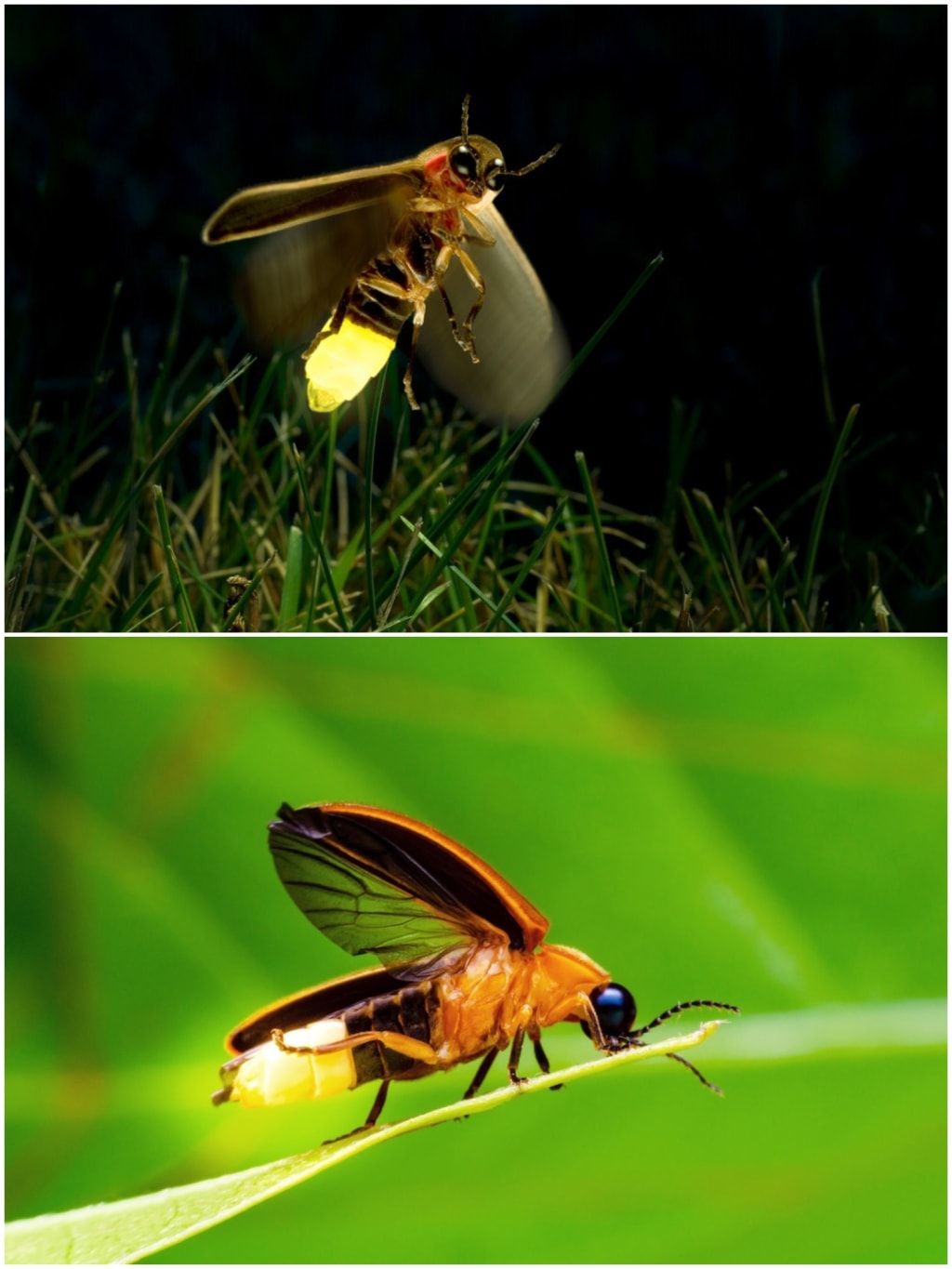
When the sun sets and darkness falls, nature doesn't go to sleep — it transforms. One of the most magical sights you might witness on a warm summer night is the soft, glowing dance of fireflies. These tiny insects, also known as lightning bugs, have captivated the imagination of humans for centuries with their silent, blinking lights.
But beyond their enchanting glow lies a world of fascinating biology, evolutionary brilliance, and even potential scientific breakthroughs. Let’s dive into the mysterious world of fireflies and uncover why these glowing insects are so much more than a pretty sight.
---
A Light from Within: How Fireflies Glow
Fireflies produce light through a process called bioluminescence, a chemical reaction that occurs in special light-emitting organs usually located in their lower abdomen. The key ingredients involved are luciferin (a light-producing chemical), luciferase (an enzyme), oxygen, and ATP (an energy molecule).
When these elements combine, the firefly emits light — and incredibly, almost 100% of the energy is converted into light, with virtually no heat. That’s something even our most efficient LED bulbs can't do!
The light can be yellow, green, or even pale red, and it blinks in patterns unique to each species.
---
More Than Just Decoration: The Purpose of the Glow
You might think fireflies glow just to look pretty — but their light has real survival and reproductive functions:
Attracting Mates: Each species of firefly has a unique flashing pattern that males use to signal females. The females respond with a different flash, and this light “conversation” helps them find suitable partners in the dark.
Warning Predators: Some fireflies produce chemicals that make them taste bitter or toxic. Their glow acts as a warning signal to potential predators like birds and frogs.
Deceptive Tactics: Interestingly, in some species, females of one type mimic the light signals of another species to lure unsuspecting males — and then eat them! Nature can be brutal, even in glowing beauty.
---
Fireflies Across the Globe
Fireflies are found on every continent except Antarctica. They thrive in warm, humid environments — forests, marshes, meadows, and near water. Asia, North America, and parts of South America are especially rich in firefly diversity.
In some regions, like parts of Japan, Thailand, and the U.S., synchronized firefly displays are major tourist attractions. Imagine thousands of fireflies flashing in perfect harmony — a natural light show that seems almost too magical to be real.
---
In Danger: A Disappearing Glow
Sadly, firefly populations are declining in many parts of the world due to habitat destruction, pollution, pesticides, and especially light pollution. Artificial lights from cities and towns disrupt their mating signals and confuse their natural rhythms.
Conservationists are now working to protect firefly habitats and educate the public on how to reduce light pollution. Keeping dark areas near water bodies, planting native vegetation, and avoiding chemical pesticides can help bring these glowing creatures back.
---
Fireflies in Science and Medicine
Fireflies aren't just a wonder of nature — they’ve also contributed to scientific progress. The enzyme luciferase used in their light reaction has become a powerful tool in medical and genetic research. Scientists use it to track gene expression, detect cancer cells, and test for bacteria in water or food.
This tiny glowing bug has helped us light the path in some of the most advanced areas of human health and environmental science.
---
Cultural Symbolism and Myth
Fireflies hold a special place in many cultures. In Japanese folklore, they are often seen as the souls of the dead, while in other cultures they represent hope, guidance, or transformation.
Artists, poets, and filmmakers frequently use fireflies as metaphors for fleeting beauty, love, or even childhood innocence. Their appearance in literature and cinema speaks to how deeply humans are moved by their mysterious glow.
---
Final Thoughts
The next time you see a flickering light in the summer darkness, pause and appreciate the tiny creature behind the glow. The firefly, with its soft and silent light, reminds us of the beauty that exists in nature’s smallest corners.
It teaches us that even in the darkest times, a gentle light can speak volumes — about life, love, survival, and the interconnectedness of all things.
Let the firefly’s glow inspire us not only to protect the wonders of nature but to find light within ourselves too.
About the Creator
Keep reading
More stories from Insect Legends and writers in FYI and other communities.
"Bombardier Beetle: Nature’s Tiny Chemical Warrior"
When we think about deadly creatures in the animal kingdom, we often imagine lions, snakes, or sharks. But some of the most fascinating — and dangerous — life forms are much smaller and more mysterious. One such creature is the Bombardier Beetle, a tiny insect that packs a powerful punch using chemistry straight out of a science lab.
By Insect Legends10 months ago in FYI




Comments
There are no comments for this story
Be the first to respond and start the conversation.