
Ethics in the Digital Age
Why ethical consistency still matters more than digital chaos

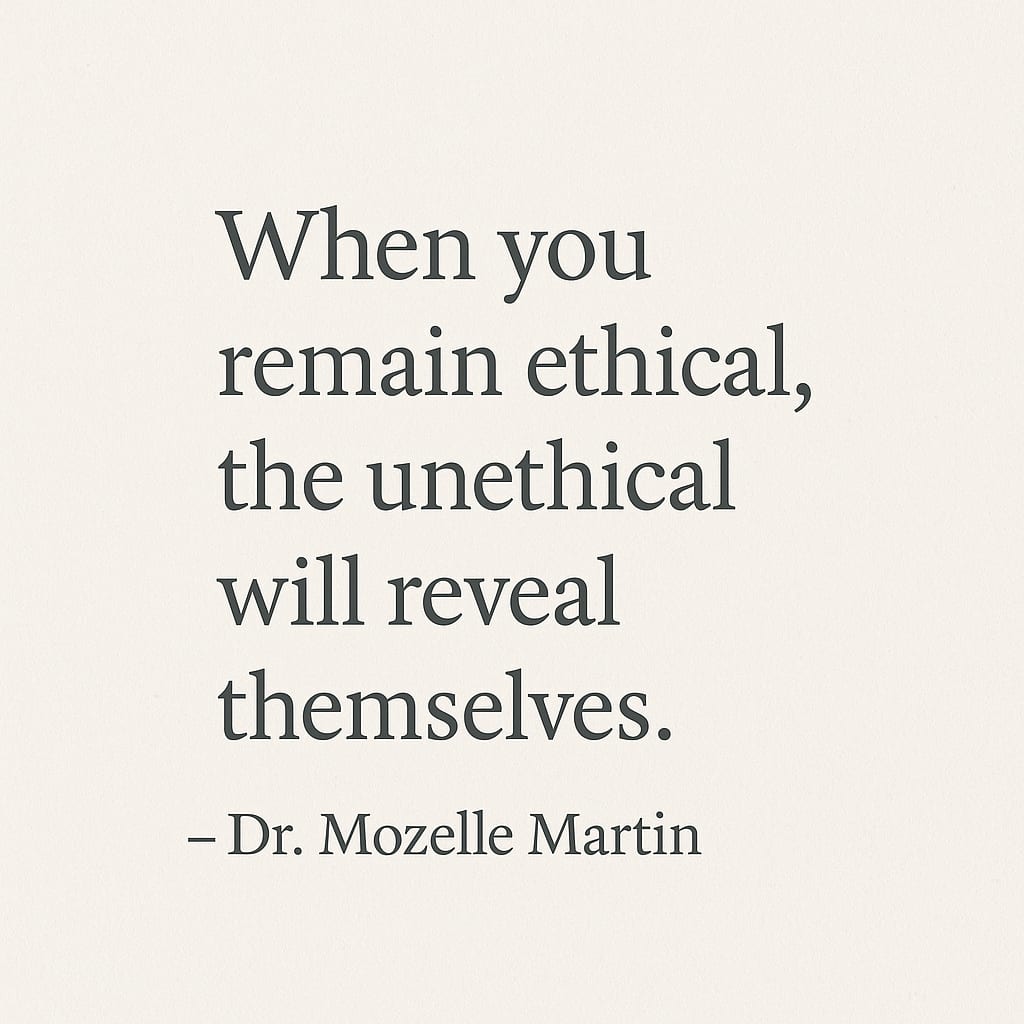
In the field of forensic handwriting analysis, ethics have always been my guide — not reactions. That hasn’t changed, even in digital spaces.
Since 2022, I’ve watched how misinformation can quietly reframe a professional reputation, regardless of credentials or contributions. It’s not shocking — but it is revealing.
As someone with nearly 40 years of forensic experience, I’ve been trained to recognize patterns, motives, and behavioral indicators. And what I see online today is no different from what I’ve observed in criminal contexts: misdirection, projection, and repetition are often used to control a narrative.
Forensic work is about evidence. Not emotion. Not trends. And certainly not anonymous opinions. Whether analyzing a ransom note, a suicide letter, or an affidavit, my job has always been to distill the facts from the distractions. In that way, the digital landscape isn’t all that different — it just moves faster and requires a steadier lens.
Throughout my career, I've been offered substantial amounts of money to say this or that. I am not defense- or prosecution-oriented, no matter who hires me — I am justice-oriented. I go with what's on the paper being analyzed — nothing more, nothing less. And that commitment to neutrality has guided every aspect of my professional path, regardless of the visibility or controversy of the case.
Online commentary may shift and change, but the truth doesn’t. My approach to this new landscape mirrors the same principles I've always followed: remain consistent, document clearly, and allow facts to surface through discipline — not volume.
When digital defamation emerged in late 2022 - triggered by self-styled "sleuths" unhappy with my professional opinions on high-profile cases - I didn’t change who I was. I applied what I already knew. I didn’t respond in kind, nor did I feel compelled to explain or defend myself to strangers. Instead, I focused on what has always mattered: clarity, truth, and long-term ethics. I refused to let digital noise overrule a career built on integrity.
I’ve spent my career consulting on cold cases, training law enforcement, and teaching professionals how to interpret human behavior through handwriting. Those values didni't change when I was targeted - they deepened. I simply brought the same measured approach I've always used into a new context.
Forensic work is - and always has been - about evidence. Not emotion. Not virality. And certainly not untrained or biased opinions. Whether I'm examining a ransom note, a suicide letter, or consulting on a cold case, my job is to uncover what the paper holds. The rest is just noise.
Most importantly, I didn’t abandon my ethics and in my lifetime, that matters more today than ever before.
Digital reputations are shaped by visibility and content saturation. I’ve learned that firsthand. But rather than attempt to silence misinformation, I stayed focused on transparency, on verified credentials, and on providing accessible, truth-based resources across platforms. And in doing so, I’ve seen something encouraging for those currently being targeted.
I’ve never believed that loudness equals legitimacy. And I’ve never confused public attention with professional validation. My work speaks through outcomes — and through the people I’ve helped, taught, and trained over nearly four decades.
So if you’re navigating something similar — whether misrepresentation, defamation, or digital distortion — I offer this:
- You don’t have to fight for your integrity.
- You just have to keep living it.
- The truth does rise when built with consistency, ethics, and time.
Over time, consistency has more power than outrage ever will.
That's why I recently published a reflection of this topic on Substack.
About the Creator
Dr. Mozelle Martin
Behavioral analyst and investigative writer examining how people, institutions, and narratives behave under pressure—and what remains when systems fail.
Keep reading
More stories from Dr. Mozelle Martin and writers in FYI and other communities.
Coded Convictions:
Coded Convictions: When Algorithms Become Judge, Jury, and Executioner In today's data-driven society, courtroom gavels have been replaced by algorithms. Invisible yet omnipresent, they operate at scale and speed, deciding what content is amplified and what is buried. But what happens when these machine-learning systems begin reinforcing public shame, online defamation, and digital vigilantism? At what point does a line of code evolve into a digital executioner?
By Dr. Mozelle Martin11 months ago in FYI
Why Fiber Optic Assemblies Are Essential in Aerospace Systems
Modern aircraft are more technologically advanced than ever before. From navigation systems and flight controls to in-flight entertainment and real-time diagnostics, today’s aerospace platforms rely heavily on fast and reliable data transmission. Traditional wiring systems, while effective in earlier generations of aircraft, are no longer sufficient to meet the increasing demand for bandwidth, speed, and signal clarity.
By Beckett Dowhan4 days ago in FYI
A Knight of the Seven Kingdoms Series Review (Season 1)
As one of the biggest properties in fantasy, A Song of Ice and Fire remains immensely popular with audiences. After reaching far into the past with House of the Dragon, a second spin-off was on the cards. A Knight of the Seven Kingdoms serves up a bite-sized slice of action and drama, but it still claims a spot among the best small-screen titles.
By Robert Cainabout 21 hours ago in Geeks


Comments