
English Is a Weird Language – How Many of These Do You Know?
Strange but True


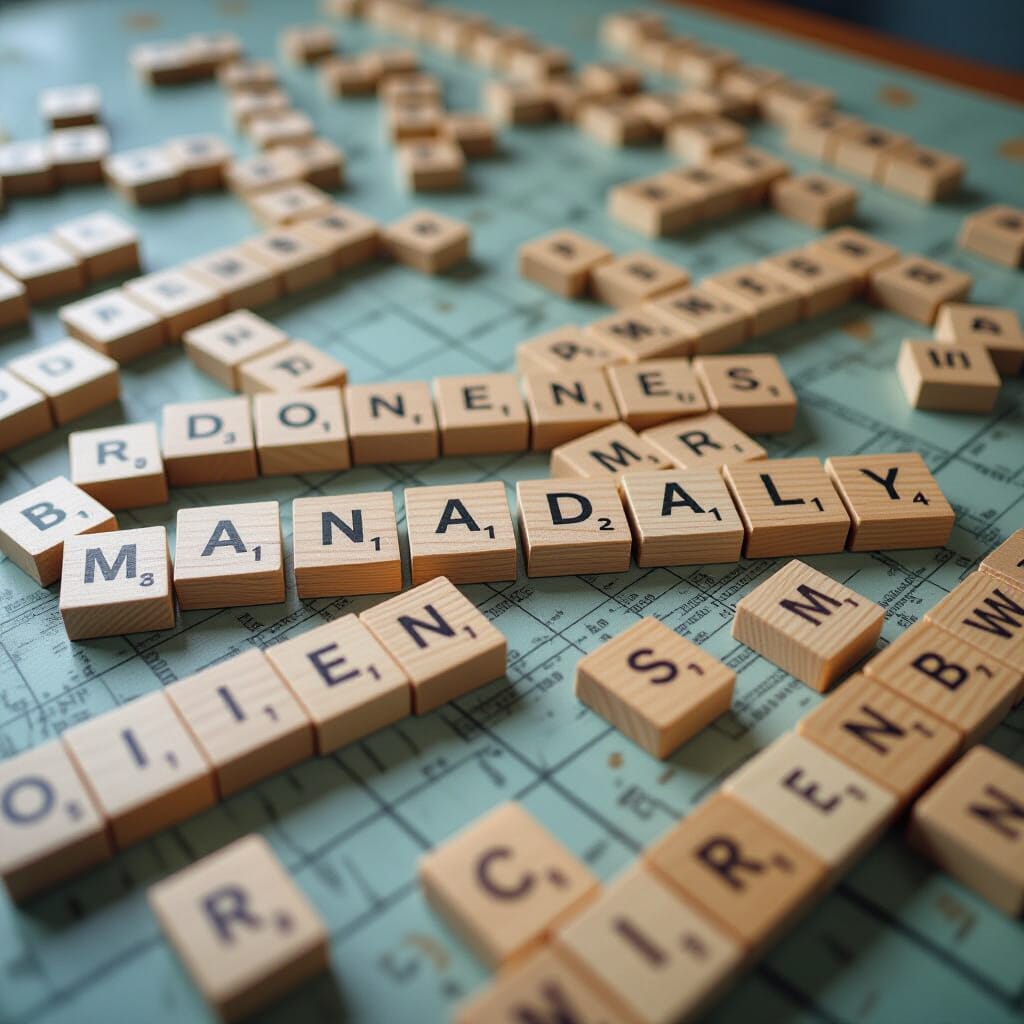
The English language has over 1 million words. However, about 171,476 words are commonly used today.
Native speakers typically have a vocabulary of 20,000 to 40,000 words. It is also said that knowing 3% of the total vocabulary allows you to read 95% of what is written.
It seems like the English language has a name for just about everything. If there isn’t, then we just make one up. I used to love describing people as "preprognisable."
Don’t rush off to Google to find out what it means. I made it up a few years ago to describe people I had no time for and who annoyed me.
So test your knowledge of weird and wonderful English words.
How many of these did you know?
I have put each one in a sentence to make it more fun, and then I have explained the meaning below.
#1. I had never seen anyone with such a hirsute glabella.
#2. Sitting on the bus, I was trying to work out who it was that had the strange wamble.
#3. Can you smell that petrichor?
#4. The amount of griffonage made it difficult to understand what he was actually on about.
#5. The party host, regretting the excessive alcohol consumption, blamed his crapulence on the open bar.
#6. That can’t be right; there must be a problem with your Bannock device.
#7. He had such a big columella nasi, you could easily mistake him for a cow.
#8. There is nothing more painful than when you break your minimus (???).
#9. I can’t do that until ovemorrow, will that be alright?
#10. Do you really think that all those interrobangs help your story?
Glabella - is the term that is used to describe the gap between the eyebrows at the top of the bridge of your nose.
It comes from the Latin word “glabellus” meaning smooth or hairless. I was watching a series on Netflix the other day that had a character whose galbella was non-existent. Her eyebrows were pretty much joined together. Most distracting from the character, as all I could focus on was her eyebrows.
Wamble – is a term used to describe when your tummy rumbles. It is likely to have originated in Middle English between 1150 and 1500. Some say it comes from Germanic or Norwegian roots, linking it to the word ‘vamla,’ which means to stagger. But I am not sure that relates to a rumbling stomach at all.
It originally meant "to feel nausea" or "to move unsteadily." It is often described as a queasy stomach.
Petrichor – this is the name given to the earthy smell that follow rainfall. The word itself has ancient origins. It’s derived from the Greek “petra” (stone) and “ichor” which, in Greek mythology, is the ethereal blood of the gods.
If you've ever paused to smell a rainforest, especially a eucalyptus forest, you get it. Two Australian scientists coined the term.
Griffonage – describes illegible handwriting. It comes from the French word "griffonner," meaning "to scribble" or "to scrawl. The term first appeared in the English language in the 1830’s. I tend to suffer from this. When I was working, I often needed a translator. Doctors are also well known for griffonage on prescriptions.
Crapulence – that horrible feeling that you get when you have eaten or drunk too much. It comes from late Latin "crapulentus." This word comes from Latin "crapula," which means "intoxication." The Latin term can be traced back further to the Greek word "kraipálē." It is a feeling often associated with Thanksgiving dinners, smorgasbords, or Christmas dinners.
Bannock device - this is the metal device that you put your foot into when you want to know your shoe size. It was invented and patented by Charles Bannock in 1926.
Columella nasi: This term refers to the tissue bridge that divides the nostrils at the bottom of the nose. You guessed it; it also comes from Latin. The Latin word “columella” means "little column." “Nasi” is the genitive form of "nasus," which means "nose."
Minimus - is used to describe your little toe or finger. Again, from the Latin word for smallest or tin.
Ovemorrow – finally a word that is derived not from Latin, but from German. The term describes the day after tomorrow and was first used in the mid-1950s in the Cloverdale bible. The origin is thought to derive from a similar word in German.
Interrobangs are a combination of a question mark with an exclamation mark (?!). It only dates back to the 1960s. They aren’t often used. That’s why you don’t find them on standard keyboards or in print. It is typically used for informal writing.
So there you have it, ten unusual words. How many did you know?
Till next time,
Calvin
About the Creator
Calvin London
I write fiction, non-fiction and poetry about all things weird and wonderful, past and present. Life is full of different things to spark your imagination. All you have to do is embrace it - join me on my journey.
Keep reading
More stories from Calvin London and writers in FYI and other communities.
Did You Read the Sign, or Just Ignore It?
A friend and one of Vocals' great inspirations, Mikedred, wrote a story last month called “Do Not Read This.” I had on my list of future stories, one about signs and how people just seem to ignore them these days. Mike’s story motivated me to get on and write it.
By Calvin London7 months ago in FYI
A Failed Artist, A Disillusioned Poet, An Underpaid Game Show Host
I took my son and niece to Gori, a small town in Georgia where Joseph Stalin was born. They talked me into visiting the Stalin's Museum, the largest in the post-Soviet space. I had resisted going there because I just can't stand the monster and know enough about him, or so I thought.
By Lana V Lynx6 days ago in FYI
'20/20'
"Do It Again" the track that would ultimately open the Beach Boys final album on Capitol Records which was released on February 10th 1969 had originally been released as a single in August of 1968. The track was the first of many post-Pet Sounds era throwbacks to the early Beach Boys sound which would become continually more cliched and eventually lead the Beach Boys to the level of self-parody they would eventually succumb to in the 1980s while their closest contemporaries The Beatles nearing the end of their run in 1969 would go on to be viewed as the most influential band of all time. However, the song itself is not bad on its surface, and it opens with a futuristic sounding (for 1969) drumbeat captured by then-Beach Boys engineer Stephen Desper using tape delays on the drums performed by Dennis Wilson and John Guerin. The song has been re-recorded numerous times over the years on various Beach Boys-related projects most notably the 2011 re-recording at Capitol studios featuring the five surviving Beach Boys at the time backed instrumentally by various members of both the Brian Wilson Band and Mike Loves touring "Beach Boys" to promote the then upcoming Beach Boys 50th Anniversary reunion tour in 2012. The hammering and power drill sound at the end of the song was an excerpt from a track called "Workshop" that was to be a part of the uncompleted "SMiLE" album.
By Sean Callaghan6 days ago in Beat


Comments (20)
Haha, just what I needed today.
Lol I was about to rush off to Google to find out what prepognisable meant. But I stopped when I read the next sentence. People you don't have time for and who annoyed you, seems very fitting. I met this word before. Crapulence. But never used it in my own writing, even though I meant to. Your sentence accompanying this word, did make it easy for the meaning to form. Petrichor, seems to be a favourite among us all. I do like the word griffonage and it's meaning makes it quiet useful in everyday conversations. Interrobangs. Oh so that's what this (?!) is. Thank you Calvin, now we have a word for it. Out of all of them, this was the one I was the most excited to learn about. Congratulations on your leaderboard placement and your top story 🎉🤗🙏🏾❤️
Wooohooooo congratulations on your Leaderboard placement! 🎉💖🎊🎉💖🎊
I knew 4 and although it was used frequently as a child when we went looking for my shoes, I never knew what "it" was called: a Bannock device! Very interesting. Petrichor, to me, is a magical word....love it and the smell :)
i use interrobangs, even in formal writing probably far too much, and petrichor hangs around mountain bodies of water all of the time. it’s what makes mountain lake air so nice.
I know five of these. :) I guess it's thanks to a combination of being a former English teacher, having read old English and Shakespeare in the past, an interest in etymology, and learning Latin for fun. Interrobang (: Are you serious?! I normally use interrobangs when appropriate. I love this punctuation mark, a combination of questioning with the added element of surprise. I believe they're not on keyboards because a whole key takes space and you can easily use the separate ? and ! keys instead. But, on a Mac you can do this: Command + Control + Spacebar shortcut to open the Character Viewer. Search for “ Interrobang “ or just 'Interro' and the Viewer will find the symbols: ‽ And ⁉️ About your example sentence, using multiple interrobangs is incorrect. Pretty much in the same way, using multiple question/exclamation marks is incorrect; you only need only one and using multiple ones does not really add anything. Overmorrow and ereyesterday (the day before yesterday) are now archaic, but you can find them in Elizabethan literature, such as in Shakespeare works. In the same group of words you find "morrow" meaning the next day or tomorrow, and "good morrow" the archaic form of good morning. Before "tomorrow" was established there was a transition spelled as "to-morrow," with a hyphen. (I think you have to check the dates because these were used way before the 1950s!, like Shakespeare used them in the 1600s, and I believe these were words from at least the 1500s.) Minimus: I know this one from some Latin texts. Crapulence: I know this one because my mother, who had an incredible vocabulary and normally used uncommon words, used to use it. She was also a teacher and loved to speak properly, so I learned this word from her. Petrichor: I know this from nature writing.
I can’t say I knew any of them but I look forward to using a few to test the knowledge of a few writer friends! Great read and congrats on your Top Story!
A fun read, Calvin. I have griffonage after having carpal tunnel and still have a stiff wrist. I don't think we'll remember these words, LOL! Congrats on the Top Story🥳 🥳 🥳
I knew parts of words. I can't say that I have ever used any in conversation or in my writing yet!😉💗 I enjoy looking at new words, not that I remember many!😉❤️
Back to say congratulations on your Top Story! 🎉💖🎊🎉💖🎊
Are we speaking English? That is strange and did not know a single word. I guess these are not part of conversational English. Thank you for the info,
very well written keep going i really appreciate you
I knew one! 'Overmorrow' 🎉 I've always wondered why this isn't used more. The equivalent of 'overmorrow' is a very common and regularly used word in my native language, and while learning English, it seemed like an obvious word to have (and use) instead of saying "the day after tomorrow" every time. I didn't know the other words, but I feel like "glabella" and "petrichor" are words I want to start using from now on, at least in my writing. 😃
I love words and this piece filled me with joy!! great work!
Fun list! Interestingly, while there are so many words I don’t know, I still can never find the perfect one when I’m writing, even with a ginormous thesaurus in front of me 😅
Some great words and explanations there, excellent piece
I scored 0/10. Fun article, and I'll remember a few of these words in the future.
Omg I knew none lol 😝 not one. Nice work 😝😳🤔😳
I learned petrichor like many a year ago from Gina here on Vocal. I've heard of glabella but forgot the meaning. I've never heard of the other words so thank you for teaching them. And also preprognisable! 🤣🤣🤣🤣🤣🤣🤣🤣
I knew petrichor and crapulence! Loved this exploration of English. It's such a varied language with its hotchpotch of influences.