
Elon Musk's SpaceX launches crew to rescue stuck NASA astronauts from ISS
NASA Astronauts

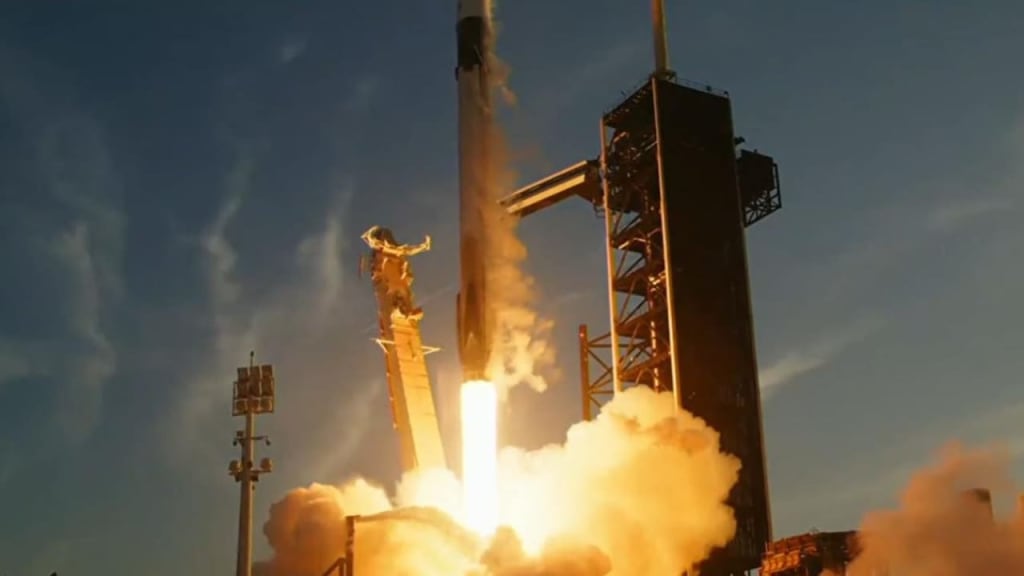
Elon Musk's SpaceX launches crew to rescue stuck NASA astronauts from ISS
SpaceX has once again demonstrated its pivotal role in space exploration by launching a rescue mission to bring back NASA astronauts stranded on the International Space Station (ISS). The mission led by Elon Musk’s aerospace company highlights the increasing reliance on private space enterprises for critical operations in low Earth orbit. This development underscores both the challenges and advancements in human spaceflight and the growing collaboration between NASA and SpaceX. The stranded astronauts were part of a routine mission to the ISS but encountered technical issues with their return vehicle making it unsafe for re-entry. NASA and SpaceX coordinated to deploy a replacement Crew Dragon spacecraft ensuring a safe return for the crew. This mission is not only a testament to the resilience of space agencies but also an example of how commercial partnerships are shaping the future of space travel.
The Mission at Hand
The necessity for a rescue mission arose when NASA detected problems with the originally assigned spacecraft raising concerns about its ability to withstand the intense conditions of re-entry. Given the complexity of space travel such technical failures are not entirely unexpected but they require immediate and well coordinated responses to ensure astronaut safety. SpaceX having successfully conducted multiple crewed missions under NASA’s Commercial Crew Program was the natural choice for the task. The company swiftly prepared a Crew Dragon spacecraft to be launched atop a Falcon 9 rocket. The mission was executed from Kennedy Space Center ensuring rapid deployment to the ISS. The Crew Dragon capsule known for its advanced safety features and autonomous docking capability played a crucial role in this mission. Designed with state of the art life support systems emergency abort capabilities and touchscreen controls the spacecraft exemplifies modern human spaceflight technology. Its reliability and success rate have made it a trusted vehicle for NASA's astronaut transportation needs.
The Role of SpaceX in NASA Missions
SpaceX has become an essential partner for NASA, significantly altering the dynamics of human spaceflight. Before the advent of commercial space companies NASA relied primarily on the Russian Soyuz spacecraft for astronaut transport following the retirement of the Space Shuttle program in 2011. However with SpaceX proving itself as a capable and innovative spaceflight provider the dependency on foreign agencies has been significantly reduced. The Crew Dragon spacecraft developed under NASA’s Commercial Crew Program has already completed multiple successful missions to and from the ISS. The program’s success not only ensures safer and more cost effective astronaut transport but also strengthens the presence of private companies in space exploration. This mission further solidifies SpaceX’s reputation as a reliable partner for NASA. The company's ability to respond quickly to urgent needs demonstrates the advantages of commercial spaceflight over traditional government run programs which often face budgetary and bureaucratic hurdles.
The Challenges of Space Rescue Missions
Rescuing stranded astronauts is not a simple task. The entire mission requires meticulous planning coordination and technical expertise. From the moment NASA identified the issue with the return vehicle engineers and mission planners worked around the clock to devise a safe alternative. One of the major challenges was the timely preparation of a Crew Dragon capsule. While SpaceX has streamlined its operations readying a spacecraft for launch involves numerous safety checks fueling procedures and integration with the Falcon 9 rocket. Any minor error could jeopardize the mission and endanger the astronauts aboard the ISS. Additionally the docking process presents another layer of complexity. While Crew Dragon is designed for autonomous docking, any software malfunction or miscalculation could lead to complications. However SpaceX’s track record in automated docking technology has minimized such risks. Another key concern is re entry. The Earth’s atmosphere poses extreme challenges with temperatures soaring due to friction. The Crew Dragon’s heat shield plays a crucial role in ensuring a safe descent. Despite these challenges SpaceX’s previous missions have proven that their technology can handle these intense conditions reliably.
Implications for Future Space Travel
The success of this rescue mission has far-reaching implications for the future of human spaceflight. It not only reinforces the reliability of commercial space companies but also highlights the importance of having contingency plans for astronaut safety. With SpaceX demonstrating its ability to handle emergency missions efficiently NASA and other space agencies may explore broader collaborations with private companies. This could pave the way for more ambitious missions including lunar and Mars expeditions, where quick responses to emergencies could mean the difference between life and death. Furthermore this mission raises important discussions about space safety protocols. While advancements in space technology have made human spaceflight safer than ever before unforeseen complications still arise. This incident serves as a reminder that while space exploration is pushing boundaries it still carries significant risks that must be mitigated with robust contingency planning. Additionally the successful completion of this mission strengthens the case for continued investment in the commercial space sector. With companies like SpaceX proving their capabilities future missions may see even greater private sector involvement reducing the burden on government space agencies while enhancing efficiency and innovation.
The Future of SpaceX and NASA Collaborations
Elon Musk’s vision for SpaceX has always extended beyond Earth’s orbit. With ambitious plans for Mars colonization and deep space exploration the company has positioned itself as a leader in space travel. Missions like this rescue operation further build trust between NASA and SpaceX setting the stage for even more significant partnerships in the future. NASA on the other hand benefits greatly from the reliability and efficiency that SpaceX brings. The agency can now focus more on deep space missions while relying on private enterprises for low Earth orbit operations. This shift not only optimizes resources but also accelerates the pace of space exploration. SpaceX’s ability to conduct such missions also serves as an inspiration for other space companies. As commercial spaceflight continues to evolve more companies may enter the market leading to increased competition technological advancements and ultimately more accessible space travel. SpaceX’s latest mission to rescue stranded NASA astronauts from the ISS is a testament to the progress made in space exploration. The swift response cutting edge technology and seamless execution highlight the growing role of private space companies in ensuring astronaut safety and mission success. As human spaceflight continues to advance missions like these will become even more critical. Whether it is launching satellites sending humans to the Moon or eventually colonizing Mars SpaceX has cemented itself as a leader in modern space exploration. The collaboration between NASA and private space companies marks a new era where space travel is not just a government endeavor but a shared mission between public and private enterprises. With this successful rescue mission SpaceX has once again proven that the future of space travel is not just about reaching new frontiers but also about ensuring that every astronaut who ventures beyond Earth returns home safely.
About the Creator
Adnan Rasheed
Author & Creator | Writing News , Science Fiction, and Worldwide Update| Digital Product Designer | Sharing life-changing strategies for success.
Keep reading
More stories from Adnan Rasheed and writers in FYI and other communities.
Ancient Beaches Found on Mars Reveal The Red Planet Once Had Oceans.
Ancient Beaches Found on Mars Reveal The Red Planet Once Had Oceans. Recent discoveries have revolutionized our understanding of Mars revealing that the Red Planet was once home to vast oceans and sandy beaches. These findings challenge the long standing notion that Mars has always been an arid and lifeless world. Instead the evidence increasingly suggests that Mars once had a complex hydrological system complete with shorelines river deltas and possibly even an ocean large enough to influence its climate. The discovery of these ancient beaches not only reshapes our perception of Mars’ past but also raises exciting questions about its potential to have harbored life. A recent breakthrough in this field comes from China’s Zhurong rover which has been exploring the Utopia Planitia region since 2021. The rover part of China’s ambitious Tianwen 1 mission is equipped with ground penetrating radar that allows scientists to study the subsurface composition of the Martian terrain. Recent analyses of Zhurong’s radar data have uncovered geological structures that strongly resemble terrestrial beach sediments. These formations buried up to 35 meters beneath the surface provide compelling evidence that an ancient ocean once lapped against the Martian landscape.
By Adnan Rasheed11 months ago in FYI


Comments
There are no comments for this story
Be the first to respond and start the conversation.