
Ancient Beaches Found on Mars Reveal The Red Planet Once Had Oceans.
Beach Found On Mars Red Planet

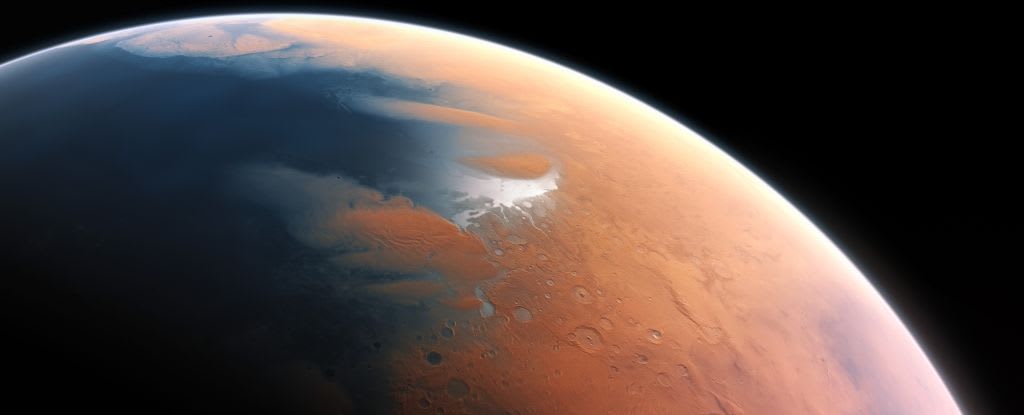
Ancient Beaches Found on Mars Reveal The Red Planet Once Had Oceans.
Recent discoveries have revolutionized our understanding of Mars revealing that the Red Planet was once home to vast oceans and sandy beaches. These findings challenge the long standing notion that Mars has always been an arid and lifeless world. Instead the evidence increasingly suggests that Mars once had a complex hydrological system complete with shorelines river deltas and possibly even an ocean large enough to influence its climate. The discovery of these ancient beaches not only reshapes our perception of Mars’ past but also raises exciting questions about its potential to have harbored life. A recent breakthrough in this field comes from China’s Zhurong rover which has been exploring the Utopia Planitia region since 2021. The rover part of China’s ambitious Tianwen 1 mission is equipped with ground penetrating radar that allows scientists to study the subsurface composition of the Martian terrain. Recent analyses of Zhurong’s radar data have uncovered geological structures that strongly resemble terrestrial beach sediments. These formations buried up to 35 meters beneath the surface provide compelling evidence that an ancient ocean once lapped against the Martian landscape.
The ocean in question which scientists have named Deuteronilus is estimated to have existed around 3.5 to 4 billion years ago. At that time Mars was a very different world with a much thicker atmosphere and conditions that could have supported liquid water for extended periods. The existence of such an ocean would have had profound implications for Mars’ early climate and its potential for life. If stable bodies of water persisted for long enough they could have created the perfect conditions for microbial organisms to emerge and thrive. Dr. Benjamin Cardenas a geologist from Pennsylvania State University has also been studying Martian landscapes to identify signs of ancient water activity. Using data from the Zhurong rover and orbital imagery Cardenas and his team have identified features resembling ancient river deltas and coastal deposits. These findings further reinforce the theory that a significant ocean once covered large portions of Mars’ northern hemisphere. The presence of river deltas suggests that Mars had a dynamic water cycle with rivers transporting sediments into the ocean just as they do on Earth.
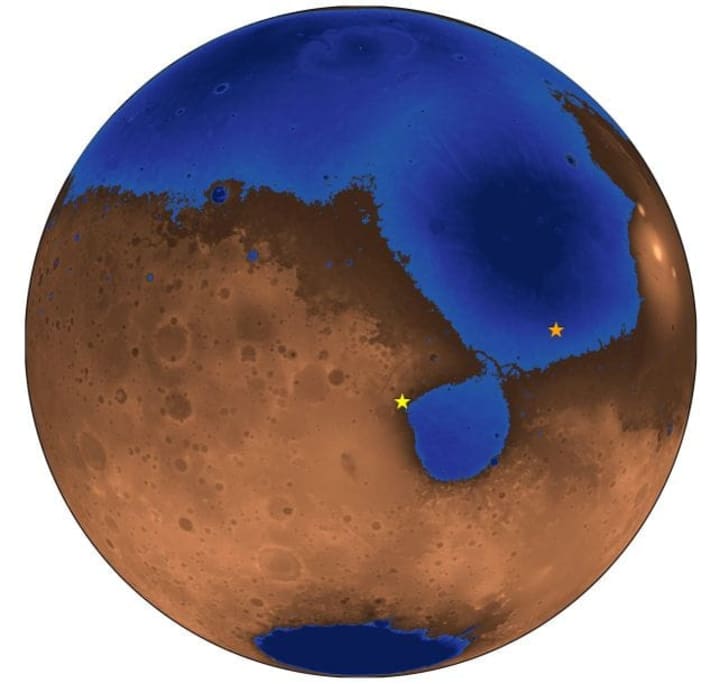
The implications of these findings extend beyond mere geological curiosity. If Mars had vast bodies of water in the past it raises the question of what happened to all that water. Scientists believe that a combination of factors led to the planet’s transformation into the barren world we see today. Mars lost its magnetic field billions of years ago which exposed its atmosphere to the relentless solar wind. Over time this caused most of the planet’s atmosphere to be stripped away leading to a dramatic drop in atmospheric pressure. With lower pressure, liquid water could no longer remain stable on the surface either freezing into underground reservoirs or escaping into space. Further supporting the notion of a wet Mars scientists have found evidence of water rich minerals in Martian meteorites. These rocks which originated from Mars and landed on Earth after being ejected by asteroid impacts contain chemical signatures that suggest they once interacted with liquid water. Some of these meteorites date back to a period when Mars was thought to be cold and dry indicating that water may have persisted on the planet for much longer than previously believed.
Another intriguing piece of evidence comes from observations made by NASA’s Curiosity rover which has been exploring Gale Crater since 2012. Curiosity has identified sedimentary structures that closely resemble those formed by water on Earth. These include ripple marks mud cracks and layers of sediment that suggest long term exposure to liquid water. Such findings reinforce the idea that Mars was not only wet in its distant past but that water persisted long enough to leave a lasting mark on its geological history. Despite this mounting evidence some questions remain unanswered. If Mars once had oceans and rivers did it also have life. So far no direct evidence of past or present life has been found but the discovery of ancient shorelines provides a promising avenue for future exploration. On Earth coastal environments are rich in life as they provide a stable and nutrient rich habitat. If Mars ever hosted microbial life these ancient beaches and deltas could be the best places to search for fossilized biosignatures.
NASA’s Perseverance rover which is currently exploring the Jezero Crater is specifically designed to search for signs of ancient life. Jezero was once home to a lake and river delta making it an ideal location to hunt for preserved organic molecules or microbial fossils. Future missions including those that will return samples to Earth may finally provide definitive answers about Mars’ biological potential. The recent discoveries of ancient beaches on Mars are not just about understanding the past they also have implications for future exploration and colonization. If significant amounts of water are still trapped beneath the surface future human missions to Mars could tap into these resources. Water is essential for sustaining life and can also be split into hydrogen and oxygen to produce fuel. Understanding the history and distribution of water on Mars is crucial for planning long term human presence on the planet. The detection of ancient beaches and coastal deposits on Mars marks a major milestone in our understanding of the planet’s history. The evidence gathered from both rover based and orbital observations, suggests that Mars was once a world with oceans river deltas and sandy shorelines. These findings not only challenge our previous assumptions about Mars’ climate but also open up new possibilities in the search for life beyond Earth. As exploration continues these ancient shorelines may hold the key to unraveling the mysteries of Mars’ past habitability and its potential for supporting life in the distant past.
About the Creator
Adnan Rasheed
Author & Creator | Writing News , Science Fiction, and Worldwide Update| Digital Product Designer | Sharing life-changing strategies for success.
Keep reading
More stories from Adnan Rasheed and writers in FYI and other communities.
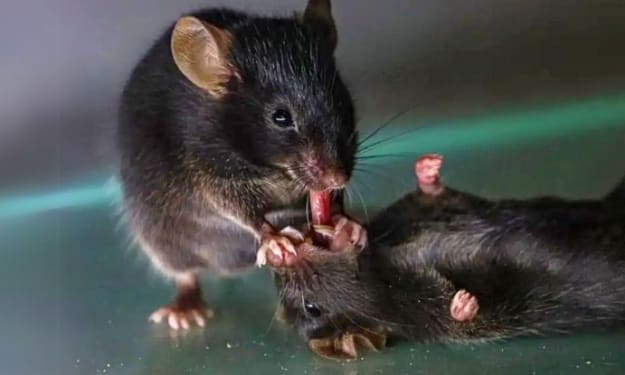
Incredible Discovery Shows Mice Trying to Revive Fallen Companions.
Incredible Discovery Shows Mice Trying to Revive Fallen Companions The animal kingdom continues to surprise us with its complexity revealing behaviors that challenge our perceptions of intelligence and social connection among non human species. A recent study by researchers at the University of Southern California USC has uncovered an astonishing discovery mice appear to perform a form of first aid on their unconscious companions. This finding adds to a growing body of evidence suggesting that empathy care and social responsibility are not exclusive to humans or large brained mammals like dolphins and elephants. Instead even small rodents often thought of as simple creatures driven purely by instinct may possess a remarkable capacity for aiding their peers in distress. The study led by USC neuroscientist Wenjian Sun observed mice displaying what could be described as paramedic like behavior when confronted with an unconscious companion. The researchers noticed that when a mouse was rendered immobile either anesthetized or otherwise unresponsive another mouse particularly if it was familiar with the unconscious individual would attempt to resuscitate it. The most striking behavior involved pulling on the unconscious mouse's tongue a technique that proved to be beneficial in opening the airway and speeding up recovery. While at first glance this behavior may seem crude compared to human first aid techniques the effect was undeniably significant. The mice that received assistance from their peers recovered much faster than those left alone. This discovery raises profound questions about the extent to which rodents are capable of recognizing distress in others and taking intentional actions to alleviate it.
By Adnan Rasheed11 months ago in FYI
Freezing the War, Not Ending It. Why Trump’s Russo-Ukraine Peace Deal Will Break Down
Wars don’t end just because someone in a suit decides they should. The war in Ukraine is nearing its fourth year, and while diplomacy is accelerating, the battlefield is unmoved. Missiles still strike cities. The front line still grinds forward inch by inch. The war keeps its own tempo, no matter how fast envoys fly between Mar-a-Lago, Moscow, Paris, and Kyiv with draft agreements in hand.
By Lawrence Lease4 days ago in FYI



Comments
There are no comments for this story
Be the first to respond and start the conversation.