
Eggs: What the Grades Mean
All eggs have the same nutritional value, but they do not all have the same quality.


Eggs are graded AA, A, or B depending on their shell, whites, yolks, and air cells. The grade is posted in big bold letters on the cartons to let consumers know the grade of the eggs they are buying.
People are probably aware that the US Department of Agriculture inspects and grades foods before they end up in the grocery stores. Foods are inspected, assessed, and graded based on quality, freshness, and market value.
Shoppers probably pay more attention to the USDA grade on meats than on other foods.
Eggs Have a Grade
Eggs are inspected and graded by their exterior appearance and their interior. If you are wondering how eggs are inspected on the inside, it is done by a method called candling, where each egg is held up to a very bright light. Candling allows egg graders to examine the interior of the egg, including the white, yolk, and air cells.
Even though all eggs have the same nutritional value, not all of them have the same quality. The eggs you purchase always have a grade in big bold letters on the carton. However, most people don't pay attention to it. That's because they are busy checking to see if the eggs are broken in the carton before they take them home.
The United States Department of Agriculture (USDA) has inspected every egg and given it a grade. No matter what grade an egg has, they all have the same nutritional value.
Pay attention to the next carton of eggs you buy and see that it will probably be Grade A because that's the most common grade for eggs, even though it is not the highest grade.
Grade AA Eggs
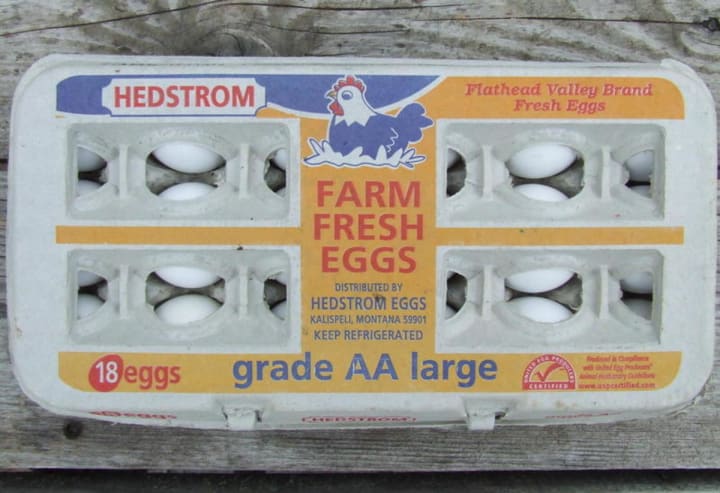
U.S. Grade AA eggs are almost perfect and the freshest. At least, they have the highest grade. That's because the whites are thick, firm, and the yolks are high, round, and almost free from defects. The shells are clean with no cracks.
There is hardly any air in Grade AA eggs. They have the smallest air cells of no more than 1/8 inch, while the other grades have bigger air cells.
Grade A Eggs
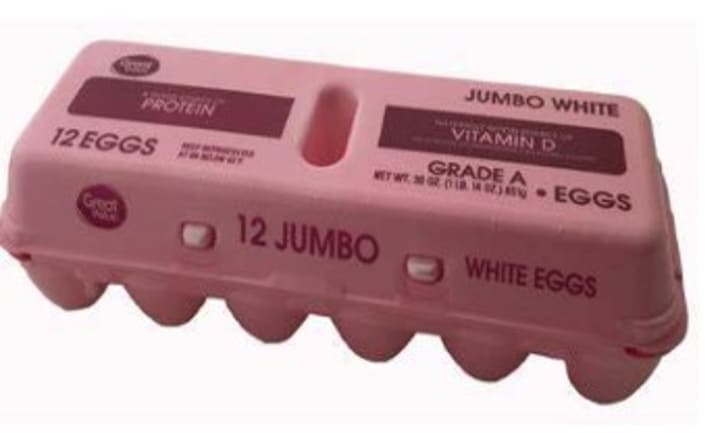
U.S. Grade A eggs are a grade lower than Grade AA eggs. The difference is so slight that they are the most popular that customers buy, but the interior is of a lower quality. This is the quality most often sold in stores.
Grade A eggs have characteristics of Grade AA eggs, except that the whites are reasonably firm. Grade A eggs have a clean and unbroken shell. The white is clear and not as thick as the top grade.
Grade B Eggs
U.S. Grade B eggs are noticeably different. They may have slight stains and be irregular in shape and size. The quality of the interior is further reduced with whites that may be thinner and yolks that may be wider and flatter than the two grades above them.
Grade B eggs are not sold in supermarkets, but are used commercially in powdered egg products or liquid eggs.
Grade C Eggs
Don't expect to find US Grade C eggs in the supermarket. This very low grade is used in the production of processed egg products.
They have a cracked or stained shell, flattened yolk, and watery whites. The USDA doesn't recommend those eggs to be sold to consumers as they are.
Summary
- Grade AA: the highest grade
- Grade A: commonly sold in grocery stores
- Grade B: the lowest grade; not sold in grocery stores; used commercially in powdered egg products and liquid eggs
- Grade C: low grade, not sold in grocery stores
About the Creator
Margaret Minnicks
Margaret Minnicks has a bachelor's degree in English. She is an ordained minister with two master's degrees in theology and Christian education. She has been an online writer for over 15 years. Thanks for reading and sending TIPS her way.
Keep reading
More stories from Margaret Minnicks and writers in FYI and other communities.
September 16 Is a Popular Date for Babies to Be Born
According to birth statistics and hospital records, more babies are born on September 16 than on any other day of the year. Harvard University published the results of its study in the New York Times, with the same conclusion as other studies based on research and data.
By Margaret Minnicks5 months ago in FYI
Center Stage with Paul Stewart
*** I'm keen to republish the interviews I did for my series with Vocal creators. It's been a few years and I thought it might be nice to revisit these wonderful conversations. I'll be releasing them one at a time for a few weeks/months.
By Heather Hubler5 days ago in Interview



Comments
There are no comments for this story
Be the first to respond and start the conversation.