
Does hair loss only bother humans? Whales: Who will save my thinning hair?
Whale: Who will save my sparse hair

In today's life, savvy businessmen have a firm grasp on two wealth codes. One is weight loss, and the other is the treatment of hair loss.
Inevitably hair loss is a problem that is coming earlier and earlier. Where once hair loss was the exclusive preserve of the middle-aged and elderly, now students in their prime are also facing the plight of hair loss.
The pressure of life and work makes our generation, touching the back of the head hand brought down three or four hairs, the hairline moved back and the area of bare skin on the top of the head is getting bigger and bigger. We are at our wit's end with all the treatments to the top of the head and finally had to step into the door of the hair transplant hospital.
I can't help but ask: Is hair loss a problem only for humans?
Does hair loss belong to human beings only?
First of all, we need to redefine hair loss because most mammals, except humans, have hair all over their bodies, so hair loss here refers to hair all over the body.
But unfortunately, almost all animals can not escape the clutches of hair loss, even the whales and dolphins of the marine world can also lose their hair.
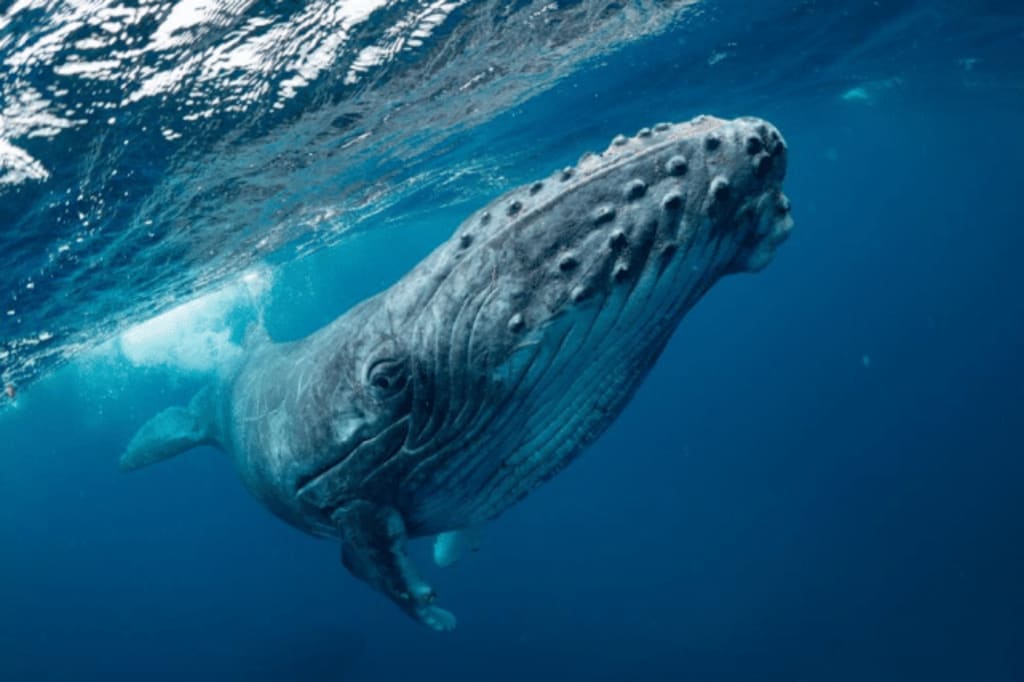
Many people wonder how whales can have hair when they are so smooth. Of all the cetaceans, the humpback whale has the most obvious hair follicles. Although we can't see them up close, it's not hard to see the golf ball-like hair follicles on the surface of the whale's skin, and this feature is the best way to identify humpback whales.
The hair follicles on the head of an adult humpback whale are also called nodules, and these nodules are connected to a large network of nerves in the brain. More than a hundred nodules have hairs regularly attached to them, which means that a whale has about a hundred hairs.
The reason why humpback whales retain such visible, and possibly increased resistance, hairs may be that these hairs provide a function similar to human sweat hairs, giving it a lucid perception.
Back to the issue of hair loss!
Much of the hair loss in the animal world is genetic, such as in the human "relative", the short-tailed macaque, and neither males nor females are immune to genetic hair loss.
The life expectancy of a short-tailed macaque is only about 30 years. At the age of 5, the macaque will show signs of hair loss on the top of its head, and by the age of 7, the bare skin on the top of its head will be close to one-half, which translates into a human age of about 25-30 years, a span from youth to middle age. So not only human beings will panic about the age of standing, but animals also have to fight the mid-life crisis.
This genetic hair loss is also the leading cause of hair loss in humans, and it shows similarities to short-tailed macaques.
For example, female short-tailed macaques are more likely than usual to experience hair loss during pregnancy because of elevated levels of progesterone in their bodies, a phenomenon that can also occur in humans during pregnancy.
This characteristic of hair loss in short-tailed macaques can make them "miserable". Scientists often experiment on short-tailed macaques to treat human hair loss or baldness, using various methods to make the hair on their heads glow again.
Of course, short-tailed macaques are not the only ones who are "bald", at least the rhesus monkeys are as well.
But not all primates face a "mid-life crisis"; there are some animals that are born bald. The kind that grew up bald, and growing out their hair may become their mid-life crisis.
Reasons for shedding hair: Survival
In addition to mammals, birds shed hair is also very common, most of the time the former is called hair replacement, and the latter is called feathering. But no matter what animal, the process of shedding hair will cause a skyrocketing conversion of appearance.
Although the composition of human hair is very strange, only a few places remain (such as hair, armpit hair, private hair, etc.), but in the naked eye, visible places (hair) are slightly changed, and the face is also a radical change.
Although the hair of all animals determines their appearance, their hair removal is not in pursuit of good looks, but for survival.
For example, friends who have pets at home are faced with scenes of animal hair flying all over the place. Seasonal hair change is the reason why most animals change their hair. Birds grow rich feathers to withstand the cold, and in the spring they change into a light summer feathers.
In addition, there are various reasons to change feathers, for example, to compensate for the loss of feathers, to change feathers during growth and development, to change feathers for courtship, to avoid natural enemies to better camouflage and protect themselves, and to change feathers for migration.
Although, humans will learn to use external objects such as fire, and clothing to keep warm, and then lose heavy body hair transformed into a standing hair muscle, the essence of the reason for our hair loss can not be separated from survival.
Our sparse and subtle body hair, and does not occur seasonal change, except for some special areas - is that that dense hair, these hairs will be thinning and dense changes with the hot and cold changes.
It's just that each hair has a different "lifespan", so it doesn't all fall out at the same time.
Simply put, human hair loss is normal and necessary for survival!
However, we may not be able to help but ask "a good head, how to say bald and bald".
The life span of human hair is generally 2-6 years, 50-100 hair loss per day is within the normal range, no need to worry, metabolism will let the hair grow again, the overall dynamic balance, maintain the normal number.
"Baldness" is because this hair loss is pathological, often occurring in men and IT professionals.
Finally
As the saying goes, it is not a day's cold to freeze three feet, the most important thing to solve pathological hair loss is to return to a "normal" diet, work, work, and rest, and to treat and regulate with a long-term mentality.
About the Creator
Aliser
be happy every day



Comments
There are no comments for this story
Be the first to respond and start the conversation.