

Introduction
A data warehouse is a structured database that stores an organization’s historical business data. A data warehouse is often used to make business decisions and analyze trends over time. It differs from other kinds of databases because it is designed specifically for analysis and reporting, with the goal of supporting decision-making rather than transaction processing. Data warehouses are often used in conjunction with other tools such as OLAP cubes or data marts that provide more focused views on specific subsets of information within the warehouse itself. This guide will explain what a data warehouse is and how it differs from other types of storage systems like data lakes, which are often associated with AI applications due to their ability to analyze massive amounts of unstructured data at once—but only if you know where to look!
What is a Data Warehouse?
A data warehouse is a centralized system used to store and analyze large amounts of business data. Data warehouses are often constructed using relational database management systems (RDBMS), which makes them particularly useful for analyzing structured data.
Data warehouses are designed to be highly reliable, especially when it comes to storage and redundancy. Data warehouses typically consist of multiple layers of security, including firewalls, intrusion detection systems and other tools that monitor activity within the environment. They also have powerful backup capabilities in case any part of the system fails or has problems with its integrity; this ensures that no data is lost during downtime or maintenance periods
What is a Data Lake?
A data lake is a storage repository that stores raw data. It does not have any specific design, and users can access it through tools such as a data mart or data warehouse. The main difference between a data lake and other storage repositories is its purpose: A data lake stores raw and unstructured information, whereas other storage repositories store structured datasets that are easy to query with existing tools.
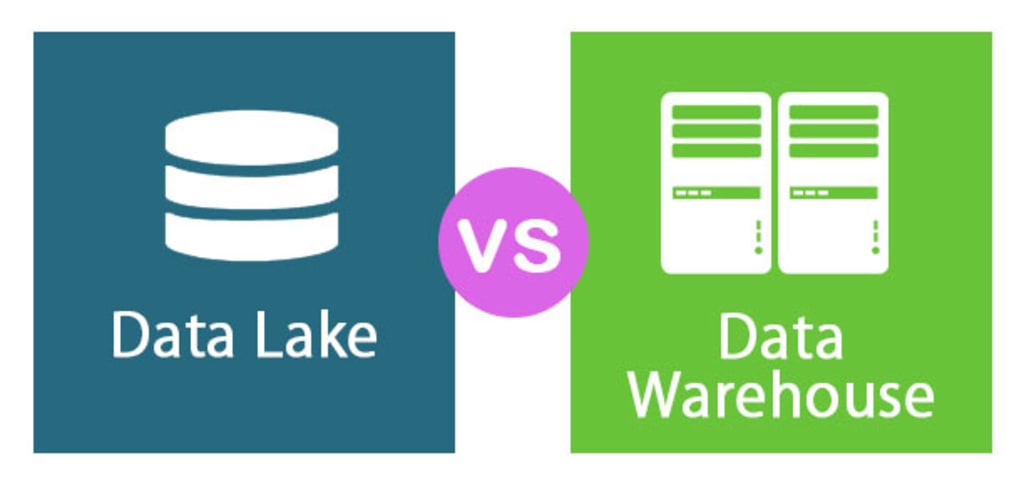
Main differences between a data warehouse and a data lake.
A data warehouse is designed to answer specific questions. Data warehouses are built for a specific purpose and type of analysis, with the goal of answering a question or providing insight into a set of data. Data lakes, on the other hand, store any type of data in an unstructured format (typically JSON) so you have access to all your raw data regardless if it's related or not. They're meant to be used as repositories where algorithms can analyze different types of information together in order to get useful insights out of them.
While both tools provide value to organizations by storing large amounts of information in one place, they serve different purposes:
- A data warehouse is designed to answer specific questions, while a data lake serves as a storage place for all the raw data, where it can be accessed by other tools like a data mart or a data warehouse.
- A data warehouse is designed to answer specific questions. It is a relational database that stores all the raw data from various sources, such as a CRM system or an ERP system. A data warehouse can be accessed by other tools like a data mart or a data warehouse itself.
- A data lake stores all raw information coming from various sources in its native format, without any type of processing or transformation whatsoever. This means that you cannot query it with SQL statements but must use other tools such as Hive, SparkSQL, Presto, etc., which are optimized for operations on unstructured datasets (e.g., BigQuery).
A data warehouse is a storage place for all your business data. It contains information collected from different sources, such as customer transactions, surveys and so on. It helps decision makers to make better decisions based on facts rather than assumptions or guesses.
The main difference between a data warehouse and a data lake is that the former is designed to answer specific questions while the latter serves as a storage place for all raw data where it can be accessed by other tools like Data Marts or Data Warehouse.
About the Creator
Outside Lands 2026: Music, Memory, and Magic
There is something different about a festival held in a park surrounded by fog. The air feels softer. The sound carries in a strange, beautiful way. Strangers stand shoulder to shoulder, waiting for a song that might stay with them for years. Outside Lands 2026 is already stirring that quiet excitement. Even before the lineup is announced, people are talking about outfits, travel plans, and who they want to see on stage. It is not just another music festival. It is a yearly ritual for thousands who return to Golden Gate Park for three days of sound, food, and shared emotion. Outside Lands 2026 promises more than performances. It promises moments.
By Muqadas khan5 days ago in FYI


Comments (1)
Thanks for describing the difference in concepts of Data Warehouse Vs Data Lake. There is often confusion between these terms. Sometimes they are even used interchangeably. But the differences come down to purpose, structure, data types, data origin and data access rights. https://www.cleveroad.com/blog/enterprise-data-warehouse/