
Cracking The Code Of Life: The Fascinating Story Of DNA
Inside every cell lies the ultimate blueprint of life, how DNA shapes you who you are?
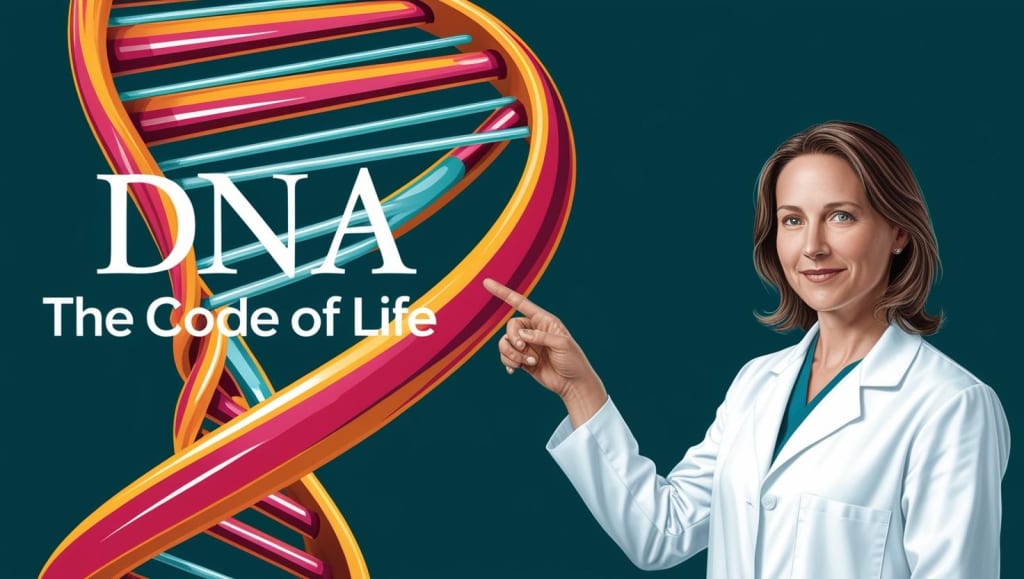
What Is DNA, Really?
DNA—short for deoxyribonucleic acid—is the biological instruction manual that tells living organisms how to grow, function, and reproduce. Think of it as the software that runs your entire body.
Made from just four basic chemical building blocks—adenine (A), thymine (T), cytosine (C), and guanine (G)—DNA strands pair up in a very specific way (A always pairs with T, C with G) and twist into the iconic double helix shape. This twisting ladder holds all the instructions needed to create and maintain life.
Amazingly, the complete DNA code for a human being—known as the human genome—consists of over 3 billion base pairs. If you typed out just one letter per second, nonstop, it would take over 95 years to finish. And yet, this incredibly complex information is packed into the nucleus of nearly every cell in your body.
DNA: Nature’s Private Detective
Aside from building our bodies, DNA has become a powerful tool in modern science. Forensic experts use it to solve crimes by matching samples found at a scene—hair, skin cells, or blood—to a suspect. It’s like leaving behind a microscopic signature that can’t be faked or erased.
But DNA isn’t just for detectives and lab coats. You might have taken a DNA ancestry test yourself. These kits can tell you where your ancestors came from, trace genetic traits, and even identify distant cousins you never knew existed.
What’s more, DNA can give us clues about how our bodies process food, respond to medications, or react to certain exercises. It’s not just about knowing who you were—it’s about understanding who you are right now.
The Genetic Revolution Has Begun
In 2003, scientists completed the Human Genome Project, a 13-year effort to map every gene in the human body. It was one of the most ambitious scientific undertakings of the modern age, and it unlocked an entirely new era of medicine and biology.
Today, we’re witnessing the rise of gene editing technologies, the most famous of which is CRISPR. This tool acts like molecular scissors, allowing scientists to cut, modify, or even replace specific parts of DNA with pinpoint accuracy. The potential is staggering—from correcting inherited genetic disorders to making crops more resilient against disease and climate change.
But with this power comes a wave of ethical questions. Should we edit the genes of unborn babies to make them stronger or smarter? Could tampering with human DNA affect future generations in ways we can’t predict? Where should society draw the line between healing and enhancement?
As science races forward, philosophers, lawmakers, and citizens must ask themselves: just because we can do something, does it mean we should?
DNA and Everyday Life: More Connected Than You Think
Even if you’ve never stepped foot in a laboratory, DNA technology is influencing your daily life.
Health care: Genetic testing is now used to screen for risks of diseases like cancer, heart conditions, and rare genetic disorders. Doctors can personalize treatments based on your genetic makeup, improving outcomes and reducing side effects.
Nutrition and fitness: Ever wondered why certain diets work for some people but not others? DNA plays a role. Some companies now offer genetic reports that help you choose the best foods and workouts for your body.
Agriculture and environment: Genetically modified crops are engineered to withstand pests, require less water, and grow in harsh climates. Scientists are also studying how to use DNA to clean up oil spills or restore endangered species.
Paternity and identity: DNA testing can confirm parentage, reunite adopted children with birth families, and even help solve cold cases from decades past.
In short, DNA is no longer just a scientific concept—it’s a part of the fabric of modern life.
You: A Walking Genetic Masterpiece
Here’s the most awe-inspiring part: you are one of a kind.
Even though humans share about 99.9% of their DNA, that tiny 0.1% variation is what makes you you—your eye color, your voice, your quirks, and talents. Your DNA is a personalized recipe shaped by millions of years of evolution and passed down through thousands of ancestors.
And while we often search for meaning in the stars, it's humbling to realize that a full universe of information is already coded inside us.
So the next time you look in the mirror, take a moment to appreciate the marvel of biology and history that made you possible. You are a living, breathing result of nature’s most elegant design—and your DNA is the script that tells your story.
About the Creator
Majid
passionate writer to inspire readers
Freezing the War, Not Ending It. Why Trump’s Russo-Ukraine Peace Deal Will Break Down
Wars don’t end just because someone in a suit decides they should. The war in Ukraine is nearing its fourth year, and while diplomacy is accelerating, the battlefield is unmoved. Missiles still strike cities. The front line still grinds forward inch by inch. The war keeps its own tempo, no matter how fast envoys fly between Mar-a-Lago, Moscow, Paris, and Kyiv with draft agreements in hand.
By Lawrence Lease5 days ago in FYI



Comments
There are no comments for this story
Be the first to respond and start the conversation.