
Islam is Peace: Uncovering the Message Behind the misunderstood Faith
Despite the global misconception, Islam is rooted in compassion, justice and a deep call for peace
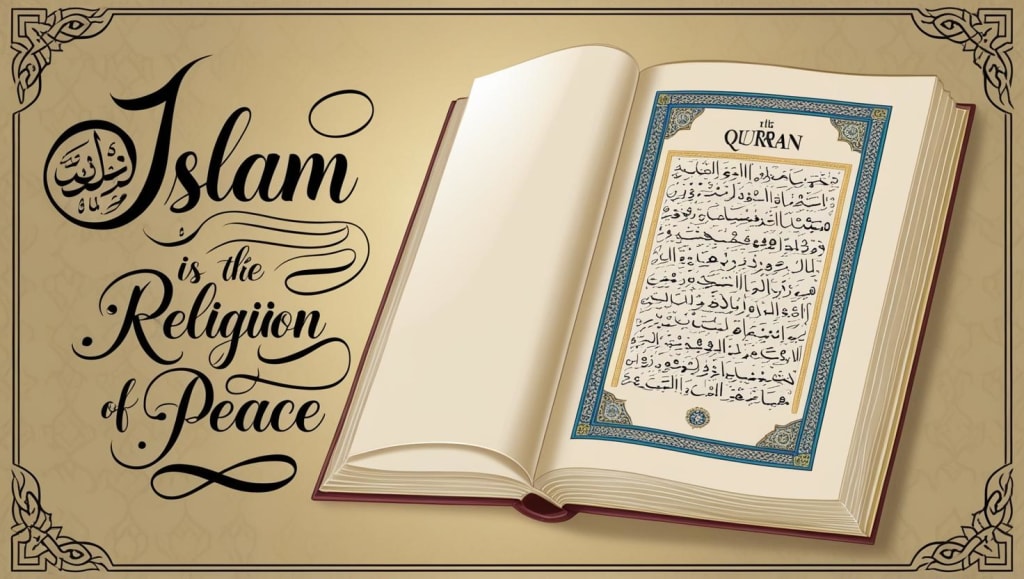
If you ask ten people what comes to mind when they hear the word “Islam,” you’ll likely get ten different answers. Some may speak of spirituality, others of culture, and—unfortunately—some may mention conflict or extremism. But here's a truth that often gets buried beneath the weight of media headlines and political rhetoric: the very word Islam comes from the Arabic root word Salaam, which means peace.
Yes, peace. Not war. Not hate. Not violence. Just peace.
I grew up hearing As-salamu alaykum every single day—“Peace be upon you.” It wasn’t just a greeting, it was a promise. A declaration that you were safe from harm—from my tongue, my hands, and my heart. Islam teaches that peace begins within the soul and extends outward, shaping how we treat our families, neighbors, communities, and even those who disagree with us.
But somewhere along the way, that message has been distorted. Misrepresented. Lost.
The Peace That Begins With God
Before diving into the teachings of Islam, let’s look at the opening lines of the Qur’an—the most recited words in a Muslim’s life:
Bismillah-ir-Rahman-ir-Raheem
“In the name of God, the Most Gracious, the Most Merciful.”
Before rules. Before stories. Before anything—God introduces Himself with mercy. Not wrath, not vengeance—mercy. In fact, two of God’s most repeated names in the Qur’an are Ar-Rahman and Ar-Raheem—both rooted in deep compassion.
So when someone claims Islam promotes hatred or violence, I wonder if they’ve ever opened the book. Because the Qur’an doesn’t glorify war—it regulates it. It doesn’t call for vengeance—it commands forgiveness. And perhaps most powerfully, it says:
“Whoever kills a person [unjustly]... it is as if he has killed all mankind. And whoever saves a life, it is as if he has saved all mankind.”
(Qur’an 5:32)
That’s not a footnote. That’s the essence.
The Prophet Who Chose Peace
Prophet Muhammad (peace be upon him), the final messenger in Islam, lived a life full of hardship, but responded with peace. He was mocked, beaten, boycotted, and driven from his home. Yet when he returned to Mecca years later—victorious, powerful, and surrounded by followers—he didn’t seek revenge.
He forgave his enemies. He declared amnesty. He didn’t burn homes or imprison his oppressors. He said:
“Go. You are free.”
That act, deeply personal and profound, offers a glimpse into the real spirit of Islam: mercy, humility, and healing.
So Why the Violence?
Let’s not sugarcoat reality—yes, there are people who commit acts of violence in the name of Islam. But let’s be honest: there are violent people in every religion, every race, every ideology. No faith, no group, no nation is immune to extremism.
What gets lost in mainstream discourse is the distinction between Islam and some Muslims. The faith isn’t what a few misguided individuals do in its name. Islam, like any other major world religion, must be judged by its core texts and the actions of its true representatives—not the outliers.
Unfortunately, acts of peace don’t make headlines. A Muslim woman feeding the homeless. A mosque sheltering hurricane victims. A scholar spending his life studying the ethics of war and peace in Islam. These stories are real—but they’re rarely told.
Peace Isn’t Passive
Islamic peace isn’t about staying silent in the face of injustice. It’s about standing up for truth without resorting to hate. It’s about balance—between justice and mercy, strength and restraint.
The Qur’an urges Muslims to speak out against oppression, but also commands them to make peace whenever it’s possible.
“If they incline to peace, then incline to it [also]...” (Qur’an 8:61)
Islam encourages engagement, not isolation. Dialogue, not division. It welcomes coexistence and honors the dignity of every human soul.
A Faith That Welcomes Diversity
What many don’t realize is that the Qur’an openly acknowledges the diversity of humanity—including religious diversity.
“There is no compulsion in religion.” (Qur’an 2:256)
“To you your religion, and to me mine.” (Qur’an 109:6)
This isn’t just tolerance—it’s acceptance. Muslims are not called to force faith on anyone. Instead, they’re urged to live with dignity, offer kindness, and invite others to truth with wisdom and compassion.
Why I Wrote This
I wrote this not to preach, but to present a side of Islam many never get to see. I’m not a scholar, but I am a witness—to the peace my faith gives me every day. To the calm that comes with prayer. To the power of community, charity, and purpose.
In a world buzzing with division, it’s easy to forget that Islam—at its heart—is an invitation to peace. Peace with God. Peace with people. Peace with yourself.
So the next time you hear about Islam in a headline, I hope you remember this:
Islam doesn’t just mean peace. It is peace.
About the Creator
Majid
passionate writer to inspire readers
Proven Strategies For Overcoming Awkward Conversations During Early Dating Experiences
It is a fact of life that during early dating, there are some awkward situations. They can usually be caused by nervousness, lack of familiarity or poor handing over of the message. The understanding that some discomfort is normal will make it easier to take the pressure and self-growth out of conversations.
By Willian James3 days ago in Humans




Comments
There are no comments for this story
Be the first to respond and start the conversation.