
Climbing Mount Fuji: The Importance of Respect and Manners
Why respecting Japan’s sacred peak matters more than ever

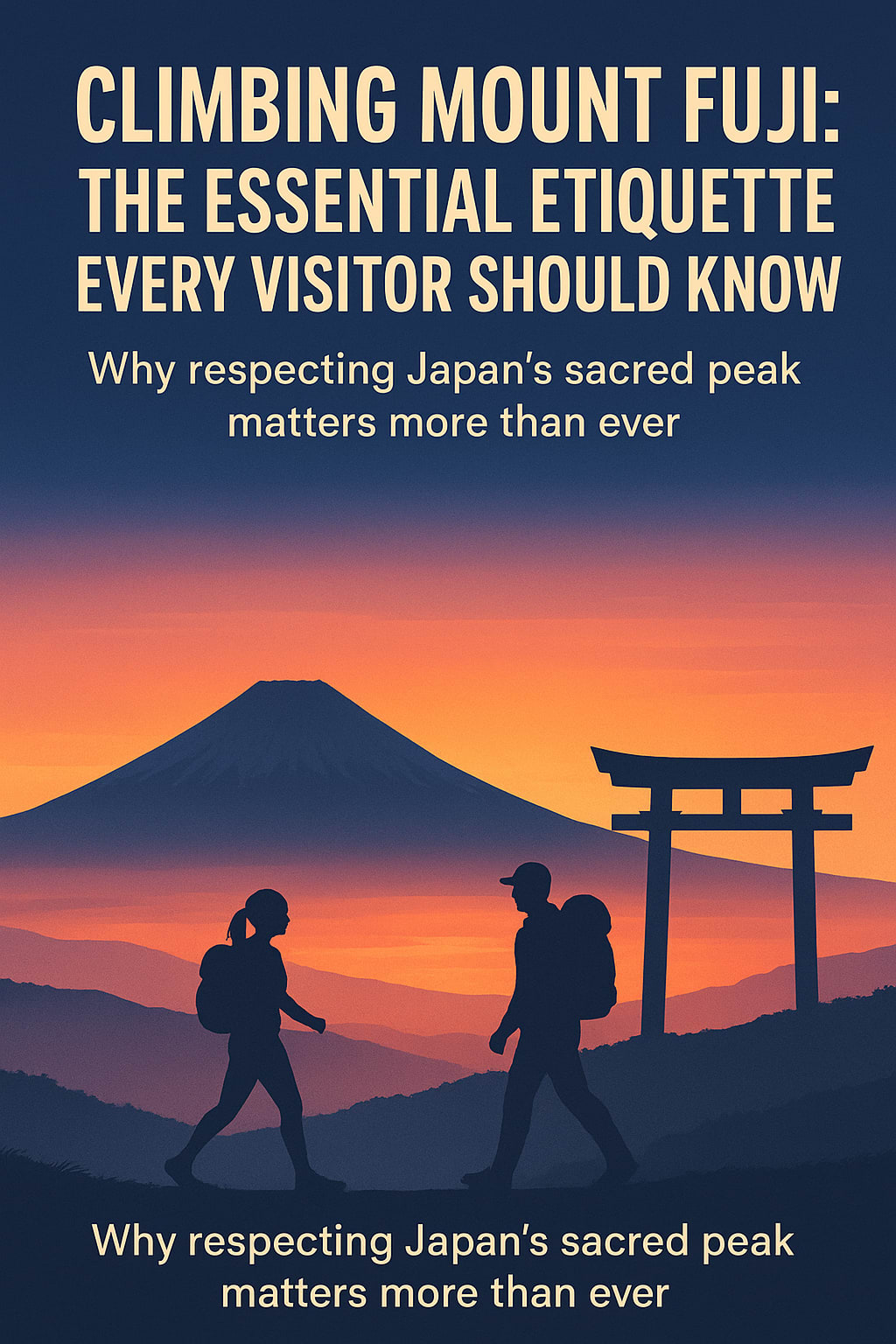
Mount Fuji, Japan’s most iconic peak, has always inspired awe. Its nearly perfect cone, often crowned with snow, has drawn travelers, poets, and pilgrims for centuries. But in recent years, Fuji’s popularity has surged—so much so that the mountain now faces overtourism challenges. News outlets in Japan frequently report issues caused by visitors, from overcrowded trails to improper behavior at sacred sites.
For those planning to climb Fuji, understanding the proper etiquette is not just about following rules—it’s about showing respect for a mountain that holds deep cultural and spiritual meaning for the Japanese people. Here are some of the most important manners and practices to keep in mind.
⸻
1. Respect the Sacredness of the Mountain
Mount Fuji is not only a natural wonder but also a sacred site in Japanese culture. Shinto shrines and Buddhist relics can be found along the climbing routes. Treat these areas with reverence—avoid loud behavior, and never litter near shrines or monuments.
⸻
2. Stay on the Trails
The trails leading up Fuji were designed to manage both safety and environmental impact. Cutting across off-path areas damages the fragile alpine ecosystem. Stick to marked routes to protect the mountain’s natural balance.
⸻
3. Carry Out All Trash
Unlike many hiking spots abroad, Japan’s mountains often do not provide trash bins. The principle is simple: pack in, pack out. Bring a bag to carry your garbage, from plastic wrappers to empty water bottles. Leaving waste behind is one of the most common complaints in recent Fuji news coverage.
⸻
4. Prepare Properly—Physically and Mentally
Every year, climbers underestimate Fuji’s difficulty. Although it is a popular climb, it is still a 3,776-meter mountain where altitude sickness, sudden weather changes, and exhaustion are real risks. Coming prepared with proper gear, water, food, and layered clothing is part of showing respect—for yourself, and for others who may have to help if you get into trouble.
⸻
5. Overnight Stays and Noise Control
Many climbers attempt the “bullet climb”—going up at night to catch the sunrise without resting. Authorities strongly discourage this. Overcrowding and exhaustion from bullet climbing have led to serious accidents. Staying at a mountain hut not only supports local workers but also helps maintain order. When you rest, keep noise levels low; many others are also preparing for an early morning ascent.
⸻
6. Respect Other Climbers
Mount Fuji is a shared experience. Be courteous: don’t block narrow paths for long photo sessions, allow faster climbers to pass, and use polite greetings such as a simple “konnichiwa” to foster a friendly atmosphere.
⸻
7. Support Local Efforts
In 2024, Japan introduced new rules, including climbing fees for certain routes, to manage overtourism. These funds go toward trail maintenance, safety, and environmental protection. Paying these fees is a direct way to contribute to preserving Fuji for future generations.
⸻
A Shared Responsibility
Climbing Mount Fuji is a dream for many, but it comes with responsibility. By following proper etiquette, visitors help protect both the environment and the cultural significance of Japan’s most famous mountain. The goal is simple: leave Fuji as beautiful and sacred as you found it—so that future climbers can experience the same awe.
About the Creator
Takashi Nagaya
I want everyone to know about Japanese culture, history, food, anime, manga, etc.
Keep reading
More stories from Takashi Nagaya and writers in FYI and other communities.
🔥 The Healing Heat of Japanese Saunas: Discovering Japan’s Sauna Culture in Osaka
Japan’s sauna culture is more than a health trend—it’s a spiritual journey. While most visitors associate Japan with sushi, shrines, and Shinkansen, there’s another side of modern Japanese life that deserves attention: the art of “totonou”—achieving a euphoric state through sauna.
By Takashi Nagaya6 months ago in FYI
Indonesia Furniture Market: Housing Demand, Design Trends, and Manufacturing Expansion
According to IMARC Group’s latest research publication, the Indonesia furniture market size reached USD 9.1 Billion in 2025. Looking forward, the market is expected to reach USD 15.2 Billion by 2034, exhibiting a compound annual growth rate (CAGR) of 5.82% during 2026–2034.
By Abhishek Rastogi6 days ago in FYI



Comments
There are no comments for this story
Be the first to respond and start the conversation.