

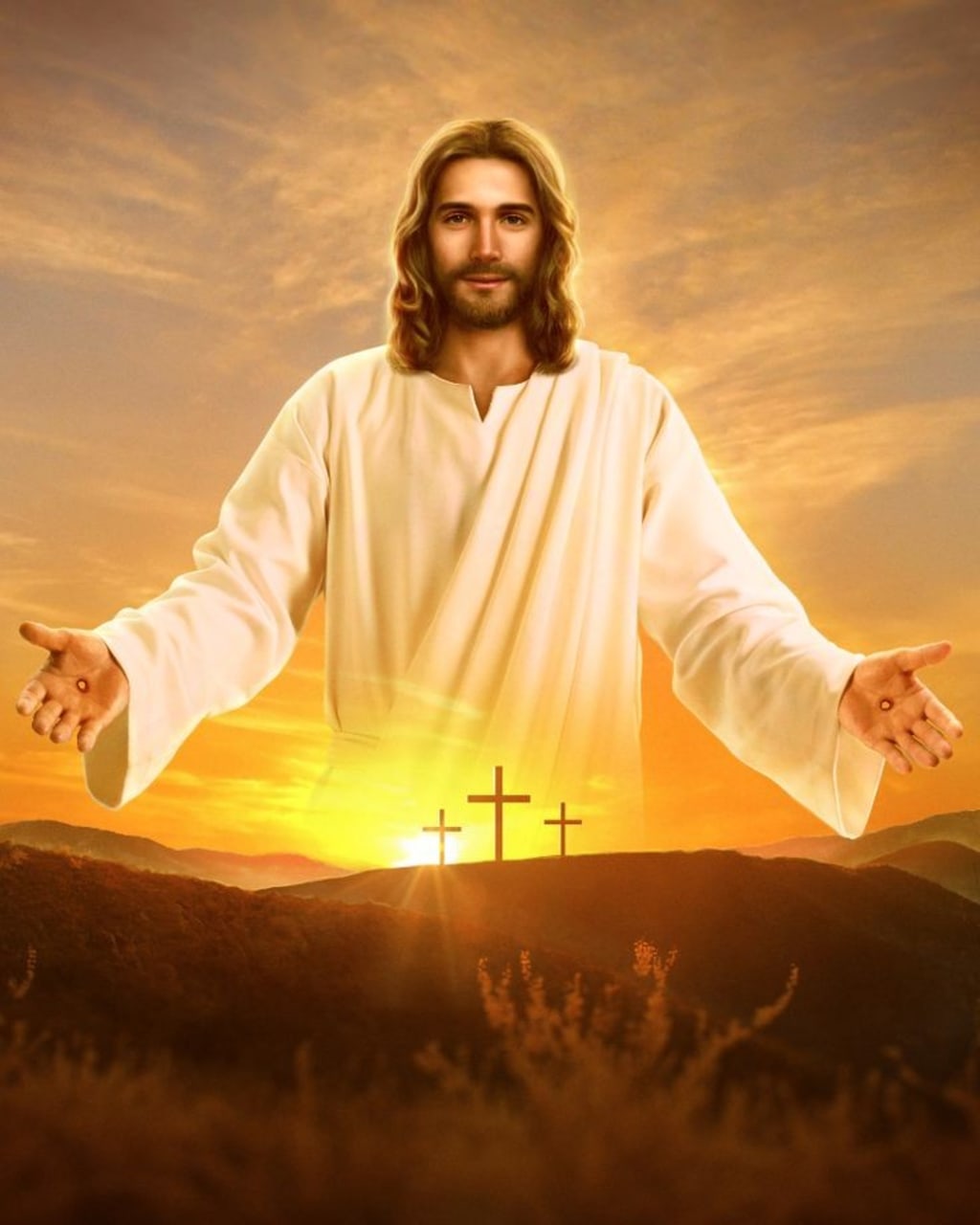
**Christianity: History, Beliefs, and Influence**
**I. Introduction**
Christianity, also known as the Christian faith or Christendom, is the world's largest religion, with over 2 billion adherents. It originated in the Middle East in the 1st century AD, based on the life and teachings of Jesus Christ. Over the centuries, Christianity has evolved and become a cornerstone of cultural, social, and political life in many nations.
**II. History of Christianity**
1. **Origins and Birth**
Christianity arose from Judaism, an ancient monotheistic religion. Jesus, regarded as the Messiah in Christianity, was born in Bethlehem around 4 BC. According to Christian belief, after his crucifixion and resurrection, his disciples began to spread his teachings, forming the first Christian communities.
2. **Early Development**
The apostles, particularly Saint Paul, played a crucial role in spreading Christianity beyond Jewish territories. They traveled throughout the Mediterranean region, establishing churches and writing letters that explained Christian doctrines. By the third century, Christianity had spread throughout the Roman Empire.
3. **Catholicism and Orthodoxy**
In 313 AD, Emperor Constantine I issued the Edict of Milan, recognizing Christianity as a legal religion, and later, it became the state religion of the Roman Empire. However, cultural, linguistic, and theological differences led to the Great Schism of 1054, resulting in two main branches: Roman Catholicism and Eastern Orthodoxy.
4. **Protestant Reformation**
In the 16th century, the Protestant Reformation, initiated by Martin Luther, created several other branches of Christianity. Luther protested against certain doctrines and practices of the Catholic Church, leading to the formation of Protestant denominations such as Lutheranism, Calvinism, and Anabaptism.
**III. Beliefs and Doctrines**
1. **Core Beliefs**
Christianity is based on the belief in the Holy Trinity: God the Father, God the Son (Jesus Christ), and God the Holy Spirit. Christians believe that Jesus is the Savior who died to redeem humanity from sin and was resurrected to offer eternal life to those who believe in him.
2. **The Bible**
The Bible is the foundation of Christianity, consisting of the Old Testament and the New Testament. The Old Testament includes the history, laws, and prophecies of the Jewish people. The New Testament records the life and teachings of Jesus, as well as the letters of the apostles and the Book of Revelation.
3. **Sacraments**
Sacraments are important sacred rituals in Christianity. The Roman Catholic and Eastern Orthodox Churches recognize seven sacraments: Baptism, Confirmation, Eucharist, Reconciliation, Anointing of the Sick, Holy Orders, and Matrimony. In contrast, most Protestant denominations typically recognize two sacraments: Baptism and Eucharist.
**IV. Organization and Structure**
1. **Roman Catholic Church**
The Roman Catholic Church has a hierarchical structure, with the Pope as its leader, currently Pope Francis. The Pope is the spiritual leader of over one billion Catholics worldwide. Below the Pope are cardinals, bishops, and priests.
2. **Eastern Orthodox Church**
The Eastern Orthodox Church has a decentralized structure, with self-governing churches such as the Greek Orthodox Church, Russian Orthodox Church, and others. Each church is led by a patriarch or archbishop.
3. **Protestantism**
Protestant denominations often have more flexible organizational structures. Some denominations have episcopal systems, while others are organized as congregational or presbyterian, led by pastors and church councils.
**V. Influence of Christianity**
1. **Culture**
Christianity has deeply influenced art, music, literature, and architecture. Iconic structures such as Notre Dame Cathedral, St. Peter's Basilica in Vatican City, and the works of Leonardo da Vinci and Michelangelo are significant in Christian history.
2. **Education**
Christianity has played a crucial role in the development of the education system in Europe. Prestigious universities such as Oxford, Cambridge, and Harvard originated from Christian educational institutions.
3. **Society**
Christianity has contributed to shaping social values such as human rights, equality, and charity. Christian charitable organizations and hospitals have helped millions of people worldwide.
**VI. Challenges and Opportunities**
1. **Challenges**
Christianity faces numerous challenges, including declining membership in Western countries, sexual abuse scandals within the Catholic Church, and the rise of secularism and other religions.
2. **Opportunities**
Despite these challenges, Christianity has many opportunities for growth. The increase in believers in developing countries, along with innovative approaches to outreach and evangelism, can help Christianity continue to thrive.
**VII. Conclusion**
Christianity has played and continues to play a significant role in human history. From a small group of followers in the Middle East, it has spread worldwide and profoundly influenced many aspects of human life. Despite facing many challenges, Christianity remains a powerful force in shaping global culture and society.
About the Creator
A Failed Artist, A Disillusioned Poet, An Underpaid Game Show Host
I took my son and niece to Gori, a small town in Georgia where Joseph Stalin was born. They talked me into visiting the Stalin's Museum, the largest in the post-Soviet space. I had resisted going there because I just can't stand the monster and know enough about him, or so I thought.
By Lana V Lynx18 days ago in FYI
The Fall of the Iranian Regime Will Destroy Russia
A lot has been happening in the world of geopolitics lately. We’re not even three weeks into 2026, and we’ve already seen wars, bombings, regime changes, capitulations, and escalating unrest across multiple regions. The year has opened at full throttle, and one of the next countries that appears to be teetering on the edge is Iran.
By Lawrence Lease6 days ago in FYI


Comments (1)
Perfectly crafted