
Blueprint to Fight Rising Antimicrobial Resistance Crisis in Africa Unveiled
African countries could play a pivotal role in the global fight against antimicrobial resistance
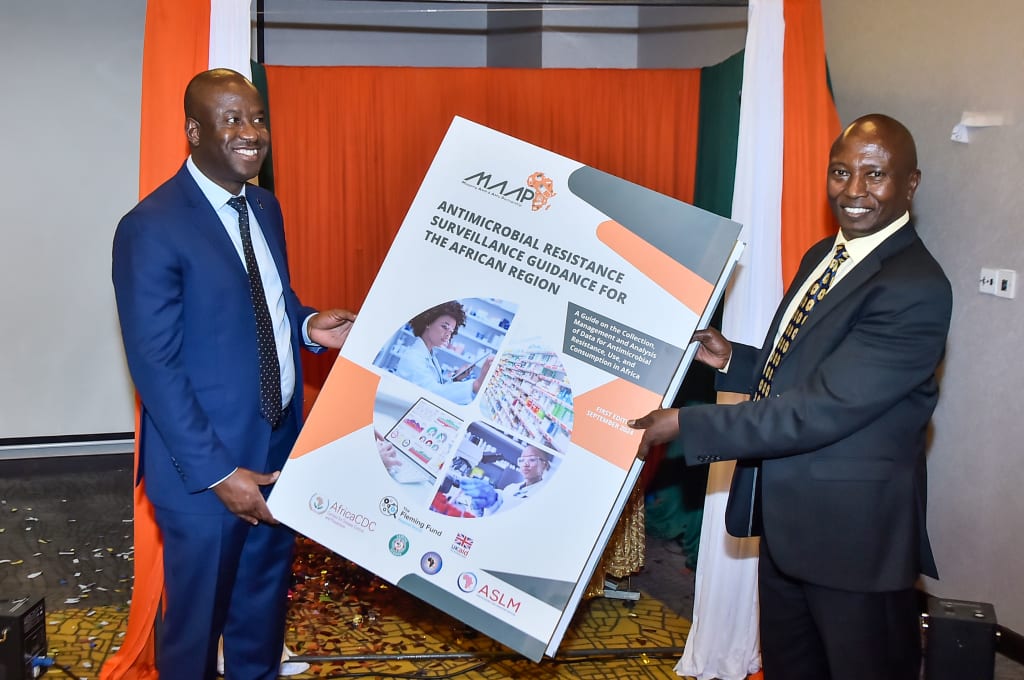
A new initiative aimed at enhancing the collection, management, and analysis of data on antibiotic use and resistance in 14 African countries has been launched, marking a critical step in the fight against antimicrobial resistance (AMR).
This effort is part of a broader strategy to address AMR, a rapidly growing public health threat that contributes to millions of deaths annually while placing increasing pressure on healthcare systems and economies, particularly in vulnerable regions like Africa.
AMR occurs when bacteria, viruses, fungi, and parasites develop resistance to the medications designed to eliminate them, making infections harder to treat. In Africa, AMR presents a particularly complex challenge, given the high burden of infectious diseases like malaria, tuberculosis, and HIV, which already strain public health systems. The rise of drug-resistant infections exacerbates these issues, potentially reversing decades of progress made in controlling infectious diseases.
The African Antimicrobial Resistance Surveillance Blueprint, spearheaded by the Africa Centers for Disease Control and Prevention (Africa CDC) and the African Society for Laboratory Medicine (ASLM), provides a unified framework for standardizing data collection and analysis across the continent.
The blueprint is designed to strengthen national and regional capacities to monitor antibiotic use and resistance patterns effectively, enabling timely responses to AMR-related outbreaks. By coordinating efforts, the initiative seeks to improve the early detection of resistant pathogens and streamline responses to contain their spread.
“This blueprint is essential for establishing systems that can generate the data needed to understand AMR across various regions,” said Nqobile Ndlovu, CEO of the ASLM, at the launch of the initiative. Ndlovu emphasized that the plan also includes strategies for capacity building through training and monitoring, ensuring that laboratories across the continent are equipped to tackle the growing challenge of antibiotic resistance. By bolstering laboratory infrastructure, African nations can improve their ability to track and respond to AMR effectively.
One of the key findings highlighted during the launch was the significant gap in Africa’s capacity to combat AMR. A recent study conducted by Africa CDC and ASLM, under the Mapping Antimicrobial Resistance and Antimicrobial Use Partnership (MAAP), revealed that only 1.3 percent of laboratories across the continent are conducting the bacteriological testing necessary for monitoring AMR. This number falls far short of what is needed; experts argue that at least 50 percent of laboratories should be engaged in such testing to gain a comprehensive understanding of the AMR crisis.
In addition to the limited testing capacity, the study revealed that only five of the 15 priority antibiotic-resistant pathogens are consistently tested in the 14 countries surveyed. This underscores the critical need for expanding laboratory infrastructure and increasing testing capabilities.
Ndlovu stressed that improving these laboratory systems could be a “game changer” in the fight against AMR. Accurate data is essential not only for understanding the scope of the problem but also for developing targeted interventions that can effectively reduce the spread of resistant infections.
However, financial constraints remain a major obstacle to addressing the AMR crisis in Africa. Experts estimate that the continent needs between $2 billion and $6 billion annually to mount an effective response to AMR, but current funding levels are far below this target.
The lack of sufficient financial resources hampers efforts to scale up laboratory testing, improve data collection, and implement preventive measures, all of which are essential to combating the threat.
The financial shortfall also complicates efforts to implement key public health strategies, such as water, sanitation, and hygiene (WASH) and infection prevention and control (IPC), both of which are seen as cost-effective measures to reduce the incidence of AMR. Experts believe that investing in WASH and IPC could potentially reduce AMR-related deaths by up to 20 percent annually. However, without the necessary funding, many countries struggle to roll out these programs on a national scale.
Dr. Yewande Alimi, AMR Program Coordinator at Africa CDC, pointed out that AMR in Africa will be a key issue at the upcoming United Nations General Assembly (UNGA). African leaders are expected to use the platform to advocate for increased international funding to support AMR surveillance and intervention programs across the continent. “We are strongly advocating for global partners to invest in this effort so that more African countries can address the AMR crisis,” Alimi stated.
The economic impact of AMR cannot be overstated. Drug-resistant infections lead to longer hospital stays, the need for more intensive care, and the use of more expensive, often less effective, treatment options. In addition to the direct costs of healthcare, AMR also affects economic productivity by keeping people out of work for extended periods. For African economies, which are already vulnerable due to limited healthcare infrastructure and high rates of poverty, the rising burden of AMR threatens to exacerbate existing inequalities.
In this context, the launch of the African Antimicrobial Resistance Surveillance Blueprint is a crucial development. By providing a comprehensive framework for addressing AMR, Africa CDC and ASLM hope to galvanize national governments into prioritizing AMR surveillance and collaborating on cross-border efforts to strengthen public health systems.
Ndlovu and Alimi are optimistic that, by adhering to the blueprint’s guidelines, African countries can play a pivotal role in the global fight against AMR, ultimately safeguarding both lives and economies.
The next steps will involve building political will at the national level, securing funding, and ensuring the effective implementation of the blueprint’s recommendations. If successful, this initiative could serve as a model for other regions grappling with the challenges of AMR, demonstrating the power of coordinated, continent-wide action in addressing one of the most pressing public health issues of our time.
About the Creator
Suleiman Mbatiah
A Journalist
Keep reading
More stories from Suleiman Mbatiah and writers in FYI and other communities.
Professor Ahmed: Over 75% of APMD Platform Budget Dedicated to Implementation Phase
The African Union Inter-African Bureau for Animal Resources (AU-IBAR), with funding from the Bill & Melinda Gates Foundation, has invested $5.28 million in the development and implementation of the African Pastoral Management and Development (APMD) Platform.
By Suleiman Mbatiah12 months ago in FYI
Smart phones, Humans and Aliens.
WARNING. I will be tapping into one of your favorite creative tensions: The absurdity of humans worshipping their glowing rectangles as if they were tiny oracles. There’s something deliciously poetic about that contradiction, and it lends itself beautifully to an instructive proviso.
By Novel Allen4 days ago in Poets


Comments
There are no comments for this story
Be the first to respond and start the conversation.