
Black entertainers-Actors/ess
History series part 3

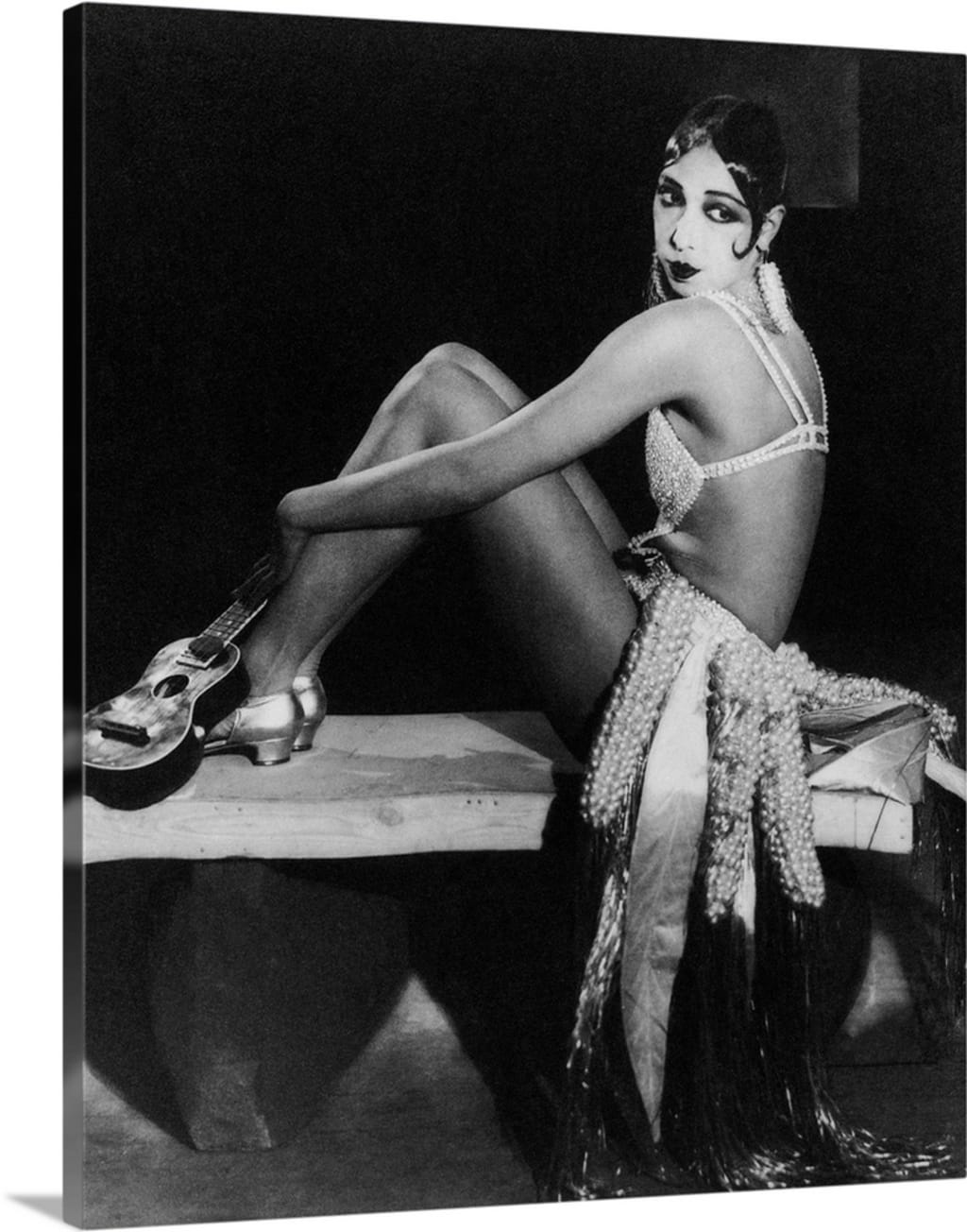
Whenever black history is taught in schools we only cover certain topics or even people such as Harriet Tubman, Martin Luther King Jr, and Rosa Parks because they are considered safe to teach about. Slavery is rarely taught and it usually goes straight to the civil rights movement of the 60’s. Black history is more than that because every aspect of American history has been touched and built up on by a black person. Let me introduce to you several people.

Ira Frederick Aldridge was the first African American actor to achieve success on the international stage. He became known as the preeminent Shakespearean actor and tragedian of the 19th Century and also social boundaries by playing opposite white actresses in England. He was born in New York City, NY on July 24, 1807 to free blacks Reverend Daniel and Lurona Aldridge. He studied classical education at the African Free School in New York where he was first exposed to the performance arts and by age 15 was associating with professional black actors in the city. Ira joined the prestigious African Grove Theatre, an all-black theatre troupe founded by William Henry Brown and James Hewlett in 1821 where he apprenticed under Hewlett, who was the first African American Shakespearean actor. Later emigrating to Europe in 1824 as the valet for British-American actor James William Wallack before eventually moving to Glasgow, Scotland and beginning studies at the University of Glasgow, where he enhanced his voice and dramatic skills in theatre. Ira then moved to England and made his debut in London in 1825 as Othello at the Theatre Royal Covent Garden, a role he would remain associated with until his death. The critic reviews gave Aldridge the name Roscius (the celebrated Roman actor of tragedy and comedy) which he embraced and began using the stage name “The African Roscius.”By creating the myth that he was the descendant of a Senegalese Prince whose family was forced to escape to the United States to save their lives it gave him an exotic and almost magical being.Throughout the mid-1820s to 1860 Ira Aldridge slowly forged a remarkable career. He performed in London, Liverpool, Edinburgh, Bath, and Bristol in King Lear, Othello, Macbeth, and The Merchant of Venice.In 1852 he embarked on a series of continental tours that intermittently would last until the end of his life. Performing his full repertoire in Prussia, Germany, Austria, Switzerland, Hungary, and Poland. Some of the honors he received include the Prussian Gold Medal for Arts and Sciences from King Frederick, the Golden Cross of Leopold from the Czar of Russia, and the Maltese Cross from Berne, Switzerland. Aldridge died on August 7, 1867 while on tour in Lodz, Poland at the age of 60. He had been married twice and left behind several children including a daughter named Luranah who would, in her own right, go on to become a well-known actress and opera singer. There is a memorial plaque at the Royal Shakespeare Theatre in Stafford-upon-Avon, in honor of his contributions to the performing arts. In 2014 a second plaque was unveiled in Lodz, Poland to honor his memory and legacy.
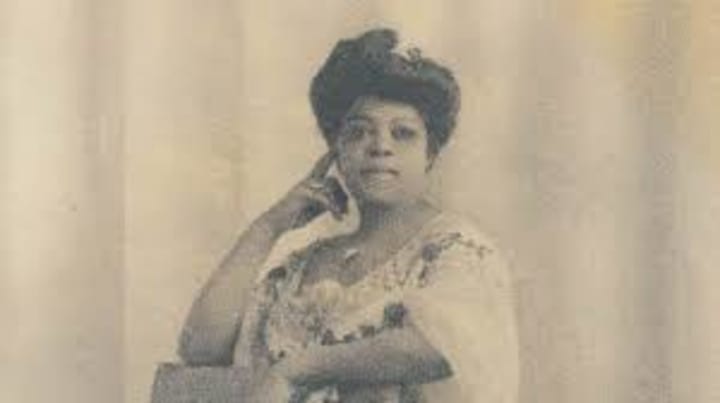
Matilda Sissieretta Joyner Jones was a world-famous soprano who in June 1892 became the first African American to perform at Carnegie Hall in New York City, NY. She was born on January 5, 1869, in Portsmouth, Va then after moving with her family to Rhode Island when she was six, Sissieretta began singing in the church choir, which was directed by her father. At fourteen, she married David Richard Jones, who became her first manager. Later, she formally studied voice at the Providence Academy of Music, the New England Conservatory, and the Boston Conservatory.Following her NYC debut on April 5, 1888 in Steinway Hall, she was nicknamed “the Black Patti” after being compared to the Italian prima donna Adelina Patti. Although she preferred to be called Madame Jones, the nickname stayed with her throughout her 30-plus year career. During the 1880s and 1890s, Jones performed at Madison Square Garden, Boston’s Music Hall and the World’s Columbian Exposition in Chicago, Illinois. Performing at the White House in February 1892 for President Benjamin Harrison and later returning to appear before Presidents Cleveland, McKinley, and Theodore Roosevelt. She also appeared before the British Royal Family. Touring internationally in the late 1800s and early 1900s, she sang both classical opera and performed in musical comedies with her own troupe. By 1895 Jones had become well known and highly paid and the group was one of the most popular shows on American stage, touring throughout the United States; the careers of numerous black performers were launched by their initial appearances with the Black Patti troupe.Her tours took her to the Caribbean, South America, Australia, India and Southern Africa as well as London, Paris, Berlin, Milan, Munich, and St. Petersburg. In the 1890s, she formed Black Patti’s Troubadours with the group disbanding in 1915 with a final performance at New York City’s Lafayette Theater. Jones moved back to Providence, and cared for her mother and her two adopted children.Jones divorced her husband in 1899 due to his gambling and lavish misuse of her money. In spite of many years of high earnings, toward the end of her life Jones relied on financial assistance from the NAACP. Sissieretta Jones died of cancer on June 24, 1933 at the Rhode Island Hospital in Providence, and had an unmarked grave until 2018.

Noble M. Johnson, the first major African American movie actor, was born in Colorado Springs on April 18, 1881. His father was a successful racehorse owner and trainer. Johnson attended public schools in Colorado Springs (Lon Chaney Sr. was a classmate) until the age of fifteen, when he struck out across the country, following the racing circuit, training horses, and working as a cowboy. Returning to Colorado Springs in 1909, he filled in for an injured actor, playing an Indian, in a Lubin Film Manufacturing Company Western, and his career path was set.Johnson made several films for Lubin before joining with several other African Americans (including his brother George) to organize the Lincoln Motion Picture Company in 1916( it folded in 1921). He was the company's original president and acted in its first three films but was pressured by Universal Studios' to resign from there in 1920. During that he was working for both but from 1920 on Noble Johnson was a Hollywood actor.Light-skinned and athletic, Johnson was cast in a great variety of major roles. Some of which were the Four Horsemen of the Apocalypse (1921), Cecil B. DeMille's original The Ten Commandments (1923),The Navigator (1924),The Thief of Bagdad (1924) Ben Hur (1925), King Kong (1933),Frank Capra's classic Lost Horizon (1937) and She Wore a Yellow Ribbon (1949) being his final film. In a business characterized by racial discrimination, Johnson played Native Americans, Latinos, Asians, and other "exotics" but was never billed as African American or identified with African American roles. He retired from the movie industry in 1950 and died on January 9, 1978, in Yucaipa (San Bernardino), California, at age 96.

Madame Sul-Te-Wan was born on September 12, 1873 as Nellie Conley in Louisville, KY where her widowed mother worked as a laundress. Madame Sul-Te-Wan was a pioneering stage and film actress who became one of the most prominent black performers in Hollywood during the silent film era. Her career spanned more than seventy years and she is best known as the first African American actress contracted to appear in D.W. Griffith’s Birth of a Nation (1915).Madame Sul-Te-Wan’s interest in performing was awakened at Louisville’s Buckingham Theater where young Nellie would watch the shows. Two white actresses, Mary Anderson and Fanny Davenport, wrangled an audition for her at a talent contest at the Buckingham which she won. Later moving to Cincinnati, Ohio with her mother, Madame Sul-Te-Wan worked in dance troupes and theater companies throughout the East and Midwest billed as “Creole Nell.” She formed her own musical performing company, The Black Four Hundred before renaming it the Rair Back Minstrels and toured the East Coast to great acclaim.Madame Sul-Te-Wan married in 1910, gave birth to three sons, and moved her family to Arcadia, California where she hoped to break into California’s burgeoning film industry but in 1912, her husband deserted the family leaving them destitute. Madame Sul-Te-Wan accepted charitable assistance and worked as a domestic in between stints as a singer and dancer in Southern California. In 1915, on learning that D.W. Griffith, a native of her hometown, was making a movie about the antebellum South and Reconstruction, the actress personally plead her case to the filmmaker and won a part in the cast of Birth of a Nation however most of her role and that of the other black actors in the film were deleted from the final cut. When the film was complete, Madam Sul-Te-Wan was discharged from Griffiths’ film company for “allegedly stealing a book from a white actress and inciting blacks to protest the film’s showing in the Los Angeles area.” Hiring prominent African American attorney E. Burton Ceruti, she successfully defended herself against the charges and was reinstated in the company. She continued to work in film until her death at the Motion Picture Country Home in Woodland Hills on February 1, 1959.
About the Creator
Kia T Cooper-Erbst
Writer, poet, author. submissive. Mom of three wonderful human beings. These are the first things that come to mind when I think of myself besides being the obvious.... which is daughter, wife,etc.
Keep reading
More stories from Kia T Cooper-Erbst and writers in FYI and other communities.
Black entertainers- Musicians
Whenever black history is taught in schools we only cover certain topics or even people such as Harriet Tubman, Martin Luther King Jr, and Rosa Parks because they are considered safe to teach about. Slavery is rarely taught and it usually goes straight to the civil rights movement of the 60’s. Black history is more than that because every aspect of American history has been touched and built up on by a black person. Let me introduce to you several people might have heard of along with some that you probably haven't.
By Kia T Cooper-Erbst4 years ago in FYI


Comments
There are no comments for this story
Be the first to respond and start the conversation.