
Backlash in CNC Machines: What It Is & How to Test for It
Learn everything about backlash in CNC machines, including its causes, effects on precision, testing methods, and how to eliminate it for optimal performance.

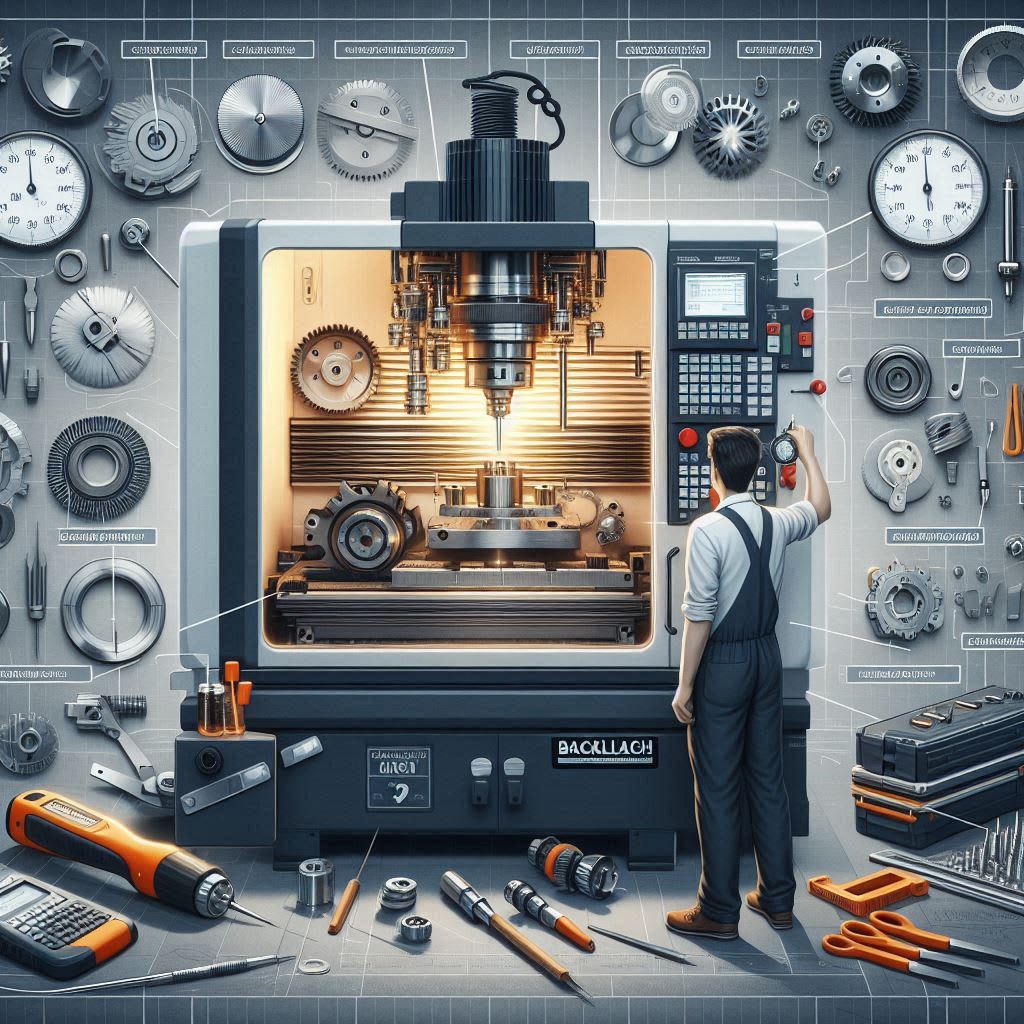
Backlash is a typical problem of CNC (Computer Numerical Control) machines that can cause considerable impact on accuracy and precision. It is an unsolicited little movement or clearance between machinery parts, for example, ball screws and lead screws, when the machine reverses direction. Backlash can cause dimensional errors, unsatisfactory surface finishes, and wasted material, leading to production cost wastes.
Based on industry statistics, backlash in CNC machines can vary from 0.001 to 0.01 inches based on machine type and maintenance regimes. Even small amounts of backlash can cause deviations and impact the precision machining applications' quality.
In this detailed guide, we will discuss:
- What backlash is and why it happens
- How backlash affects CNC machining
- How to effectively test to quantify backlash
- How to minimize or eliminate CNC machine backlash
- Preventive maintenance techniques to prevent backlash problems
- Improving machine components to reduce backlash
1. What is the Cause of Backlash in CNC Machines?
Backlash results from wear and mechanical gaps among drive elements. The most prevalent causes are:
1.1 Ball Screws and Lead Screws Wear and Tear
Ball screws and lead screws wear out over time because of continuous motion, causing gaps between the screw and nut.
- Lack of proper lubrication increases wear, thereby worsening backlash.
- Improper maintenance schedules result in excessive wear and premature backlash.
1.2 Incorrect Assembly or Installation of Machines
- Movement excess is created by loose linear rails, couplings, and bearings.
- Assembled machine components inaccurately result in gaps creating backlash.
- Wrong torque settings in fasteners allow system movement.
1.3 Thermal Expansion and Contraction
- Metal parts experience expansion and contraction due to varying temperatures, changing the system's tightness.
- This effect is greater in high-speed machining environments.
- Some CNC machines are fitted with thermal compensation systems to minimize backlash due to temperature changes.
1.4 Worn Bearings and Bushings
- Bearings and bushings that hold rotating elements wear out over time.
- Worn bearings cause play in the system, which increases backlash.
- Poor lubrication and contamination can hasten wear on these elements.
1.5 Belt-Driven vs. Direct-Drive Systems
- Belt-driven CNC machines are more likely to experience increased backlash with time due to belt wear and stretching.
- Direct drive eliminates belts and employs servo motors with precision feedback to minimize backlash.
2. Backlash Effects on CNC Machining
Backlash has a direct effect on machining accuracy and surface finish. Some of its most severe effects are:
2.1 Loss of Positional Accuracy
- If backlash gets beyond acceptable levels, the CNC machine cannot reposition to the right place, resulting in dimensional inaccuracies.
- It is particularly important for precision machining with high-tolerance applications, including aerospace and medical devices.
- It can produce rejected parts even with 0.002 inches of backlash in high-precision manufacturing.
2.2 Poor Surface Finish
- Backlash contributes to chatter and vibration, which result in rough or irregular surface finishes.
- It facilitates rework or scrap parts more likely.
- In CNC milling, backlash can lead to stair-stepping effects on contoured surfaces.
2.3 Inefficient Toolpath Execution
- CNC programs depend on exact movements. If there is backlash, there are toolpath deviations, decreasing efficiency and necessitating constant adjustments.
- In multi-axis machining, backlash can lead to synchronization errors between axes.
2.4 Increased Wear on Other Components
- Excessive backlash places extra load on motors, bearings, and linear guides, resulting in earlier wear and higher maintenance costs.
- With time, backlash can cause drive motor overheating and higher power consumption.
3. Testing for Backlash in CNC Machines
Accurate measurement of backlash is necessary to diagnose and solve the problem. The following methods are effective ones:
3.1 Dial Indicator Method
Tools Needed: Dial indicator, magnetic base
Procedure:
- Mount the dial indicator on a firm base close to the machine's moving part.
- Shift the axis in one direction and zero the dial indicator.
- Reverse the direction and note any deviation in the dial reading.
- The difference between the starting and ending readings is backlash.
Example: A CNC machine with 0.005 inches of backlash can be compensated for in the control system.
3.2 Laser Interferometry
- High-precision measuring method employed in high-end manufacturing shops.
- Measures small positional errors using laser reflections.
- Offers real-time feedback on machine motion deviations.
3.3 CNC Control Backlash Compensation Test
- Most CNC controllers include backlash compensation adjustments.
- Executing a programmed backlash test cycle can automatically diagnose and compensate for backlash.
4. Reducing or Eliminating Backlash
There are various mechanical and software modifications that can minimize backlash in CNC machines.
4.1 Ball Screw and Nut Adjustments
- Preloaded ball nuts can be tightened to minimize movement gaps.
- Double-nut systems installed eliminate backlash entirely.
4.2 Anti-Backlash Gears and Compensation Software
- Anti-backlash nuts provide tight control over lead screws.
- CNC controllers provide software backlash compensation, dynamically correcting for lost motion.
4.3 Going Direct-Drive with Motors
- Belt-driven systems are less likely to be backlash-prone.
- Direct-drive servo motors do away with mechanical gaps.
4.4 Regular Maintenance and Lubrication
- Ball screws, bearings, and linear rails are properly lubricated, which minimizes wear and backlash.
- Monthly precision checks made ensure long-term accuracy.
5. Best Practices Preventing Backlash
Prevention of backlash involves a mix of correct machine setup, regular maintenance, and quality components. The following is a preventive checklist:
- Adjust and check ball screws: Monthly
- Lubricate moving parts: Weekly
- Check bearings and bushings: Bi-annually
- Calibrate backlash compensation settings: Quarterly
- Replace worn nuts and couplings: As needed
Industry statistics indicate that well-maintained CNC machines have 30-50% less backlash than poorly maintained ones.
6. Conclusion
Backlash on CNC machines is an unavoidable circumstance, but backlash can be prevented or eliminated using proper testing, adjustment, and preventive maintenance. Periodic checking for backlash, making precise mechanical adjustments, and applying software compensation can reduce backlash and enhance the accuracy of a machine considerably.
For high-precision CNC machining businesses, backlash control is important to sustain product quality and minimize waste. Spending on good-quality components and frequent maintenance will help extend the life of machines and enhance machining efficiency.
Looking for a Reliable Used CNC Machine?
At MachineStation, we offer a wide range of high-quality pre-owned CNC machines that are thoroughly inspected for performance and accuracy. Contact us today to find a machine that fits your needs!
About the Creator
Machinestation
At MachineStation, we specialize in buying, selling, and trading used CNC machinery. We offer a wide range of certified pre-owned machines from more than 70 brands, including Haas, Mazak, and Doosan.
Visit: https://www.machinestation.us/
Keep reading
More stories from Machinestation and writers in FYI and other communities.
The Advantages of Buying a Used Vertical Turret Lathe
In the competitive world of modern manufacturing, companies are constantly looking for ways to increase productivity while keeping operational costs low. One effective way to achieve this is by purchasing used machinery, particularly Vertical Turret Lathes (VTLs). These powerful and versatile machines are a staple in industries that require precision turning of large, heavy workpieces such as aerospace, automotive, and energy production.
By Machinestation10 months ago in FYI
A Failed Artist, A Disillusioned Poet, An Underpaid Game Show Host
I took my son and niece to Gori, a small town in Georgia where Joseph Stalin was born. They talked me into visiting the Stalin's Museum, the largest in the post-Soviet space. I had resisted going there because I just can't stand the monster and know enough about him, or so I thought.
By Lana V Lynxabout a month ago in FYI
Men Who Go To War
This morning started a fire within me about how our military in the US is being run. They have taken the LGBTQ+ out of the military, while using the phrase "REAL MEN GO TO WAR". This morning I woke and started my doom scrolling on TikTok, when a TikToker by the name of The Infernum Asylum (warning: it is a man dressed up as a demon per se, however, his words are true) gave the story, THE TRUE STORY behind the phrase, behind the movie 300. I remember when I was heavily involved in Greek History and Mythology when I was in High School, and vaguely remembered as I listened to his video.
By Jessie Lynn Nelson6 days ago in FYI
📢 Raise Your Voice Thread: 02/05/2026
Our “Raise Your Voice Threads” are hosted most alternating Thursdays at 12PM ET to offer creators more avenues to uncover exceptional stories on Vocal. As we are continuously searching for fresh creators and inspiring stories, this thread provides an opportunity to exchange and discuss the stories that have moved and motivated us on Vocal.
By Raise Your Voice by Vocalabout 10 hours ago in Resources



Comments
There are no comments for this story
Be the first to respond and start the conversation.