
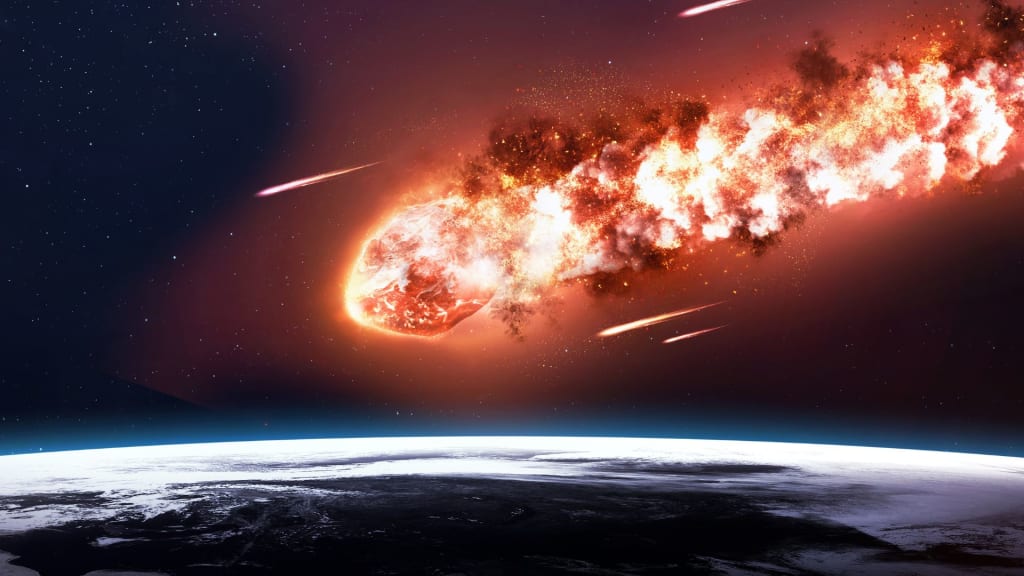
You ever just sit back and think about how wild space is? I mean, one day you’re sipping coffee, scrolling through your phone, and the next, you hear about an asteroid like 2024 YR4 that might—emphasis on might—decide to drop in on Earth. It’s the kind of thing that makes you look up at the night sky a little differently, you know? This space rock’s been making waves since it was spotted late last year, and I’ve got to admit, it’s got my curiosity piqued. What’s the deal with it? How likely is it to hit us? And if it does, what could we do about it? Let’s unpack this cosmic curveball together—I promise it’ll be a fun ride, even if it’s a little spooky.
Back in December 2024, some sharp-eyed astronomers in Chile were scanning the sky with the ATLAS telescope—you know, that Asteroid Terrestrial-impact Last Alert System that’s always on the lookout for trouble. They caught sight of something new: a chunky little asteroid, about 130 to 300 feet wide, tumbling through space. They named it 2024 YR4, and honestly, it’s been a bit of a troublemaker ever since. It’s not some planet-killing monster, but picture a 10-story building or a football field cruising along out there. That’s enough to make you sit up and pay attention.
I’ve always loved stargazing, ever since I was a kid lying in the grass with my dad pointing out constellations. Back then, I didn’t think about rocks like this one possibly crashing the party. But here we are, February 20, 2025, talking about 2024 YR4 and whether it’s got Earth in its sights. Spoiler: it’s not a sure thing, but it’s not a total non-issue either. Let’s dig into the details.
The Latest Scoop: A 3.1% Chance
Here’s where it gets real. When they first clocked 2024 YR4, the odds of it hitting Earth in December 2032 were pegged at a slim 1.9%. That’s like a 98.1% chance it’d zoom by without a hitch—pretty reassuring, right? But science doesn’t sit still. As of the latest reports rolling out this week, those odds have ticked up to 3.1%. That’s a 1-in-32 shot, according to NASA’s number-crunchers at the Center for Near-Earth Object Studies. Suddenly, that “mostly safe” feeling gets a little wobbly.
Now, don’t get me wrong—3.1% isn’t “pack your bags and head for the hills” territory. There’s still a whopping 96.9% chance it’ll miss us. But it’s enough to make you wonder. I mean, if I had a 3.1% chance of spilling coffee on my shirt before a big meeting, I’d still be nervous about it. Context matters, though. With asteroids, the more we watch them, the better we get at predicting their moves. Usually, those odds drop as we gather more data—think of it like focusing a blurry camera. So, while 3.1% sounds spicier than 1.9%, it’s not set in stone. We’ve got years to keep an eye on this thing.
To give you a sense of what it could do, think back to history. In 1908, an asteroid about this size exploded over Tunguska, Siberia, leveling trees across 500 square miles. No one died, thankfully, but it was a wake-up call. Or take the Chelyabinsk meteor in 2013—smaller, at about 20 meters wide, but it still shattered windows and injured over a thousand people when it blew up in the sky. Size matters with these things, and 2024 YR4 is not lightweight.
But here’s the good news: that 1.9% isn’t final. It’s more like a rough draft. The more we watch this asteroid—tracking its path, refining our measurements—the clearer the picture gets. Usually, as data piles up, the odds drop. It’s like trying to guess where your friend’s headed based on a blurry photo of them driving. A few more pics, and you’ve got a better idea. So, by 2032, we might be laughing this off—or, you know, prepping for action. Stay tuned.
How Do We Stop an Asteroid?
So, let’s say the odds don’t budge, or worse, they creep up. What do we do? Sit back and hope for the best? Nah, we’re smarter than that. Scientists have been brainstorming asteroid defense for years, and they’ve got some pretty cool tricks up their sleeves. Let’s run through a few.
- First up: deflection. The idea’s simple—give the asteroid a little shove so it misses us. Easy to say, harder to do. These things are fast, heavy, and stubborn. But we’ve got proof it can work. Remember NASA’s DART mission? In 2022, they slammed a spacecraft into a tiny asteroid called Dimorphos and shifted its orbit by 32 minutes. That’s huge! For 2024 YR4, we might need a beefier version—maybe multiple hits—but it’s doable.
- Then there’s the gravity tractor. Picture a spacecraft hovering near the asteroid, using its own teeny gravitational pull to tug the rock off course. It’s slow—like, years-slow—but if we’ve got time, it’s a gentle, low-risk option. No explosions, no drama, just physics doing its thing.
- Speaking of explosions, some folks have pitched the nuclear option. Detonate a bomb near the asteroid to either blast it apart or nudge it aside. Sounds cinematic, sure, but it’s dicey. Breaking it up could turn one big threat into a shower of smaller ones. Plus, nukes in space? That’s a PR nightmare waiting to happen.
- And here’s a wild one: paint it. Yep, slap some reflective paint on the asteroid—or maybe zap it with lasers to change its surface color. Why? Something called the Yarkovsky effect. Sunlight pushes on asteroids, and changing how they reflect it could tweak their path over time. It’s subtle, but with enough warning, it might just work.
My Two Cents: The Satellite Swarm Idea
Now, here’s where I get to play mad scientist for a minute. What if we tried something totally new? Imagine a swarm of tiny satellites—dozens, maybe hundreds—attaching to 2024 YR4 and firing their thrusters together. Think of it like a bunch of ants teaming up to drag a crumb across the kitchen floor. Each satellite’s push is small, but all together? That could add up.
Why do I like this? For one, it’s flexible. Need more power? Send more satellites. Two, it’s safer than betting everything on one big mission. If a few fail, the rest keep going. And three, it could be affordable—small satellites are getting cheaper to launch every year thanks to folks like SpaceX. Sure, there’d be hurdles: coordinating them, avoiding collisions, powering them up. But isn’t that half the fun of inventing something new? I haven’t seen this exact idea floating around, so maybe it’s worth a brainstorming session at NASA—or at least a sci-fi novel.
Why This Hits Home
Asteroids aren’t just about science—they’re personal. They remind me of the time I was camping as a kid, staring at the stars, totally clueless about what was up there. Now I know those twinkling lights come with risks, and it’s kind of humbling. We’re this little blue dot, spinning through a chaotic universe, and every so often, it tests us.
But that’s also what makes this exciting. We’re not defenseless. Tools like ATLAS are out there, spotting threats like 2024 YR4 before they sneak up on us. Missions like DART show we can fight back. And honestly, there’s something inspiring about that. It’s not just about tech—it’s about us. If this asteroid ever became a real problem, it’d take everyone—scientists, governments, maybe even you and me—to tackle it. A global team-up against a cosmic bully. How’s that for a plot twist?
The Cultural Buzz Around 2024 YR4
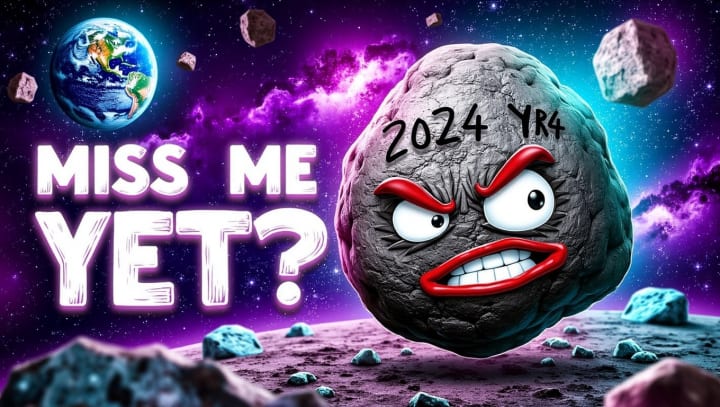
You know what’s funny? Asteroids like 2024 YR4 don’t just stay in the science journals—they spill over into everything else too. Since the news broke about that 3.1% chance, I’ve seen it popping up everywhere. My cousin texted me a meme the other day: a cartoon asteroid with “2024 YR4” scribbled on it, smirking at Earth with the caption, “Miss me yet?” It’s dark humor, sure, but it shows how fast this thing’s grabbed people’s imaginations.
On X, folks are having a field day. Some are joking about building bunkers, others are pitching sci-fi movie ideas—Armageddon 2: YR4’s Revenge, anyone?—and a few are genuinely freaking out. One user posted, “If it hits, I’m blaming Mercury retrograde,” which got a solid laugh out of me. But it’s not just online chatter. My barber, Tony, brought it up while trimming my hair last week. “You think they’ll nuke it?” he asked, snipping away. “Or are we just toast?” I told him about DART, and he nodded like he was ready to sign up for NASA himself.
It’s wild how a space rock can stir up so much. Part of it’s fear, sure—who wouldn’t get a little jittery about a potential city smasher? But there’s curiosity too, maybe even excitement. We’ve all seen the movies, read the books. Now it’s real, or at least real-ish, and it’s like we’re all extras in the plot, waiting to see how it plays out.
Looking Back: Lessons from the Past
This isn’t humanity’s first rodeo with cosmic close calls, you know. History’s littered with examples—some we saw coming, some we didn’t. Take the Tunguska event I mentioned earlier. That 1908 blast was a total surprise—no telescopes back then to give a heads-up. Locals in Siberia thought the world was ending when the sky lit up and the ground shook. Scientists still debate whether it was an asteroid or a comet, but either way, it left a mark—literally and figuratively.
Then there’s the Chicxulub impactor, the big one that took out the dinosaurs 66 million years ago. That beast was 10 kilometers wide—way scarier than 2024 YR4—but it’s a reminder of what’s possible. I saw a documentary about it last month and the crater they showed in Mexico. Mind-blowing. It’s humbling to think Earth’s been through that kind of chaos and bounced back. Makes our current predicament feel a little less lonely, doesn’t it?
Closer to home, the 2013 Chelyabinsk meteor caught everyone off guard. No one saw it coming until it streaked across the Russian sky, exploding with a flash brighter than the sun. I watched the dashcam videos online—cars swerving, people yelling, windows shattering. It was small, but it showed how even a “little” impact can shake things up. With 2024 YR4, at least we’ve got a heads-up. That’s a game-changer.
What If It Hits? A Thought Experiment
Okay, let’s play a little “what if” game—not to scare ourselves silly, but because it’s kind of fun to imagine. Say that 3.1% turns into 100% and 2024 YR4 locks onto Earth for December 2032. Where might it hit? What would we do?
Scientists can’t pinpoint an exact spot yet—too many variables—but they’ve got models. If it’s an ocean strike, like the Pacific, we’d see massive waves, maybe tsunamis flooding coasts. I live inland, so I’d be okay, but my friend Mia in LA? She’d be sweating bullets. A land hit’s dicier. Picture it plowing into, say, central Europe or the American Midwest—think 8 megatons of boom, a crater a mile wide, and a dust cloud that’d mess with crops for years. Cities like Berlin or Kansas City wouldn’t stand a chance if it landed smack in the middle.
But here’s where it gets hopeful: we wouldn’t just sit there. By 2032, we’d have mobilized. Evacuations, emergency stockpiles, maybe even a last-ditch DART-style mission if the swarm idea didn’t pan out. I’d be glued to the news, texting my family like, “You seeing this?!” It’d be chaos, no doubt, but humans are scrappy. We’d adapt, rebuild, and figure it out—just like we always have.
Beyond Defense: Could We Use It?

Here’s a curveball for you: what if we didn’t just stop 2024 YR4, but turned it into something useful? I was reading about asteroid mining the other day—companies like Planetary Resources and Deep Space Industries have been dreaming about it for years. These rocks are packed with metals like iron, nickel, and even platinum. If we could nudge 2024 YR4 into a safe orbit around Earth instead of blasting it away, maybe we could mine it someday.
Crazy, right? But hear me out. With the right tech—say, an upgraded version of my satellite swarm—we could corral it into a stable spot, like a Lagrange point where Earth and the moon’s gravity balance out. Then, future missions could chip away at it, hauling back resources. It’d be a long shot, needing decades of planning, but talk about flipping the script. Instead of a threat, 2024 YR4 could become a goldmine—literally. I haven’t seen this angle in the headlines yet, so maybe it’s my next big brainstorm.
The Emotional Rollercoaster
I’ll be real with you—this whole thing’s a bit of an emotional ride. On the one hand, I’m fascinated. The science, the tech, the sheer scale of it all—it’s like a puzzle I can’t stop poking at. But there’s a quiet unease too. My niece, Ellie, is six. By 2032, she’ll be a teenager, maybe dreaming about college or her first car. The idea of an asteroid throwing a wrench into that? It bugs me more than I’d like to admit.
Yet that’s where the hope kicks in. Talking to people—whether it’s Sarah the engineer or Tony the barber—I get this sense we’re in it together. If 2024 YR4 ever became a real problem, it wouldn’t just be NASA or ESA stepping up. It’d be governments, companies, and regular folks like us pitching in however we could. Crowdfunding a deflection mission? Protesting for more space funding? Who knows—it’s that collective grit that gets me every time.
Wrapping Up—or Not Quite
So, where does that leave us with 2024 YR4? Still in watch mode, mostly. The 3.1% chance is a nag, but it’s not a siren yet. Come 2028, when it swings back into view, we’ll get a sharper picture—maybe enough to breathe easy or double down on prep. For now, it’s a waiting game with a side of wonder.
Me? I’m keeping an eye on it, partly because I’m a nerd for this stuff, and partly because it feels like a story we’re all writing together. Deflection, swarms, mining—it’s not just about dodging disaster; it’s about what we’re capable of when the stakes get high. Next time I’m out under the stars, I’ll tip my hat to 2024 YR4. It’s a tiny speck with a big presence, and whether it misses or not, it’s already shaking things up down here.
What about you? Got a hunch on how this plays out? Or maybe a wild idea of your own? I’m all ears—space is too big for just one brain to figure out.
What’s Next?

So, where are we at with 2024 YR4? Right now, it’s watch-and-wait. Astronomers are keeping their eyes peeled, collecting data, and tweaking those odds. By 2032, we’ll either be in the clear or rolling up our sleeves. Most likely, it’ll be the former—near-misses are way more common than hits.
Until then, let’s keep thinking. Deflection, gravity tractors, swarms of satellites—whatever it takes, we’ve got options. And who knows? Maybe this asteroid is just the push we need to get better at protecting our planet. Space is full of surprises, after all. Some keep us up at night, but others? They remind us what we’re capable of.
So, next time you’re stargazing, give a nod to 2024 YR4. It’s out there, doing its thing, while we figure out ours. And hey, if you’ve got a wild idea to stop it, don’t keep it to yourself—share it. We might just need it.
Sources:
- NASA Shares Observations of Recently-Identified Near Earth Asteroid
- Should you be worried about Asteroid 2024 YR4?
- Astronomers Are Keeping an Eye on This Asteroid’s Odds of Hitting Earth
- NASA Continues to Monitor Orbit of Near-Earth Asteroid 2024 YR4
- ESA actively monitoring near-Earth asteroid 2024 YR4
- Asteroid 2024 YR4 – latest updates
About the Creator
Francisco Navarro
A passionate reader with a deep love for science and technology. I am captivated by the intricate mechanisms of the natural world and the endless possibilities that technological advancements offer.
Keep reading
More stories from Francisco Navarro and writers in FYI and other communities.
AlphaFold
The Library of Hidden Shapes Imagine spending decades trying to solve a 3D jigsaw puzzle blindfolded. Every piece is invisible, and the final image holds the secret to curing diseases, ending hunger, or even reversing climate change. That’s what protein folding felt like for scientists—until AlphaFold arrived.
By Francisco Navarroabout a year ago in FYI
Woman Receives a $2.3 Million Bank Transfer by Mistake
Sometimes life throws the most unexpected surprises our way. For one woman, a routine day managing her finances turned into a situation she could never have imagined. A single bank notification changed everything, presenting her with an enormous sum of money that didn’t belong to her — and the decision she made next stunned everyone who heard the story.
By Shoaib Afridi5 days ago in FYI




Comments
There are no comments for this story
Be the first to respond and start the conversation.