
AlphaFold
The AI That Cracked Life’s Most Elusive Puzzle
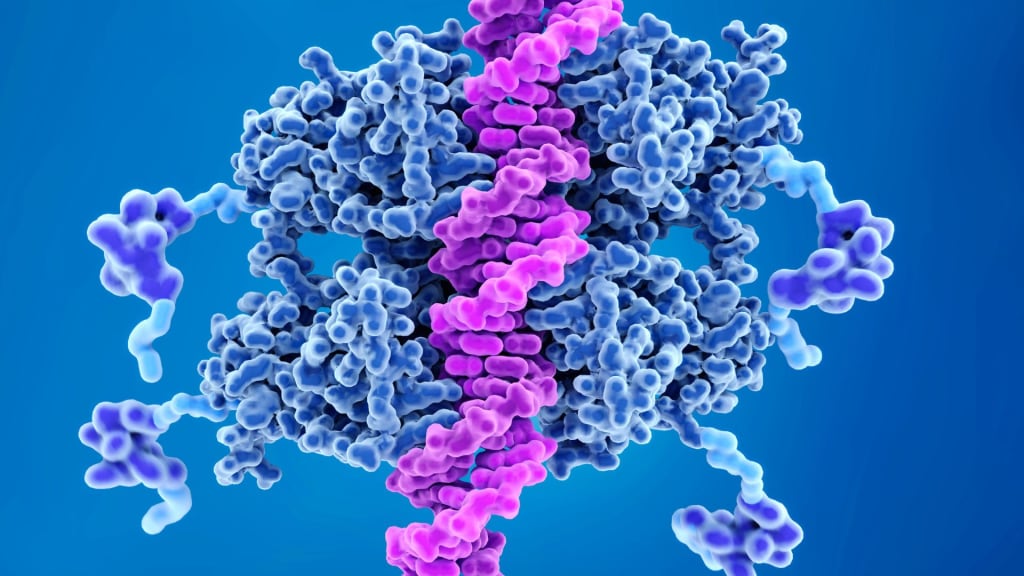
The Library of Hidden Shapes
Imagine spending decades trying to solve a 3D jigsaw puzzle blindfolded. Every piece is invisible, and the final image holds the secret to curing diseases, ending hunger, or even reversing climate change. That’s what protein folding felt like for scientists—until AlphaFold arrived.
I once watched a biologist friend spend three years mapping a single protein’s structure. Three. Years. Caffeine-fueled nights, lab coats stained with frustration, and a mountain of failed attempts. Her desk was a graveyard of crumpled diagrams and half-empty coffee mugs. Then, in 2020, AlphaFold—a brainchild of Google’s DeepMind—did something wild. It predicted the shapes of nearly all known proteins in a year. Proteins that would’ve taken scientists, using older methods, thousands of years to decode. To put that in perspective: If every human on Earth worked nonstop to solve one protein a day, we’d still need until the year 3023 to finish what AlphaFold did in 12 months.
This isn’t just a tech breakthrough. It’s like discovering a new sense—one that lets us “see” the building blocks of life.
What Is AlphaFold?
AlphaFold isn’t your average AI. It’s a molecular cartographer, a digital magician that reveals the hidden architecture of proteins—tiny machines inside every living cell. Proteins are life’s Swiss Army knives: they digest food, fight viruses, even make fireflies glow. But their power lies in their shape. A protein’s twisty, crumpled structure determines whether it heals or harms. Misfold one, and you get diseases like Alzheimer’s. Fold it right, and you might unlock a cure for cancer.
For over 50 years, scientists grappled with the “protein folding problem.” Picture throwing a string into a hurricane and hoping it lands as a perfect origami swan. That’s how chaotic protein folding seemed. Traditional methods, like X-ray crystallography, required months (or years) of lab work. Teams would grow protein crystals—a process as finicky as coaxing a snowflake to form in a desert—then blast them with X-rays to infer their shapes. AlphaFold? It cracks the code in hours.
Here’s the kicker: Before AlphaFold, scientists had mapped about 180,000 protein structures in 60 years. AlphaFold added 200 million in 12 months. That’s like building 1,000 Burj Khalifas while the rest of the world struggles with LEGO towers.
How does AlphaFold work?
Let’s break it down without the techno-babble. AlphaFold’s genius is its ability to learn like a savant chef who’s memorized every recipe in existence. It trained on a database of 170,000 known protein structures, spotting patterns humans couldn’t fathom. Think of it as a detective connecting dots across a galaxy of data—except the dots are amino acids, and the galaxy is 200 million light-years wide.
Here’s the secret sauce: AlphaFold uses something called a “neural network”—a brain-like algorithm—to predict how a protein’s amino acid chain will fold. It’s like watching a master sculptor shape clay blindfolded, guided only by intuition. The AI assigns confidence scores to each prediction, flagging areas it’s unsure about. No guesswork. Just precision.
But how accurate is it? In 2020, AlphaFold competed in a global science showdown called CASP (Critical Assessment of Structure Prediction). It predicted protein structures with an accuracy rivaling lab experiments—scoring 92.4 out of 100 on average. For context, a score above 90 is considered “experimentally useful.” One scientist described it as “like seeing the future of biology.”
And the best part? DeepMind open-sourced AlphaFold’s predictions. Over 200 million protein structures are now free to access, a treasure trove that’s grown faster than Wikipedia in its prime. Suddenly, a researcher in Nairobi has the same tools as a lab in New York.
Why Does It Matter?
Let’s get real. This isn’t just about nerdy science wins. AlphaFold is reshaping medicine, agriculture, and our fight against climate change.
- Drug Discovery on Steroids: Developing a new drug used to take 10-15 years and billions of dollars. With AlphaFold, researchers can now design drugs like architects—crafting molecules that snap perfectly into a protein’s shape. Case in point: Scientists used AlphaFold to identify a malaria vaccine target in months, a task that might’ve taken a lifetime. Another team cracked the structure of a key COVID-19 protein in days, accelerating antiviral research.
- Disease Demystified: Misfolded proteins cause Alzheimer’s, Parkinson’s, and cystic fibrosis. AlphaFold’s models are like X-ray goggles for these malfunctions, offering clues for treatments. One lab used its predictions to uncover why a genetic mutation causes severe epilepsy, paving the way for targeted therapies.
- Eco-Warrior: Enzymes that digest plastic? Crops resistant to drought? AlphaFold’s predictions are accelerating green tech faster than a Tesla in ludicrous mode. Researchers are engineering microbes to eat plastic waste and designing plants that thrive in parched soil—all by tweaking proteins AlphaFold mapped.
But here’s the jaw-dropper: In 2023, a team at the University of Portsmouth used AlphaFold to engineer an enzyme that breaks down plastic bottles six times faster than natural ones. Without AlphaFold, they estimate the project would’ve taken 50 years. Instead, it took 18 months.
The Future Is Folded
AlphaFold isn’t perfect. Sometimes its predictions are fuzzy, like a radio station tuning in from another dimension. A few structures are still riddles wrapped in enigmas. But here’s the thing: It’s already changing the game.
So, what’s next? Imagine personalized medicine tailored to your DNA, or bioengineered microbes cleaning oil spills. Picture farmers growing crops in Martian soil, or vaccines designed in weeks instead of years. AlphaFold is the key to these doors.
Want to be part of this revolution? You don’t need a lab coat. Dive into AlphaFold’s public database—it’s free, it’s vast, and it’s waiting for curious minds. Support open science. Or just marvel at the fact that, somewhere in the digital ether, an AI is folding proteins faster than you fold laundry.
AlphaFold isn’t just a tool. It’s a tectonic shift in how we understand life itself. And honestly? It’s about time.
About the Creator
Francisco Navarro
A passionate reader with a deep love for science and technology. I am captivated by the intricate mechanisms of the natural world and the endless possibilities that technological advancements offer.
Keep reading
More stories from Francisco Navarro and writers in FYI and other communities.
This Brain Hack Slows Aging by Decades — And It’s Hiding in Your Playlist
Hit Play on Your Brain Power! Ever wonder why a certain song gives you goosebumps, or why that catchy jingle gets stuck in your head for days? It's more than just a tune – it's your brain getting a full-on, fascinating workout!
By Francisco Navarro6 months ago in FYI
A Planetary Alignment will coincide with Mercury Retrograde
Double phenomena in the heavens Some people say in jest that the planets have aligned in their favor when life works the way they desire. Were you aware that there are seasons when things do line up in the heavens? There will be a planetary alignment AKA a planet parade, on February 28, 2026.
By Cheryl E Preston18 days ago in FYI



Comments
There are no comments for this story
Be the first to respond and start the conversation.