
Incredible Discovery Shows Mice Trying to Revive Fallen Companions.
Mouse Revive

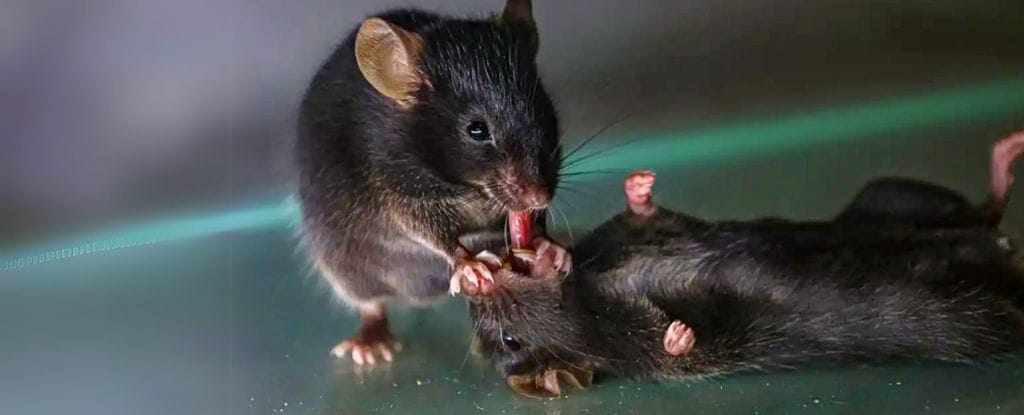
Incredible Discovery Shows Mice Trying to Revive Fallen Companions
The animal kingdom continues to surprise us with its complexity revealing behaviors that challenge our perceptions of intelligence and social connection among non human species. A recent study by researchers at the University of Southern California USC has uncovered an astonishing discovery mice appear to perform a form of first aid on their unconscious companions. This finding adds to a growing body of evidence suggesting that empathy care and social responsibility are not exclusive to humans or large brained mammals like dolphins and elephants. Instead even small rodents often thought of as simple creatures driven purely by instinct may possess a remarkable capacity for aiding their peers in distress. The study led by USC neuroscientist Wenjian Sun observed mice displaying what could be described as paramedic like behavior when confronted with an unconscious companion. The researchers noticed that when a mouse was rendered immobile either anesthetized or otherwise unresponsive another mouse particularly if it was familiar with the unconscious individual would attempt to resuscitate it. The most striking behavior involved pulling on the unconscious mouse's tongue a technique that proved to be beneficial in opening the airway and speeding up recovery. While at first glance this behavior may seem crude compared to human first aid techniques the effect was undeniably significant. The mice that received assistance from their peers recovered much faster than those left alone. This discovery raises profound questions about the extent to which rodents are capable of recognizing distress in others and taking intentional actions to alleviate it.
The research team explored the neural mechanisms underlying this unexpected behavior. Brain scans revealed increased activity in a region associated with involuntary functions alongside hormonal signals that seemed to play a crucial role in motivating the rescue attempts. This suggests that the mice were not merely acting on random impulses but instead responding to specific physiological cues indicating a need for assistance. Another recent study reinforced these findings by identifying a neural circuit that connects the tongue pulling action to rapid arousal in anesthetized mice. This suggests that the behavior is not accidental but rather an instinctive response that has evolved to help revive incapacitated members of their group. The implications of this discovery extend beyond mice hinting that similar neural pathways may exist in other social animals. One of the most fascinating aspects of this study was the observation that mice were significantly more likely to attempt resuscitation when the unconscious individual was a familiar companion rather than a stranger. This suggests that the behavior is not merely a reflexive response to an unresponsive body but rather a socially motivated act influenced by relationships and recognition. James Burkett a neuroscientist at the University of Toledo who was not involved in the study noted that this familiarity bias indicates a level of decision making beyond mere instinct. According to Burkett the mice are not simply reacting to stimuli in a mechanical way instead they appear to be assessing the situation and determining whether the unconscious individual is someone they recognize and care about. This aligns with previous research showing that rodents display empathy driven behaviors such as helping trapped companions and showing distress when their peers are in pain.
To test the robustness of these findings Sun and his team conducted a series of controlled experiments. They placed conscious mice in cages with unresponsive companions some of whom were familiar to them and others who were complete strangers. The results were striking in 50 percent of all cases the conscious mouse attempted to resuscitate its unconscious peer by pulling on its tongue. This intervention proved effective as the assisted mice were able to regain movement and start walking again significantly faster than those left without aid. The rescue process typically began with sniffing and grooming followed by more vigorous physical interaction. The mice seemed to be systematically assessing the condition of their fallen companion before engaging in what appeared to be a deliberate attempt at revival. This structured approach suggests that rodent rescue behavior may be more complex than previously assumed potentially involving an understanding of distress signals and an instinctive drive to assist. While such first aid behavior had not been extensively documented in smaller mammals before similar rescue tendencies have been observed in larger highly social species. Dolphins for example are known to support sick or injured members of their pod by keeping them afloat to prevent drowning. Elephants have been documented engaging in cooperative efforts to help fallen herd members and some primates exhibit behaviors akin to caregiving when their peers are in distress. However the discovery of these behaviors in mice is particularly significant because it suggests that the evolutionary roots of caregiving and rescue behaviors may extend much further down the animal kingdom than previously thought. If small brained creatures like mice are capable of recognizing distress and taking action to alleviate it it raises intriguing questions about the origins of altruism and social responsibility in the animal world.
The findings of this study challenge long held assumptions about the cognitive and emotional capacities of rodents. Traditionally behaviors such as helping others in distress have been viewed as complex social traits requiring significant intelligence and emotional awareness. However the discovery that mice animals often considered simple and instinct driven can engage in first aid like behaviors suggests that the foundations of empathy and cooperation may be more deeply embedded in the animal kingdom than previously believed. These insights also have potential implications for biomedical research. Mice are widely used as model organisms in neuroscience and understanding their social behaviors could lead to a deeper comprehension of how the brain processes empathy stress and social bonds. This knowledge might one day contribute to medical advancements in treating conditions related to social cognition such as autism or social anxiety disorders.
Moreover this research highlights the importance of reconsidering the ethical treatment of animals. If mice are capable of such socially motivated behaviors it suggests they experience a level of social awareness that warrants greater consideration in laboratory settings. Recognizing their capacity for empathy and caregiving could influence how scientists approach animal welfare in research environments.
The revelation that mice may attempt to revive their unconscious peers through tongue pulling and other physical interventions is a groundbreaking discovery that reshapes our understanding of animal intelligence and social behavior. While it remains unclear whether the mice consciously intend to help their consistent and structured attempts at resuscitation particularly toward familiar individuals suggest that they possess a level of social awareness previously unrecognized in small mammals. This study not only deepens our appreciation for the complexity of rodent behavior but also raises broader questions about the evolutionary origins of empathy and caregiving in the animal kingdom. As scientists continue to explore these findings we may uncover even more surprising examples of cooperation and altruism among creatures we once underestimated. The next time we observe mice scurrying about we may need to rethink our assumptions about these tiny yet surprisingly compassionate creatures.
About the Creator
Adnan Rasheed
Author & Creator | Writing News , Science Fiction, and Worldwide Update| Digital Product Designer | Sharing life-changing strategies for success.
Keep reading
More stories from Adnan Rasheed and writers in FYI and other communities.
Elon Musk's net worth overtook Mansa Musa's with $433 billion as of January 2025.
Elon Musk's net worth overtook Mansa Musa's with $433 billion as of January 2025. In the annals of history wealth has often been a measure of influence and power. Two figures stand out in this regard. Mansa Musa the 14th century emperor of the Mali Empire and Elon Musk the contemporary entrepreneur behind companies like Tesla and SpaceX. While Musk's net worth soared to unprecedented heights in recent years surpassing $400 billion at its peak the legacy of Mansa Musa's wealth remains unparalleled.
By Adnan Rasheed12 months ago in FYI
The Evolution of Data Connectivity in Aerospace Systems
The aviation industry has always relied on communication to ensure safe and efficient operations. In the early years of flight, data connectivity was extremely limited. Aircraft relied mainly on analog radio systems that allowed pilots to communicate with air traffic control through voice signals. These systems were simple but essential, helping pilots receive navigation instructions and share flight information with ground personnel.
By Beckett Dowhanabout 13 hours ago in FYI



Comments
There are no comments for this story
Be the first to respond and start the conversation.