
Africa for the space race
Why Kenya Can Lead Africa in Space Exploration

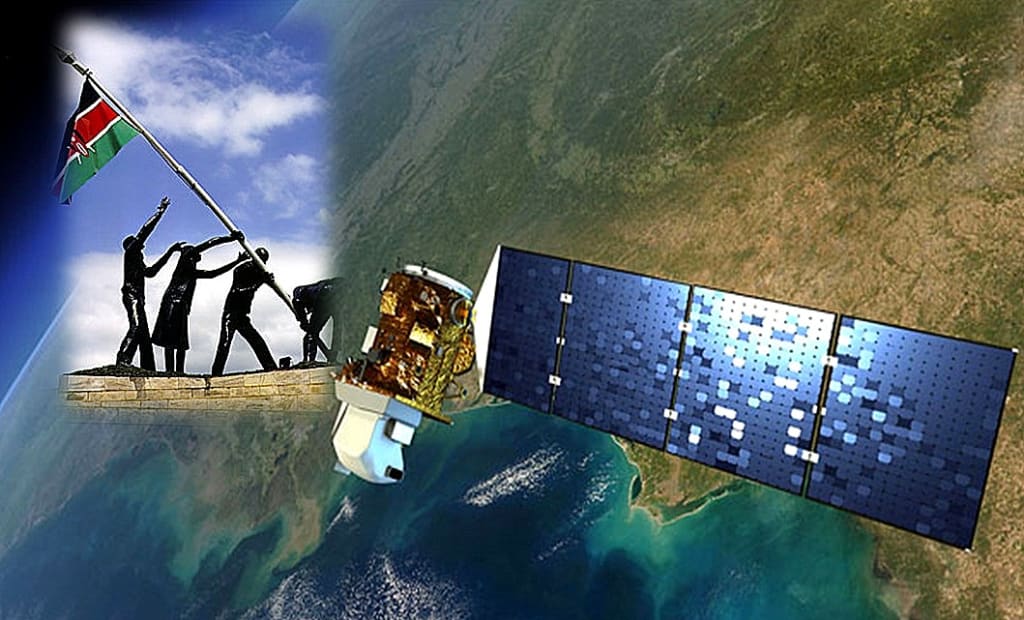
As the African space race heats up, Kenya stands at a unique crossroads, armed with a rich history and significant potential to become a leading force in space exploration on the continent. With its strategic geographical advantages and historical achievements, Kenya is well-positioned to capitalize on its space exploration capabilities and lead Africa into the future of space science and technology.
A Historical Legacy in Space Exploration
Kenya’s journey into space began on April 26, 1967, when an Italian-owned satellite was launched from the country. This event marked a significant milestone for Africa, showcasing Kenya’s potential as a key player in space exploration. The launch of the American-made Nike Apache sounding rocket, managed by NASA-trained Italian engineers, not only marked Kenya's entry into space exploration but also positioned Italy as a prominent player in the space industry.
Kenya's first major breakthrough came on December 12, 1970, when NASA and the Italian Space Agency launched the "Uhuru" satellite. Named after the Swahili word for "freedom," the Uhuru satellite was the first dedicated to X-ray astronomy, symbolizing Kenya's emerging role in global space research. This event was a testament to Kenya's strategic location and its significance in the field of space science.
Strategic Geographical Advantage
Kenya’s location on the equator is a considerable advantage for space launches. The Earth's rotation along the equator provides additional momentum to rockets, making launches more efficient and cost-effective. This equatorial advantage reduces fuel consumption and operational costs, making Kenya an ideal location for space missions.
The San Marco Space Center in Malindi, Kenya, further exemplifies the country's strategic importance. As the world’s first seaport rocket launch pad and equatorial rocket launch platform, San Marco has been a vital asset for international space agencies. The center has been utilized by NASA and the European Space Agency for various space exploration projects, including ozone measurements and cosmic ray detection.
Recent Developments and Achievements
Kenya continues to make strides in space exploration with recent initiatives and collaborations. The country was the first recipient of the UNOOSA-JAXA KiboCUBE initiative, a program designed to assist developing nations in launching cubesats into space. Kenya’s "1KUNS-PF" micro-satellite, launched in 2018, represents a significant milestone in the nation’s space program.
In March 2018, Kenya hosted the second edition of the International Space Forum-Africa Chapter, marking the first space ministerial conference on the continent. This conference highlighted Kenya's growing influence in the space industry and led to the proposal of establishing the International Space Center of Education for Africa in Kenya by the Italian Space Agency.
The Rise of Kenya National Space Agency
Despite its early successes, Kenya's space ambitions faced setbacks over the years. However, the establishment of the Kenya National Space Agency (KENSA) in March 2017 marked a turning point. Under President Uhuru Kenyatta’s executive order, KENSA was created to drive Kenya’s space exploration efforts and foster the development of a robust space industry.
Kenya holds the record for the highest number of satellites and rockets launched from Africa between 1967 and 1988. This historical achievement underscores Kenya's potential to become a leading space power once again.
The Path Forward
Kenya's journey in space exploration is far from over. The country has the infrastructure, historical experience, and strategic advantages needed to lead Africa in space science and technology. With the right policies and continued investment in space programs, Kenya can harness its potential and drive the next phase of Africa’s space race.
As science fiction author Andy Weir suggested in his novel "The Martian," Kenya could play a pivotal role in Moon colonization and beyond. With a solid space policy in place, thanks to the Kenya Ministry of Defence, the groundwork for Kenya's resurgence as a space powerhouse is already laid.
Final Thoughts
Kenya’s historical achievements and strategic advantages position it as a frontrunner in Africa’s space exploration efforts. By building on its legacy and investing in space technology and policy, Kenya can lead the continent into a new era of space exploration. The opportunity is ripe for Kenya to reclaim its place at the forefront of space science and technology, shaping the future of space exploration in Africa and beyond.
About the Creator
Horace Was
Essay Writer, Aviation and Technology Expert
Keep reading
More stories from Horace Was and writers in FYI and other communities.
Its all yours gravity
In aviation, emergencies or technical issues often require quick and decisive actions to ensure the safety of passengers and the aircraft. One such action, often misunderstood but vital, is fuel dumping. What is jettison in aviation? In simple terms, it is the process of intentionally and safely releasing fuel from an aircraft during flight. This procedure, known formally as fuel jettison, is not uncommon and serves a specific purpose that revolves around reducing the weight of the aircraft.
By Horace Wasabout a year ago in FYI
Key Hardware Components That Keep Aircraft Structures Secure
Modern aircraft are built with exceptional precision, combining advanced engineering with thousands of interconnected components. While engines, avionics systems, and aerodynamic structures often receive the most attention, the smaller structural hardware used throughout an aircraft plays an equally critical role. These components provide the connections and reinforcement necessary to keep the aircraft stable, secure, and capable of withstanding the demanding conditions of flight.
By Beckett Dowhan7 days ago in FYI


Comments
There are no comments for this story
Be the first to respond and start the conversation.