
30 Fascinating Facts About Space You Never Knew
30 Interesting Facts About Space missing from Text Books

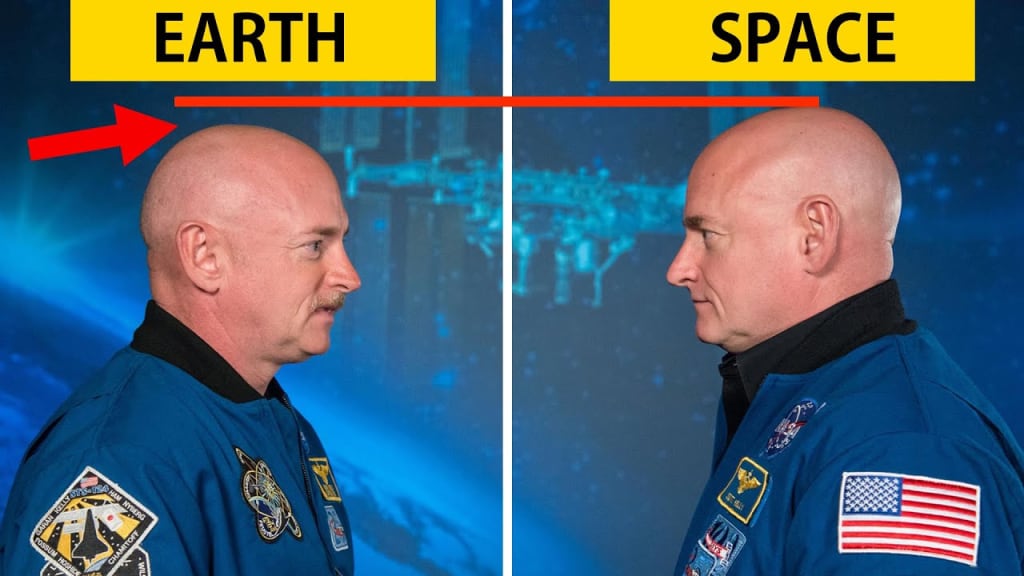
Today, we’re diving into some jaw-dropping facts about space, our planet Earth, and the mysterious universe beyond.
Why does the sky appear blue from Earth but black from space? The answer lies in sunlight, which contains all colors. When sunlight enters Earth’s atmosphere, the blue light gets scattered in all directions due to its shorter wavelength. That’s why the sky appears blue. But in space, there’s no atmosphere to scatter the light, so everything looks black.
Ever wonder why astronauts grow taller in space? In the absence of gravity, the discs in our spine expand, making astronauts up to 2 inches taller.
We humans feel like a big deal on Earth, but our planet is just a dot in the Milky Way Galaxy. The Milky Way itself is just one of 125 billion galaxies that scientists have discovered so far.
NASA’s Voyager 1 spacecraft was launched in 1977. It entered interstellar space in 2012 and is now more than 14 billion kilometers away from Earth, still transmitting data.
Earth has only one moon, but Jupiter has 79 moons. Meanwhile, Mercury and Venus don’t have a single one.
Humanity has been around for roughly 5 million years, but our solar system is about 4.5 billion years old.
You might think Mount Everest is the tallest mountain, but Mars has Olympus Mons, which is almost three times taller.
Light travels at 300,000 kilometers per second. If something moves at this speed for a full year, it would cover the distance of one light-year — about 9.46 trillion kilometers.
The Milky Way Galaxy stretches over 157,000 light-years. And remember, it’s only one among billions of galaxies out there.
The Sun is unbelievably massive — it weighs about 333,000 times more than Earth.
Twelve astronauts have walked on the Moon, and because the Moon has no wind, their footprints are still there and could last for millions of years.
On Mars, your weight would be significantly less. Someone weighing 80 kilograms on Earth would weigh only 30 kilograms on Mars because of lower gravity.
Time works differently across planets. A single day on Venus equals 243 Earth days, while a year on Mars is 687 Earth days.
The Moon could physically fit inside the continental United States, with its diameter of about 3,474 kilometers.
Did you know that ocean tides are not caused by wind, but by the Moon? Its gravity pulls Earth’s oceans, creating high and low tides.
Pluto is so small that it could easily fit inside the geographical area of India.
Believe it or not, there are more stars in the universe than grains of sand on all the beaches of Earth.
The International Space Station is the biggest and most expensive object humans have ever put in space.
In zero gravity, liquids naturally form into perfect spheres, due to surface tension.
While we’ve sent probes millions of kilometers to Mars, we’ve explored less than 5% of our own oceans.
Even our most powerful telescopes can see only 5% of the universe. The rest remains hidden or dark.
Sunlight takes eight minutes to reach Earth. That means when we see the Sun, we’re actually seeing it as it was eight minutes ago.
The International Space Station completes one orbit of Earth every 90 minutes. That means it goes around the planet 16 times a day.
In 2016, a radio signal reached Earth after traveling through space for 5 billion years. That’s older than the Earth itself.
On Venus, it rains sulfuric acid, and iron falls like snow. Its atmosphere is so extreme, it’s the last place you’d want to visit.
Space is completely silent. Sound waves need a medium like air to travel, but space is a vacuum — making it eerily quiet.
Regular pens don’t work in space because they rely on gravity to push ink. That’s why astronauts use special pressurized pens or pencils.
The Moon is slowly drifting away from Earth at a rate of 4 centimeters per year. Someday, it will be much farther away.
Jupiter acts as a giant shield for Earth, attracting and deflecting many dangerous asteroids thanks to its massive gravity.
And yes, a planet made of pure diamonds exists. Scientists discovered it 40 light-years away — a “super-Earth” where carbon has crystallized under immense pressure.
These were 30 amazing facts about space, Earth, the Moon, and the universe. If you found this fascinating, don’t forget to like, share, and comment. We’ll see you in the next video with even more mind-blowing facts!
About the Creator
Keep reading
More stories from Jehanzeb Khan and writers in FYI and other communities.
India’s Biggest Bank Fraud: Vijay Mallya
There was once an Indian man who was famously called “The King of Good Times.” He lived a life no less than royalty—hosting extravagant parties worth crores in a single night. While billionaires around the world owned private jets, this man flew in his own private Boeing 727.
By Jehanzeb Khan8 months ago in FYI
Oil Prices and the Hidden Struggles Behind Global Energy
Oil prices influence daily life in ways many people rarely notice. From the cost of gasoline at the pump to the price of food in grocery stores, shifts in oil prices ripple through the global economy. A sudden rise can strain family budgets, while a sharp drop can shake entire industries. Behind these changes are complex forces such as political tension, supply shortages, economic growth, and environmental concerns. Yet for many people, oil prices remain a distant headline rather than a personal story. The truth is far more connected to everyday life. Understanding how oil prices move, why they change, and who feels the impact most can reveal a deeper picture of the modern world and the fragile balance that keeps global energy flowing.
By Muqadas khan4 days ago in FYI




Comments (1)
nice bro