
India’s Biggest Bank Fraud: Vijay Mallya
India’s Biggest Bank Fraud: Vijay Mallya

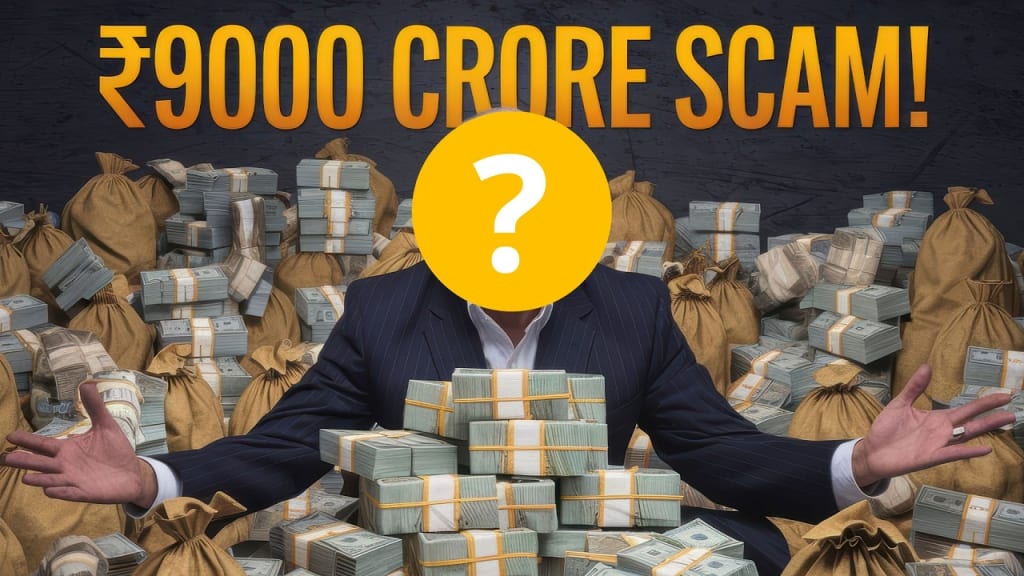
There was once an Indian man who was famously called “The King of Good Times.” He lived a life no less than royalty—hosting extravagant parties worth crores in a single night. While billionaires around the world owned private jets, this man flew in his own private Boeing 727.
But today, his name is tied to one of the biggest fraud cases in Indian history.
Yes, we're talking about Vijay Mallya.
Kingfisher wasn’t just a beer brand—it was a symbol of luxury, youth, and success. It turned Mallya into a man who owned everything an average person could only dream of. But what really happened that caused the same brand to ruin his empire?
Born in 1955 into a wealthy family, Vijay Mallya was surrounded by riches from the beginning. His father, Vittal Mallya, controlled much of India’s liquor industry as the director and major shareholder of United Breweries.
Because of his business, Vittal Mallya wasn't seen favorably by many. He avoided the media and often paid off journalists to suppress negative news. Vijay, his only son, lived like a prince. While other children played with marbles, young Vijay played with remote-controlled cars.
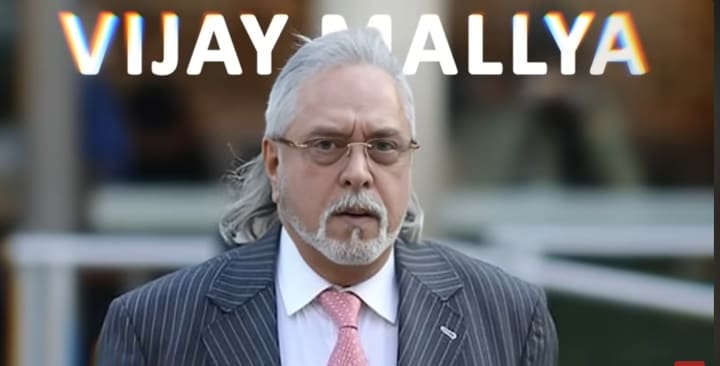
He had a passion for automobiles. As he grew older, so did the size of his toys—eventually owning around 250 vintage cars and over 200 horses, just for fun. His father disapproved, believing such hobbies made for poor businessmen.
Yet, Mallya wasn’t just a spoiled heir. In 1982, he won the Indian Grand Prix and became a national champion in racing. He might have continued pursuing sports, but a tragedy changed everything—his father died suddenly of a heart attack. Vijay was just 28.
He was suddenly burdened with the responsibility of handling his father's vast business empire. Many doubted him, believing he was too addicted to luxury to lead such a large enterprise. But Vijay proved them wrong.
Among all the United Breweries products, it was Kingfisher Beer that caught his attention. Having launched it just before his father's death, Mallya had a vision. He wanted to market Kingfisher to the youth of India, and Bangalore, with its rising pub culture, was the perfect starting point.
He used creative strategies to introduce Kingfisher to a young audience, creating vibrant, party-like atmospheres in pubs—especially targeting female consumers. In five years, Bangalore went from having just one pub to over 40. Kingfisher became synonymous with beer itself.
Despite criticism from conservative politicians, Mallya turned United Breweries into India’s largest liquor manufacturer—every second bottle sold was Kingfisher.
Mallya now lived like a king, but trouble was brewing. Several Indian states began banning liquor sales, and Kingfisher’s revenue plummeted. In these “dry states,” seized liquor was destroyed publicly with road rollers. This was Mallya’s direct loss.
Things got worse when liquor ads were banned on Indian TV and newspapers—even in states where it was legal to sell. Mallya responded with a marketing loophole known as “surrogate advertising.” He launched Kingfisher mineral water and soda, advertising them instead—though everyone knew what the ads really represented.
When India hosted the 1996 Cricket World Cup, Kingfisher ran a bold ad campaign, making it a household name. Mallya started sponsoring events with media presence, ensuring Kingfisher’s brand was constantly in the spotlight. Then came the iconic Kingfisher Calendar, which launched careers of models like Deepika Padukone, Katrina Kaif, and Nargis Fakhri.
But even with fame, wealth, and luxury, something still bothered Mallya—he hated being called the “Liquor Baron.” He wanted a name that commanded respect in society, not just in parties. That’s when he hatched a bold plan—one that would later ruin him.
In 2004, he bought 12 Airbus A320s worth over $200 million and launched Kingfisher Airlines, aiming to redefine India’s flying experience. His airline didn’t hire attendants—it hired models. The uniforms were designed by fashion designer Manoviraj Khosla. Mallya handpicked menus, staff, and every luxury detail.
At first, Kingfisher Airlines revolutionized Indian aviation. There were no first or economy classes—just the premium “Kingfisher Class.” But luxury came at a cost.
Soon, Mallya went beyond domestic flights. Since airlines needed five years of experience before going international, he hastily acquired Air Deccan, an existing airline, to bypass the rule. The deal was overpriced and financed through loans.
His plan was simple: borrow money, grow fast, and repay once profits rolled in. But the profits never came. Operational costs skyrocketed, and Kingfisher Airlines recorded a loss of ₹347 crore in its first 18 months.
Meanwhile, Mallya continued spending. He purchased Formula One and cricket teams while his airline drowned in debt.
Then came 2008—the global financial crisis. The U.S. recession hit fuel prices, travel budgets, and purchasing power. People stopped flying. Most airlines cut costs. Kingfisher didn’t. Its lavish services, though admired, became a liability.
On September 12, 2011, a Canadian research firm released a report titled “Pie in the Sky,” exposing Kingfisher’s financial chaos. It revealed the airline was surviving solely on loans and was already nearing bankruptcy.
The IDBI Bank had loaned $200 million to Kingfisher based on false documents. Mallya convinced banks of massive future profits, but it was all smoke and mirrors. The total liabilities of Kingfisher reached $7 billion.
After the report, fuel suppliers refused credit, catering services halted, and eventually, even staff salaries stopped. Some flight attendants offered their own meals to passengers. Salaries remained unpaid for over six months.
While 900 employees suffered, Mallya threw a lavish birthday bash in Goa, hiring Enrique Iglesias to perform—for a fee of $1.5 million. The cost of that party could have paid months of staff wages.
In 2012, Kingfisher Airlines’ license was suspended. Mallya had taken ₹9,000 crore in loans from 17 Indian banks—most of them public banks, meaning the people's money.
Investigations by CBI and the Enforcement Directorate found that Mallya used fake documents to secure loans and diverted funds to his personal luxuries and other businesses.
Worse, in 2016, Mallya fled to the UK just before legal proceedings began in India. His passport was canceled, and extradition requests were filed. After a lengthy trial, a UK court ruled in 2018 that he should be sent back to India, but Mallya appealed.
In the meantime, Indian courts ordered seizure of his properties. His luxury cars, bungalows, and United Breweries shares were auctioned. Still, his legal team managed to delay extradition.
Today, Vijay Mallya lives in the UK, enjoying luxury while facing criminal charges back home. His story is no longer one of success, but of downfall—of how pride, greed, and ambition turned the King of Good Times into one of India’s most controversial fugitives.
About the Creator
Keep reading
More stories from Jehanzeb Khan and writers in FYI and other communities.
Strange Objects Seen on Mars and Moon
Tonight, as we look at the stars shining in the dark sky, a thought crosses everyone’s mind — are we alone in this universe? Among these millions and billions of stars and planets, is there even one where life exists like it does on Earth? Even if we assume, just for a moment, that Earth is the only place in this universe with life, this idea is hard for the human mind to accept. Then the question arises: if life really exists only on Earth, then what is the purpose of all these countless shining stars?
By Jehanzeb Khan8 months ago in FYI
The Role of NSN Identification in Aerospace Procurement
The aerospace industry relies heavily on precision, organization, and traceability when sourcing parts and equipment. Aircraft are made up of thousands of individual components, each playing a vital role in the safe and efficient operation of the system. Managing these parts across manufacturers, maintenance teams, and procurement networks can be extremely complex. To simplify this process, standardized identification systems are used to classify and track components throughout their lifecycle.
By Beckett Dowhanabout 7 hours ago in FYI



Comments (1)
This was a fascinating deep dive into one of India’s most controversial figures. It’s shocking how ambition, unchecked spending, and systemic loopholes led to such a massive financial collapse. The story raises important questions about accountability—not just for Mallya, but for the institutions that supported him for so long. Great work!