
Will the New Hydrogen Technology Change the Trajectory of the Automobile Industry?
Hydrogen Technology on the Rise
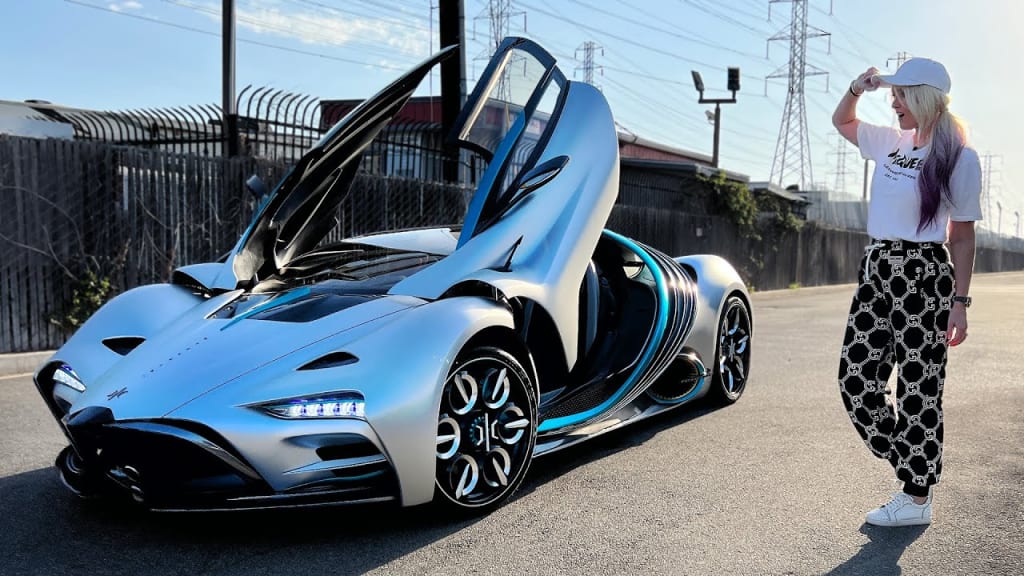
As the automotive industry speeds toward a greener future, the debate over which clean energy technology will dominate continues to intensify. While electric vehicles (EVs) powered by lithium-ion batteries have taken center stage in recent years, hydrogen fuel cell technology is quietly making a comeback, offering the potential to reshape the industry in ways that could disrupt the current trajectory.
So, the question emerges: Will the new hydrogen technology change the trajectory of the automobile industry? The short answer is: yes, but not overnight. Hydrogen has immense promise, but it also faces significant hurdles. However, with recent technological breakthroughs, shifting government policies, and growing environmental pressure, hydrogen's role in the automotive future is becoming harder to ignore.
What Is Hydrogen Fuel Cell Technology?
Hydrogen fuel cell vehicles (FCVs) use compressed hydrogen gas to generate electricity through a chemical reaction between hydrogen and oxygen, emitting only water vapor as a byproduct. Unlike battery electric vehicles (BEVs), which require long charging times, hydrogen cars can be refueled in under 5 minutes, offering a driving range comparable to petrol vehicles.
Recent advances have significantly improved the efficiency, durability, and cost of hydrogen fuel cells. Companies like Toyota, Hyundai, and Honda have already launched FCVs such as the Toyota Mirai and Hyundai NEXO, and are investing heavily in next-generation hydrogen platforms.
Why Hydrogen Could Shift the Industry
1. Faster Refueling Times
One of the main limitations of BEVs is long charging times, especially for long-distance travel or fleet vehicles. Hydrogen vehicles can be refueled almost as quickly as gasoline cars, making them highly attractive for commercial fleets, taxis, and long-haul trucks.
2. Higher Energy Density
Hydrogen has a higher energy density than batteries, which allows for longer driving ranges. This is particularly important for heavy-duty vehicles and industrial transportation sectors where battery size and weight are constraints.
3. Potential for Clean Production
While most hydrogen today is produced from fossil fuels ("grey hydrogen"), emerging methods such as green hydrogen (made using renewable energy and electrolysis) could drastically reduce carbon emissions. This aligns well with global net-zero goals.
4. Complement to EVs
Rather than being a direct competitor, hydrogen may serve as a complementary technology to BEVs. Hydrogen FCVs could dominate segments where batteries fall short, heavy transport, shipping, aviation, and areas with limited grid infrastructure.
Automakers Betting on Hydrogen
Several major players in the industry are placing big bets on hydrogen:
Toyota has long championed hydrogen and recently launched the second-generation Mirai with improved efficiency and range.
Hyundai is investing billions in hydrogen infrastructure and aims to produce 700,000 fuel cell systems annually by 2030.
BMW is developing hydrogen prototypes and exploring applications for larger vehicles and SUVs.
Honda, though previously cautious, is re-entering the space with a new fuel cell vehicle in partnership with GM.
In the commercial space, Nikola, Hyzon Motors, and Toyota are working on hydrogen trucks, while Airbus is exploring hydrogen planes.
Government Support and Infrastructure Push
Countries like Japan, Germany, South Korea, and China have introduced national hydrogen strategies, investing billions in fueling stations, R&D, and subsidies. The European Union plans to install 40 gigawatts of hydrogen electrolyzers by 2030. The U.S., under the Inflation Reduction Act and Department of Energy programs, is also pouring money into green hydrogen production and storage.
This growing policy support could be the tipping point hydrogen needs to scale in the automotive world.
Challenges Ahead
Despite its potential, hydrogen still faces several obstacles:
1. High Cost: Fuel cells and hydrogen tanks remain expensive compared to lithium-ion batteries.
2. Limited Infrastructure: Refueling stations are few and far between, even in hydrogen-forward countries like Japan.
3. Energy Efficiency: Hydrogen production, storage, and conversion currently waste more energy than BEVs.
4. Consumer Awareness: Public understanding of hydrogen tech is low, and trust in its safety and reliability is still building.
Unless these barriers are addressed, hydrogen will remain limited to niche markets in the near term.
Will It Truly Change the Industry’s Trajectory?
The trajectory of the auto industry has, for the last decade, pointed clearly toward battery-electric vehicles. But hydrogen introduces a new vector, a potential second track for decarbonizing transport, particularly in sectors where batteries are less efficient.
In passenger cars, hydrogen may coexist with BEVs but is unlikely to overtake them anytime soon. However, in trucking, shipping, aviation, and industrial fleets, hydrogen could well become the preferred clean energy source. As infrastructure expands and green hydrogen becomes cheaper, adoption could accelerate dramatically post-2030.
The Verdict
New hydrogen technology is unlikely to replace electric vehicles outright, but it will change the trajectory of the automobile industry, especially in commercial and high-performance sectors. By offering faster refueling, longer range, and lower environmental impact when sourced sustainably, hydrogen stands as a viable, scalable, and necessary component of the global clean transportation puzzle.
In the years ahead, expect a dual-track revolution: batteries for urban and personal use, and hydrogen for heavy-duty and long-haul transport. The winners will be those automakers, and nations, that can innovate across both.
About the Creator
Emma Ade
Emma is an accomplished freelance writer with strong passion for investigative storytelling and keen eye for details. Emma has crafted compelling narratives in diverse genres, and continue to explore new ideas to push boundaries.
About Binding Prometheus
I want to start actively advocating on behalf of my own work, and the most valuable part of my canon is, without a doubt, Binding Prometheus, the play I have been working on since 2019 and only finished in 2023 as part of my MA. The play itself is an amalgamation of a million different inspirations. On one end, it evokes the Ancient Greek myth-play, deriving its own title from the earliest extant work of Western drama we have, Aeschylus’s Prometheus Bound. On the other end, it borrows significantly from the sci-fi bulwarks from over the years, namely Mary Shelley’s Frankenstein and Karel Capek’s Rossum’s Universal Robots. The play could be an episode of Black Mirror, I fear. I don’t know. I’ve only ever seen one episode of Black Mirror.
By Steven Christopher McKnight18 days ago in Futurism
Contrary to popular perception, far-side observations show that Earth's moon is not "dead."
For a long time, the moon appeared to be a world that had completed its major transformations before becoming silent. Although there are still scars on its surface from heavy impacts and past lava floods, many experts have viewed such features as remnants of a far older era.
By Francis Dami6 days ago in Futurism




Comments
There are no comments for this story
Be the first to respond and start the conversation.