
Why the Moon Is Drifting Away And What It Means for Earth
The slow cosmic breakup that’s changing our tides, time, and future

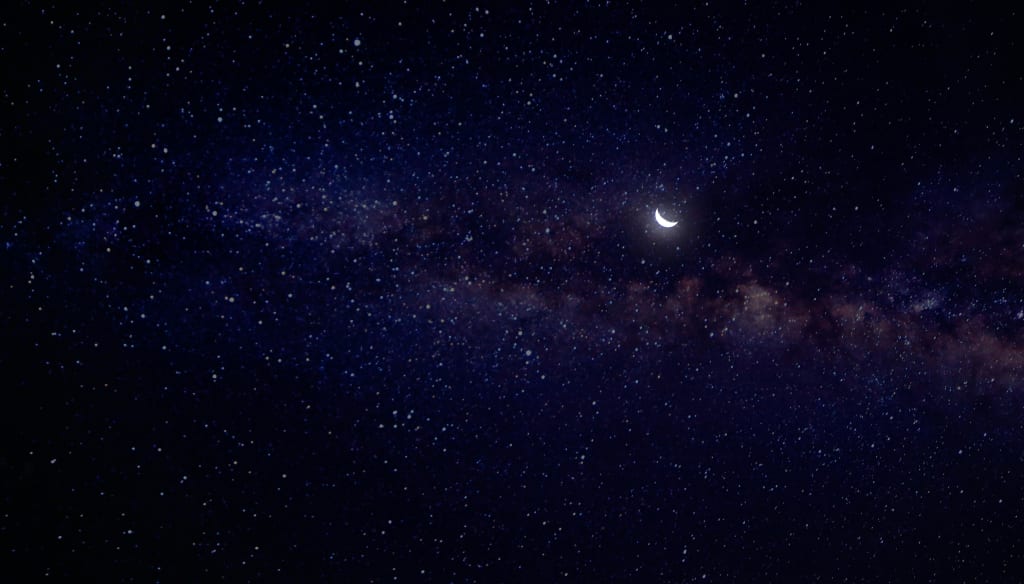
Why the Moon Is Drifting Away—And What It Means for Earth
When you look up at the night sky, the Moon seems like a loyal companion—silent, steady, and unchanging. But what if I told you the Moon is slowly leaving us?
Yes, you read that right. Earth’s closest celestial partner is drifting away, little by little, year by year. And while it's not about to abandon us overnight, this slow-motion breakup is more than just poetic. It has real consequences—affecting our tides, our days, and even the fate of life on Earth as we know it.
🌙 The Moon’s Slow Escape
Scientists have known for decades that the Moon is gradually moving away from Earth. According to data from lunar laser ranging experiments (which began with mirrors placed on the Moon during the Apollo missions), the Moon is drifting away at a rate of about 3.8 centimeters per year—roughly the same rate as your fingernails grow.
That may not sound like much. But over millions of years, it adds up. About 1.4 billion years ago, the Moon was so close to Earth that a single day lasted only 18 hours. Our planet spun faster, and the Moon’s gravitational pull on Earth was stronger—creating more extreme tides and shorter nights.
🌊 Tides: The Moon’s Tug of War with Earth
The most immediate impact of the Moon’s presence is on ocean tides. The gravitational pull between the Earth and Moon causes water on Earth’s surface to bulge, creating high and low tides. These tides are essential—not just for beachgoers, but for marine ecosystems, weather patterns, and even life cycles of certain animals.
As the Moon moves farther away, this pull weakens. Tides will become less extreme, potentially disrupting the delicate balance that marine life depends on. Shorelines could evolve differently. Migrating animals that rely on tidal patterns might be thrown off course.
The effects won’t be dramatic in our lifetime, but in the distant future, this could reshape coastlines and transform how Earth’s oceans behave.
⏰ Time Is Stretching
You know that feeling when time seems to stretch on a slow Monday? The Moon is literally making our days longer—but not because of boredom.
As the Moon moves away, it takes some of Earth’s rotational energy with it. This causes the planet to slow down ever so slightly. Right now, a day is about 24 hours, but it’s getting longer by about 1.7 milliseconds per century.
That might sound like a minuscule change, but over millions of years, it means Earth’s rotation will continue to slow. In the far future, our days could stretch to 30 hours or more.
Imagine needing a new calendar, new circadian rhythms, and possibly an overhaul of how we live day-to-day. Time, quite literally, is changing.
🪐 A Cosmic Dance
This drift isn’t just Earth being ghosted by the Moon. It’s all part of a larger gravitational relationship. The Moon formed from Earth, likely after a massive collision with a Mars-sized object billions of years ago. Since then, the two have been locked in a cosmic dance—pulling, spinning, and shaping one another.
Right now, we’re at a rare and beautiful balance. The Moon is just far enough away to perfectly cover the Sun during a total solar eclipse. But as the Moon moves away, those perfect eclipses will eventually stop. In the future, we’ll only see annular eclipses, where the Moon appears smaller and doesn’t fully block the Sun—just a glowing ring of fire.
The age of total solar eclipses will come to an end. And future generations may only read about them in history books.
🌍 What It Means for Earth and Humanity
So, should we panic? Not at all. The Moon’s drift is incredibly slow. It will take billions of years before the changes become truly dramatic.
But what’s fascinating is that this isn’t just an astronomical curiosity. It’s a reminder that our planet is evolving—not just biologically or technologically, but cosmically. The forces that shaped the Earth and made life possible are still at work, subtly shifting the conditions of our existence.
As we study the Moon’s movement, we gain deeper insight into the history of Earth, the physics of motion, and the delicate balance of life. It also teaches us humility. Even something as seemingly eternal as the Moon is part of a much larger story—a universe in motion, always changing.
🌌 Final Thoughts: The Slow Goodbye
The Moon isn’t abandoning us. It’s just slowly stepping back in the grand theater of space. And while we won't feel the full effects in our lifetimes, understanding this gentle retreat gives us a new perspective on time, gravity, and our place in the cosmos.
So next time you look up at the Moon, think about this: You’re witnessing a moment in cosmic history. A temporary balance. A snapshot of a relationship that is, quite literally, drifting apart.
And that—like the Moon itself—is both haunting and beautiful.
About the Creator
Muhammad ali
i write every story has a heartbeat
Every article starts with a story. I follow the thread and write what matters.
I write story-driven articles that cut through the noise. Clear. Sharp truths. No fluff.
Keep reading
More stories from Muhammad ali and writers in Futurism and other communities.
From Lab to Life How CRISPR is Reshaping Medicine
The Hidden Cost of Cheap Clothes That No One Talks About Walk into any mall or scroll through online stores and you’ll see it: racks of trendy clothes, dirt-cheap prices, and new styles dropping every week. Sounds like a fashion lover’s dream, right?
By Muhammad ali5 months ago in Futurism
About Binding Prometheus
I want to start actively advocating on behalf of my own work, and the most valuable part of my canon is, without a doubt, Binding Prometheus, the play I have been working on since 2019 and only finished in 2023 as part of my MA. The play itself is an amalgamation of a million different inspirations. On one end, it evokes the Ancient Greek myth-play, deriving its own title from the earliest extant work of Western drama we have, Aeschylus’s Prometheus Bound. On the other end, it borrows significantly from the sci-fi bulwarks from over the years, namely Mary Shelley’s Frankenstein and Karel Capek’s Rossum’s Universal Robots. The play could be an episode of Black Mirror, I fear. I don’t know. I’ve only ever seen one episode of Black Mirror.
By Steven Christopher McKnight16 days ago in Futurism



Comments
There are no comments for this story
Be the first to respond and start the conversation.