
Why Most Potentially Habitable Planets Do Not Look Like Earth
Space


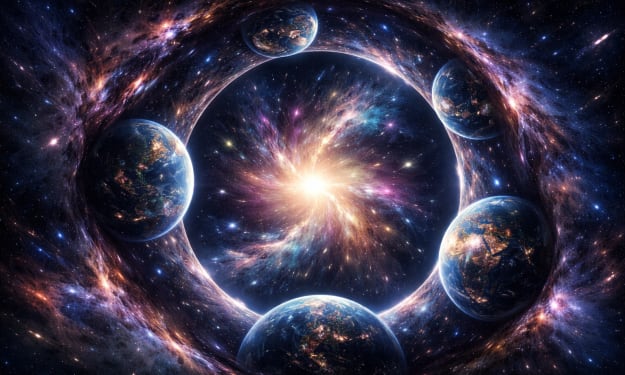
When scientists and science fiction writers imagine habitable planets, they often picture something very similar to Earth: blue oceans, green continents, a breathable atmosphere, and a familiar sky. For decades, the search for life beyond our planet has been guided by this image of a “second Earth.” Yet modern astronomy is steadily revealing a surprising truth: most potentially habitable planets in the universe look nothing like Earth at all.
Far from being the cosmic standard, Earth appears to be an outlier—an unusual result of a long chain of fortunate coincidences.
Earth Is Not the Default Outcome
Earth’s habitability depends on a delicate balance of factors. Its distance from the Sun allows liquid water to exist on the surface. Its size is just right to retain an atmosphere without becoming a gas giant. A strong magnetic field shields it from solar radiation. Plate tectonics recycle carbon and regulate climate over geological timescales. Even the Moon plays a stabilizing role by keeping Earth’s axial tilt relatively steady.
Astrophysics now suggests that this exact combination is rare. Planet formation is chaotic, and small differences early on can lead to radically different outcomes. As a result, most planets that might host life do so under conditions that diverge sharply from those on Earth.
The Habitable Zone Is Only the First Filter
Traditionally, astronomers focused on the “habitable zone”—the region around a star where temperatures allow liquid water to exist. But being in this zone does not mean a planet will resemble Earth.
Many planets within habitable zones are:
- tidally locked, with one side permanently facing their star,
- covered entirely by deep global oceans,
- wrapped in thick atmospheres that trap heat,
- or subjected to extreme pressure and gravity.
In other words, the habitable zone defines where life could exist, not how that life-bearing planet must look.
Super-Earths and Water Worlds Dominate
One of the biggest surprises of exoplanet research is the discovery that Earth-sized planets are not the most common. Instead, the universe seems to favor super-Earths—planets 1.5 to 3 times Earth’s size—and mini-Neptunes, which have thick atmospheres and deep oceans.
Many of these worlds are likely “water planets,” where oceans may be hundreds of kilometers deep, with no exposed land at all. While liquid water is essential for life as we know it, such planets lack continents, coastlines, and shallow seas—features that played a crucial role in Earth’s biological evolution.
Life on a water world, if it exists, would likely be aquatic, microbial, and hidden beneath layers of ice or water. Complex land ecosystems, forests, or civilizations would be far less likely.
Alien Atmospheres, Alien Biology
Earth’s atmosphere is not just a physical feature—it is a biological artifact. Oxygen, ozone, and the delicate balance of gases are the result of billions of years of life reshaping the planet.
On other potentially habitable planets, atmospheres may be dominated by:
- carbon dioxide,
- methane,
- ammonia,
- or even hydrogen and helium.
Such atmospheres might still support life, but not life that breathes oxygen or lives on open land. Instead, scientists expect subsurface biospheres, cloud-based microbes, or organisms adapted to high pressure and low light. Habitability does not require Earth-like air—only chemistry that allows metabolism to function.
The Influence of Different Stars
Another reason Earth-like worlds are rare is that most stars in the universe are not like the Sun. Red dwarf stars, which make up about 70% of all stars, are smaller, cooler, and far more active.
Planets in their habitable zones orbit very close to these stars, increasing the likelihood of:
- tidal locking,
- intense stellar flares,
- atmospheric erosion.
Such planets may still be habitable, but their climates could be extreme: a scorching day side, a frozen night side, and a narrow twilight zone where conditions are stable. These environments are radically different from Earth’s globally balanced climate.
Earth as a Special Case, Not a Template
As astrobiology matures, scientists are moving away from Earth-centered assumptions. The goal is no longer to find a planet that looks exactly like Earth, but to identify biosignatures—chemical or physical signs that life is actively shaping a planet’s environment.
This shift reflects a deeper realization: life is likely far more adaptable than we once believed. It may thrive under ice, beneath oceans, in dense atmospheres, or in environments that appear hostile by terrestrial standards.
Earth is not the blueprint for life in the universe. It is one successful experiment among many possible outcomes.
Why This Changes How We Search for Life
The fact that most habitable planets do not resemble Earth is not discouraging—it is empowering. It means the universe offers many pathways to life, not just one narrow corridor.
Instead of asking, “Which planet looks most like Earth?” scientists now ask, “Which planets show signs of energy imbalance, chemical disequilibrium, or long-term stability?” These questions open the door to discovering life in places we once would have ignored.
A Universe Richer Than Our Expectations
Earth taught us what life can look like—but not what it must look like. As telescopes grow more powerful and data more precise, we are learning that the cosmos is full of habitable worlds that challenge our imagination.
If life is out there, it is unlikely to mirror us. And that may be the most exciting discovery of all.
About the Creator
Keep reading
More stories from Holianyk Ihor and writers in Futurism and other communities.
Could the Universe Be Closed Rather Than Infinite?
For most people, the idea of the Universe is inseparable from infinity. We imagine space stretching endlessly in every direction, with no limits, no edge, and no final destination. Infinity feels natural, almost inevitable. Yet modern cosmology poses a far more unsettling and fascinating question: what if the Universe is not infinite at all? What if it is closed—finite in size, but without any boundaries?
By Holianyk Ihora day ago in Futurism
About Binding Prometheus
I want to start actively advocating on behalf of my own work, and the most valuable part of my canon is, without a doubt, Binding Prometheus, the play I have been working on since 2019 and only finished in 2023 as part of my MA. The play itself is an amalgamation of a million different inspirations. On one end, it evokes the Ancient Greek myth-play, deriving its own title from the earliest extant work of Western drama we have, Aeschylus’s Prometheus Bound. On the other end, it borrows significantly from the sci-fi bulwarks from over the years, namely Mary Shelley’s Frankenstein and Karel Capek’s Rossum’s Universal Robots. The play could be an episode of Black Mirror, I fear. I don’t know. I’ve only ever seen one episode of Black Mirror.
By Steven Christopher McKnight27 days ago in Futurism
Saudi Arabia Brakes and Clutches Market Analysis: Key Players and Market Forecast
According to IMARC Group's latest research publication, the Saudi Arabia brakes and clutches market is projected to exhibit a growth rate of 4.50% during 2025-2033. Increasing demand for efficient automotive components, growing urban infrastructure, and rising vehicle ownership are the prominent factors propelling the market. Investment in domestic manufacturing encouraged by the government's push for local manufacturing under Vision 2030 and incentives for the expansion of the automotive industry are also escalating product demand. Rising trend toward electric and hybrid cars is spurring advancements in braking technology, further expanding the market share.
By Abhay Rajput7 days ago in Futurism
🅼🅸🅳🅽🅸🅶🅷🆃 🆂🅽🅰🅲🅺🆂
"It's 10 in Tuscon! We all know what that means... It's Time for Midnight Snacks with your man, Gerald Gee! Ready to spend the night together? Me too! I'm full of snacks and can't wait to regurgitate them all back into your hungry ears. Crack a brew! Pop some corn! Anything to get ready for one hell of a show where the talk maybe cheap but the words cut deep...
By Lamar Wiggins6 days ago in Fiction


Comments
There are no comments for this story
Be the first to respond and start the conversation.