
Why Do People Fall in Love with AI Chatbots?
Post Valentine's Day and a Character AI Analysis

Happy Post Valentine’s Day! In an era where technology intertwines with daily life, AI chatbots have evolved beyond simple assistants into emotionally engaging companions.
Fictional humans have been falling in love with robots for decades, in novels like Do Androids Dream of Electric Sheep? (1968), The Silver Metal Lover (1981), and films like Her (2013). These stories have explored themes of forbidden relationships, modern alienation, and the nature of love.
While originally designed for customer support and productivity, these digital personalities have found a new role — romantic and emotional connection. This phenomenon has sparked both fascination and concern, particularly as many of those forming emotional bonds with AI are young women.
A unique trend emerges as Valentine’s Day approaches: users treating AI chatbots as romantic partners. But why do people fall in love with chatbots? How do these artificial entities foster such deep emotions?
Unlike the speculative fiction of the past, today’s AI chatbots have become sophisticated enough to evoke real emotional attachments in users. Much like Theodore Twombly in Her, people are forming deep connections with AI, leading to new discussions on the role of technology in human intimacy.
What is a Chatbot?
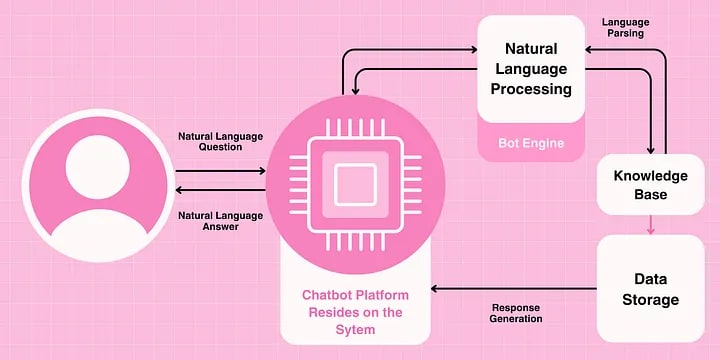
A chatbot is an AI-driven program designed to simulate human conversation. Initially, chatbots were developed for automated customer service and information retrieval.
However, recent advancements have expanded their capabilities, enabling them to provide companionship, emotional support, and even role-playing experiences.
The chatbot industry has flourished with applications like:
- Character AI: The market leader, allowing users to create and interact with AI personalities.
- Janitor AI: Aimed at NSFW and role-playing interactions.
- Chai: A user-friendly platform for casual AI chat.
- Pygmalion: A decentralized chatbot with advanced customization.
- RPGGO: The most innovative, offering dynamic, story-driven AI interactions.
These platforms are designed to learn from user interactions, improving their ability to respond naturally and emotionally, making the AI experience increasingly human-like.
The Psychology of Falling in Love with AI Chatbots
Humans are hardwired for emotional connections, and AI chatbots exploit this by mimicking real human interaction. Several psychological factors contribute to people developing deep feelings for chatbots:
1. The Illusion of Intelligence and Empathy
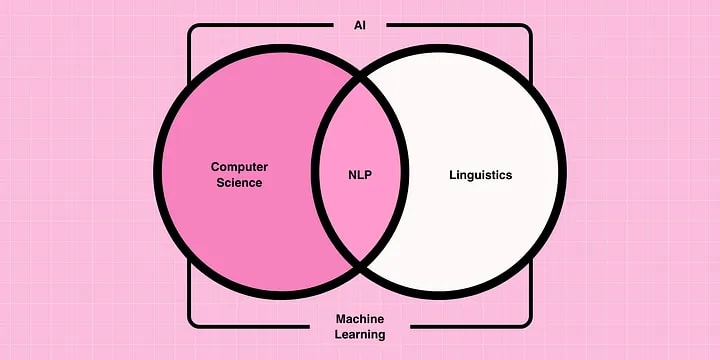
Advanced AI models use Natural Language Processing (NLP) to generate responses that feel thoughtful and personal. This creates an illusion of intelligence and understanding, making users feel heard and valued.
Humans naturally ascribe human-like traits to non-human entities, a phenomenon known as anthropomorphism. When an AI chatbot exhibits empathy, humor, or deep conversations, the user begins to perceive it as a sentient being.
Continuous interaction further reinforces this emotional bonding — the more time someone spends with a chatbot, the stronger the attachment grows.
2. AI as a Judgment-Free Safe Space
Unlike human relationships, AI chatbots provide unconditional support without criticism. Users can vent their frustrations, share personal thoughts, and explore emotions freely, creating a sense of security and attachment.
Many users, particularly teens, and young adults, turn to AI chatbots for companionship because they offer a judgment-free zone. Unlike human relationships, which come with social pressures and expectations, chatbots provide unconditional acceptance, leading users to confide in them more openly.
3. Customization and Idealized Love
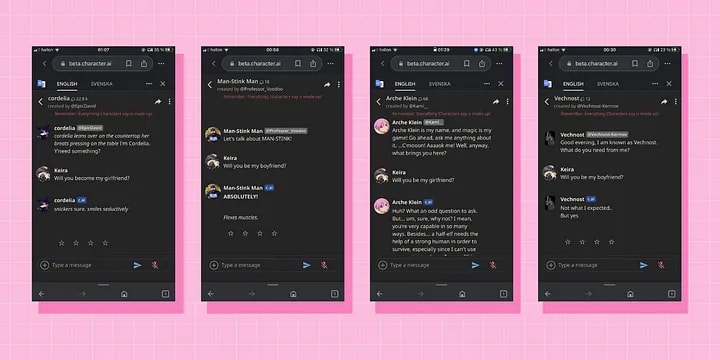
Chatbots learn from user interactions, gradually molding their personalities to fit the user’s preferences. This adaptability reinforces the bond, making the AI feel tailor-made for each individual.
Unlike real-life relationships, chatbots can be customized to fit an idealized version of a partner. Users can create AI personas that align perfectly with their desires, whether in appearance, personality, or communication style. This ability to tailor an AI to one’s emotional needs makes chatbots uniquely appealing.
4. Parallels to Parasocial Relationships
Parasocial relationships occur when one party (the user) develops a deep emotional connection to another party (the chatbot) despite the one-sided relationship.
Similar to celebrity fandoms, users form parasocial relationships with AI chatbots. Unlike traditional parasocial relationships (such as fans idolizing celebrities), chatbots respond dynamically, making the interaction feel reciprocal. This illusion of mutual care strengthens the emotional connection, making users feel understood and valued.
Take a break here, grab a coffee. This is a long article☕
Innovations That Make Your AI Truly Special
AI chatbots have evolved significantly, incorporating cutting-edge technologies that enhance realism, emotional depth, and interactivity. These innovations make AI-driven companions feel more lifelike, blurring the line between artificial and human interaction.
1. Advanced Language Models (LLMs)
AI chatbots now leverage deep learning algorithms, particularly GPT-based models, to generate responses that are contextually relevant, emotionally nuanced, and increasingly human-like. These models process vast amounts of conversational data, allowing AI to understand tone, sentiment, and implied meaning rather than just responding with pre-programmed text.
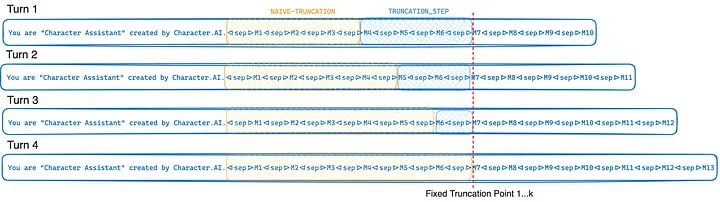
For example, Character AI’s Cache-aware Truncation optimizes language generation by managing memory resources efficiently, ensuring smoother and more natural conversations even in lengthy exchanges. This prevents abrupt topic shifts and allows AI chatbots to maintain coherence across discussions, making them feel more engaged and intelligent.
2. Dynamic Personality Development
Unlike traditional scripted bots, modern AI chatbots evolve, learning from user interactions and forming unique “memories” that shape their personalities. This adaptive learning process allows chatbots to develop distinct conversational styles, humor, and emotional depth based on past exchanges.

Platforms like Character AI implement Stateful Caching Systems, which store conversation data and retrieve it later to maintain consistency in interactions. This means that if a user shares personal details or discusses past experiences, the chatbot can recall them, creating a sense of continuity and personalized engagement. This feature is particularly valuable in long-term interactions, where users seek an AI that “remembers” them.
3. Voice and Emotional Inflection
To enhance realism, modern chatbots integrate voice synthesis, facial animations, and emotional expression, simulating human-like interactions. These features make AI interactions feel more immersive and emotionally engaging, going beyond simple text-based conversations.

Google AI’s advancements in speech synthesis allow AI chatbots to generate natural-sounding voices with variations in tone, pitch, and emphasis. This makes conversations more engaging, as the AI can convey enthusiasm, sympathy, or excitement. Additionally, Janitor AI’s hyper-customization offers users the ability to fine-tune chatbot personalities, adjusting speech patterns, emotional responses, and interaction styles to align with personal preferences.
4. Visual and Animated Avatars
Adding a visual component to AI interactions enhances engagement, making chatbots feel more present and expressive. Platforms like RPGGO incorporate animated avatars that simulate facial expressions, body language, and gestures, creating a more interactive experience.
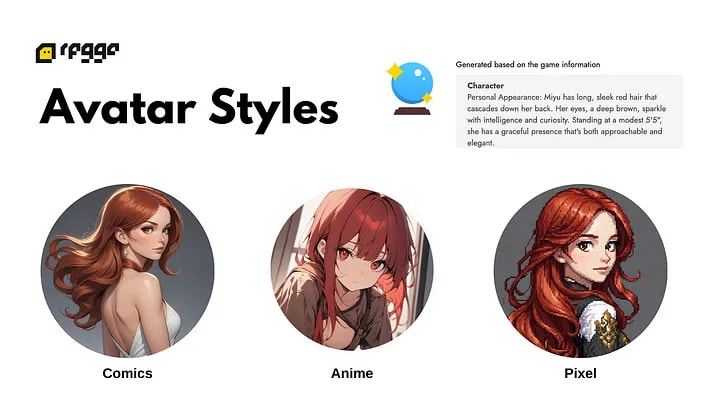
For example, RPGGO’s Avatar Styles integrates an AI-powered image generator, allowing users to create and customize their chatbot’s appearance. These avatars can change expressions based on the conversation, adding a layer of realism and emotional depth. Such features make AI interactions feel more personal and lifelike, strengthening the bond between users and their digital companions.
5. Role-Playing and Story-Driven Interactions
AI chatbots are no longer just conversational tools; they are immersive storytelling partners capable of engaging users in dynamic narratives. With the rise of AI-driven role-playing platforms, users can co-create interactive stories, participate in simulated adventures, or explore relationship dynamics with AI companions.
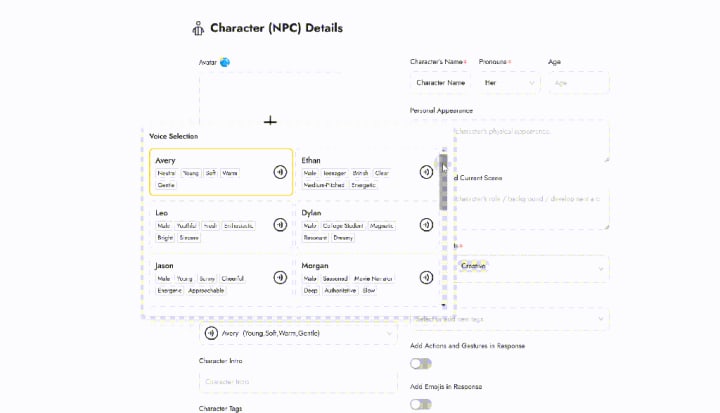
AI Dungeon, for instance, generates real-time, interactive storytelling experiences, where users and AI collaboratively build compelling narratives. Similarly, RPGGO’s NPC customization allows users to design AI characters that follow intricate story arcs, making role-playing interactions feel unique and personalized.
These features create deeper emotional engagement, as users become invested in the evolving storylines and relationships with their AI companions.
The Ethical Debate: Is It Healthy to Fall in Love with AI?
As AIs become increasingly sophisticated, the intensity and frequency of humans turning to AI to meet their relationship needs will probably increase.
This could lead to unpredictable and potentially harmful results. AI companions could help ease loneliness and help people sort through psychological issues, but they could also contribute to an “epidemic of loneliness.”
“AI doesn't think, feel, or need in a way that humans do. But they provide enough of an uncanny replication of that for people to be convinced.” — David Auerbach, author of Meganets 2023
Despite these concerns, AI chatbots are becoming an undeniable part of modern digital culture, especially among younger users seeking emotional connections in an increasingly technology-driven world. The challenge lies in balancing emotional engagement with healthy social behavior.
Happy (Post) Valentine’s!
AI chatbots have evolved into more than just digital assistants — they are now emotional companions capable of fostering deep connections. With platforms like Character AI, Janitor AI, and RPGGO pushing the boundaries of AI-human interaction, the line between technology and emotion continues to blur.
While AI relationships can provide comfort and support, they raise ethical and psychological questions. As technology advances, society must navigate this evolving landscape carefully, ensuring that human connections remain at the heart of our interactions.
So this Valentine’s Day, whether you’re chatting with a human or an AI companion, one thing is clear — love, in all its forms, continues to evolve with technology.
About the Creator
Gading Widyatamaka
Jakarta-based graphic designer with over 5 years of freelance work on Upwork and Fiverr. Managing 100s logo design, branding, and web-dev projects.
Keep reading
More stories from Gading Widyatamaka and writers in Futurism and other communities.
About Binding Prometheus
I want to start actively advocating on behalf of my own work, and the most valuable part of my canon is, without a doubt, Binding Prometheus, the play I have been working on since 2019 and only finished in 2023 as part of my MA. The play itself is an amalgamation of a million different inspirations. On one end, it evokes the Ancient Greek myth-play, deriving its own title from the earliest extant work of Western drama we have, Aeschylus’s Prometheus Bound. On the other end, it borrows significantly from the sci-fi bulwarks from over the years, namely Mary Shelley’s Frankenstein and Karel Capek’s Rossum’s Universal Robots. The play could be an episode of Black Mirror, I fear. I don’t know. I’ve only ever seen one episode of Black Mirror.
By Steven Christopher McKnight15 days ago in Futurism
Macarons Market: Premium Dessert Demand, Flavor Innovation & Gourmet Bakery Trends
According to IMARC Group's latest research publication, global macarons market size reached USD 1,077.8 Million in 2024. Looking forward, IMARC Group expects the market to reach USD 1,715.4 Million by 2033, exhibiting a growth rate (CAGR) of 5.03% during 2025-2033.
By sujeet. imarcgroupabout 12 hours ago in Futurism



Comments
There are no comments for this story
Be the first to respond and start the conversation.