
Why Are Stars Different Colors? What Their Light Reveals About Them
Space

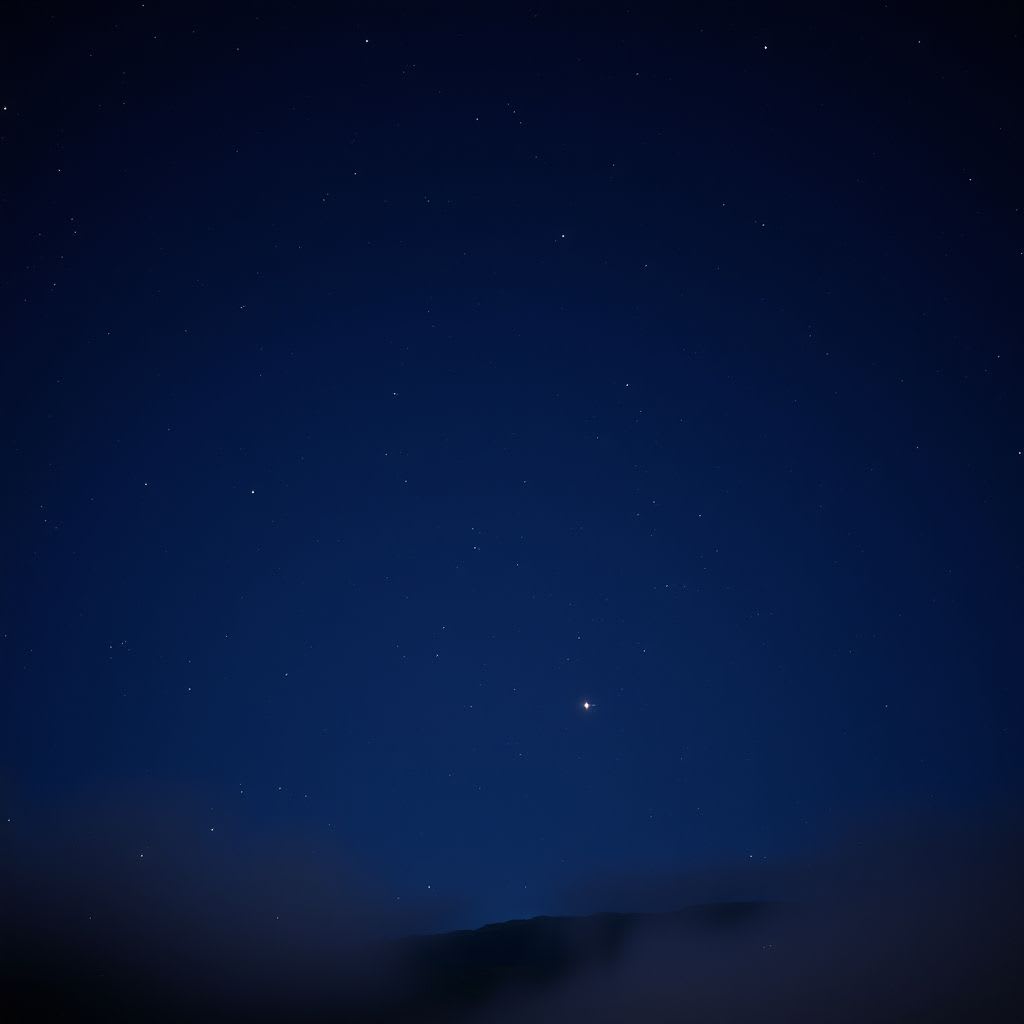
When we gaze at the night sky, it often looks like a sea of tiny white lights scattered across the darkness. But if you take a closer look especially through a telescope you'll notice that not all stars shine the same. Some glow a deep red, others shine gold or yellow, and some dazzle with an icy blue brilliance. Why are stars different colors, and what can their light tell us about them?
The Color of a Star Is Its Temperature
The most important factor that determines a star’s color is its surface temperature. Just like a piece of metal that changes color as it heats from red to orange, yellow, and eventually white or blue stars follow the same thermal pattern.
Here’s how the color of a star corresponds to its temperature:
Color Surface Temperature (°C) Example
- Red ~2,500–3,500 Betelgeuse
- Orange ~3,500–5,000 Arcturus
- Yellow ~5,000–6,000 The Sun
- White ~7,500–10,000 Vega
- Blue ~10,000–40,000 Rigel
So, the bluer a star appears, the hotter it is. Conversely, red stars are relatively cooler though still incredibly hot by Earth standards.
Why Does Our Sun Look Yellow?
The Sun emits a soft yellow-white light, which corresponds to a surface temperature of about 5,778 K (around 5,500 °C). Interestingly, the Sun’s true color is almost pure white. The yellowish hue we see from Earth is caused by our atmosphere scattering the blue wavelengths of sunlight, especially when the Sun is near the horizon. This scattering is the same phenomenon that makes the sky look blue during the day and the Sun look golden at sunset.
Color Reveals a Star’s Age and Size
Color doesn’t just indicate temperature it can also give us clues about a star’s age and mass.
Massive young stars burn hot and fast. These stars are often blue or blue-white and have very short lifespans only a few million years.
Mid-sized stars, like our Sun, burn fuel at a moderate pace and emit a yellowish light. These stars can live for billions of years.
Aging stars begin to swell and cool, becoming red giants. Their outer layers expand and cool down, giving them a reddish glow.
But not all red stars are old. Some, like red dwarfs, are low-mass stars that burn slowly and can live trillions of years. So while color can give us hints, astronomers need additional data to determine a star’s exact stage of life.
Can Stars Change Color in the Sky?
Sometimes, when we look at a star, it seems to flicker or even change color slightly. This is not because the star itself is changing rather, it’s an optical illusion caused by turbulence in Earth's atmosphere. As starlight passes through layers of air with varying temperatures and densities, it bends (or refracts), creating the shimmering, multicolored twinkle we see. In reality, the star’s color is stable.
How Astronomers Read Star Colors
To uncover the secrets of a star, astronomers use instruments called spectrographs. These tools break the star's light into a spectrum — like a cosmic barcode. From this data, scientists can determine:
- The star’s temperature
- Its chemical composition
- Whether it's spinning
- If it has planets orbiting it
- Whether it's moving toward or away from Earth
In other words, a star's light is full of information if you know how to read it.
A Star’s Color Is Its Cosmic Signature
In astronomy, color isn't just something pretty it's a powerful scientific tool. By studying the color of a star, we can learn:
- How massive it is
- How old it might be
- How long it’s likely to live
- What elements it’s made of
- What’s happening inside its core
So the next time you find yourself under a starry sky, try to notice the subtle differences in color. That bluish star? It might be a young, massive sun burning bright before its short life ends in a supernova. That orange or red glow? It could be a calm, ancient star nearing the end of its journey or a patient red dwarf with trillions of years still to go.
Each point of light is not just a star — it’s a story told in color.
About the Creator
Keep reading
More stories from Holianyk Ihor and writers in Futurism and other communities.
The Instruments of Astronomy: Tools That Let Us See the Invisible Universe
When we look up at the night sky, the stars seem like distant, unreachable specks of light beautiful but untouchable. But for astronomers, the cosmos is much more than a glittering ceiling. Thanks to powerful instruments and cutting-edge technology, scientists can now peer into the darkest corners of the Universe, watch stars being born, study planets far beyond our solar system, and even detect the ripples of spacetime itself. So, what are the tools that make this incredible exploration possible? Let’s dive into the fascinating world of astronomical instruments.
By Holianyk Ihor6 months ago in Futurism
About Binding Prometheus
I want to start actively advocating on behalf of my own work, and the most valuable part of my canon is, without a doubt, Binding Prometheus, the play I have been working on since 2019 and only finished in 2023 as part of my MA. The play itself is an amalgamation of a million different inspirations. On one end, it evokes the Ancient Greek myth-play, deriving its own title from the earliest extant work of Western drama we have, Aeschylus’s Prometheus Bound. On the other end, it borrows significantly from the sci-fi bulwarks from over the years, namely Mary Shelley’s Frankenstein and Karel Capek’s Rossum’s Universal Robots. The play could be an episode of Black Mirror, I fear. I don’t know. I’ve only ever seen one episode of Black Mirror.
By Steven Christopher McKnight16 days ago in Futurism
Glass Straw Market Size and Forecast 2025–2033
Introduction The global push toward sustainability is reshaping everyday consumer choices, from grocery bags to beverage packaging. Among the most visible symbols of this transformation is the humble drinking straw. Once dominated by single-use plastic, the category is rapidly evolving as governments, businesses, and consumers prioritize environmental responsibility. In this context, glass straws have emerged as a premium, reusable alternative that combines sustainability with style.
By Aaina Oberoi3 days ago in Futurism



Comments
There are no comments for this story
Be the first to respond and start the conversation.