
The Instruments of Astronomy: Tools That Let Us See the Invisible Universe
Space

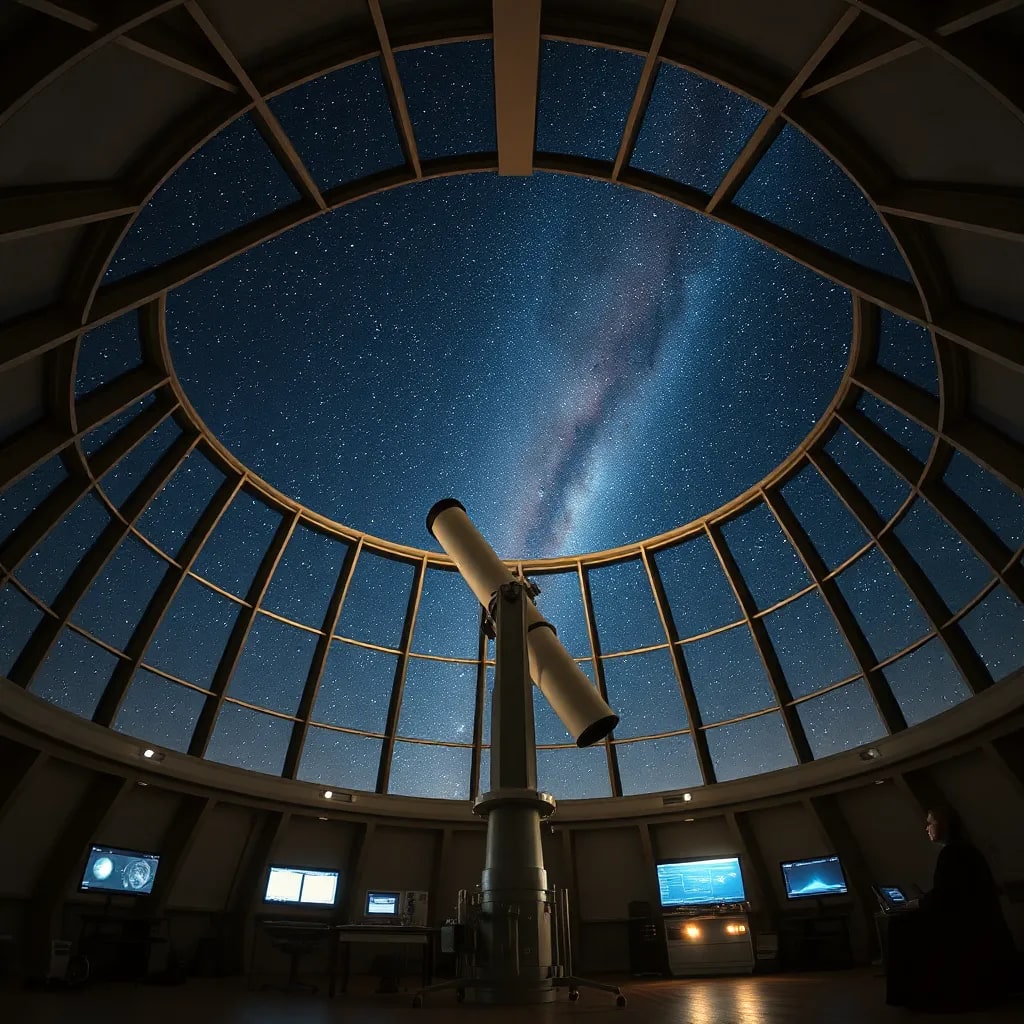
When we look up at the night sky, the stars seem like distant, unreachable specks of light beautiful but untouchable. But for astronomers, the cosmos is much more than a glittering ceiling. Thanks to powerful instruments and cutting-edge technology, scientists can now peer into the darkest corners of the Universe, watch stars being born, study planets far beyond our solar system, and even detect the ripples of spacetime itself. So, what are the tools that make this incredible exploration possible? Let’s dive into the fascinating world of astronomical instruments.
1. Telescopes: The Foundation of Space Observation
The most iconic and essential instrument in any astronomer’s toolkit is the telescope. Depending on the type of radiation it captures, a telescope can be optical, radio, infrared, ultraviolet, X-ray, or even gamma-ray.
Optical telescopes collect visible light and are often seen in observatories and planetariums. A famous example is the Hubble Space Telescope, which has provided breathtaking high-resolution images of galaxies and nebulae for over 30 years.
Radio telescopes are designed to "listen" to the universe by detecting radio waves emitted by distant celestial bodies. These massive dish-shaped instruments include the late Arecibo Observatory and the FAST telescope in China, currently the world's largest.
Infrared and ultraviolet telescopes allow astronomers to observe heat and high-energy processes in space. For instance, the James Webb Space Telescope (JWST) uses infrared to peer through cosmic dust and unveil the birthplaces of stars.
2. Spectroscopes: Decoding Light
Spectroscopy is one of the most powerful tools in astronomy. A spectroscope breaks down light from stars and galaxies into its spectrum much like a prism producing a rainbow. This reveals a treasure trove of data.
By analyzing these spectral lines, astronomers can determine a star's chemical composition, temperature, velocity, and even find evidence of past supernovae. It’s like reading a cosmic barcode.
3. CCD Cameras and Detectors: The Digital Eyes of Telescopes
Today’s telescopes are equipped with Charge-Coupled Devices (CCDs) extremely sensitive cameras that detect even the faintest light. These digital detectors far surpass old film-based techniques, making them indispensable in both professional and amateur observatories.
Some CCDs are tuned to different wavelengths, from radio to gamma rays, and gather data for in-depth analysis. Without them, many of our stunning space images and detailed star maps wouldn’t exist.
4. Atomic Clocks and Laser Ranging Devices
For tracking the motion of celestial bodies with high precision, astronomers rely on atomic clocks and laser ranging systems. These tools can measure exact positions and distances.
One fascinating example is the technique of lunar laser ranging, which involves bouncing laser beams off mirrors placed on the Moon by Apollo astronauts to measure the Earth-Moon distance with millimeter accuracy.
5. Interferometers: Precision Through Unity
Interferometry is a technique that combines signals from multiple telescopes to achieve the resolution of a much larger instrument. This method has revolutionized high-resolution astronomy.
A landmark example is the Event Horizon Telescope (EHT), a global network of radio observatories that captured the first-ever image of a black hole’s shadow in the galaxy M87 in 2019.
6. Gravitational Wave Detectors: Listening to Ripples in Spacetime
The discovery of gravitational waves opened a completely new chapter in astronomy. Instruments like LIGO in the United States and VIRGO in Europe can detect incredibly tiny distortions in spacetime caused by cosmic events like black hole collisions.
These detectors are so sensitive they can register changes smaller than a proton’s width. It’s as if the universe is whispering, and now we finally have the ears to listen.
7. Space Telescopes and Orbital Observatories
To avoid interference from Earth’s atmosphere, many telescopes are launched into space. These space-based observatories offer a crystal-clear view of the cosmos.
The James Webb Space Telescope, Fermi Gamma-ray Space Telescope, and Gaia (which maps stars with incredible accuracy) are just a few of the marvels orbiting our planet and collecting data beyond Earth’s limitations.
8. Computers and Software: The Brains Behind the Science
Modern astronomy would be impossible without high-performance computers and sophisticated software. These tools process the vast amounts of data generated by telescopes and satellites.
From simulating the birth of galaxies to identifying new exoplanets through machine learning, powerful algorithms help astronomers turn raw numbers into discoveries that expand our understanding of the Universe.
Why These Instruments Matter
Astronomical instruments are like the extended senses of humanity—our vision, hearing, and even intuition reaching out across the cosmos. They let us see what’s invisible, hear what’s silent, and understand the seemingly incomprehensible.
With their help, we uncover the secrets of ancient galaxies, watch the dance of binary stars, and peer into the origins of space and time. More than tools, they are keys that unlock the grand story of the Universe—and help us better understand our own place in it.
Image Description for the Article:
A large dome-shaped observatory under a clear, star-filled night sky. In the center, a powerful telescope is pointed skyward. Nearby, glowing monitors display digital data and colorful space imagery. In the foreground, a silhouette of an astronomer stands illuminated by the soft light of the instruments, gazing toward the heavens.
About the Creator
Keep reading
More stories from Holianyk Ihor and writers in Futurism and other communities.
Where Does Space End? Mysteries at the Edge of the Universe
When we gaze into the night sky, it feels like it stretches on forever. Countless stars, distant galaxies, and invisible black holes draw our eyes farther and farther into the abyss. But one question, both thrilling and philosophical, lingers in the back of many minds: where does space end? Does the universe have a boundary? And if so, what lies beyond it?
By Holianyk Ihor6 months ago in Futurism
About Binding Prometheus
I want to start actively advocating on behalf of my own work, and the most valuable part of my canon is, without a doubt, Binding Prometheus, the play I have been working on since 2019 and only finished in 2023 as part of my MA. The play itself is an amalgamation of a million different inspirations. On one end, it evokes the Ancient Greek myth-play, deriving its own title from the earliest extant work of Western drama we have, Aeschylus’s Prometheus Bound. On the other end, it borrows significantly from the sci-fi bulwarks from over the years, namely Mary Shelley’s Frankenstein and Karel Capek’s Rossum’s Universal Robots. The play could be an episode of Black Mirror, I fear. I don’t know. I’ve only ever seen one episode of Black Mirror.
By Steven Christopher McKnight19 days ago in Futurism
UAE Retail Market: Consumer Spending Shifts, Omnichannel Growth & Future Outlook
According to IMARC Group's latest research publication, UAE retail market size reached USD 145.3 Billion in 2024. The market is projected to reach USD 227.1 Billion by 2033, exhibiting a growth rate of 5.1% during 2025-2033.
By Abhay Rajput5 days ago in Futurism



Comments
There are no comments for this story
Be the first to respond and start the conversation.