
Who Owns the Moon? The Legal Puzzle of Extraterrestrial Property
Space

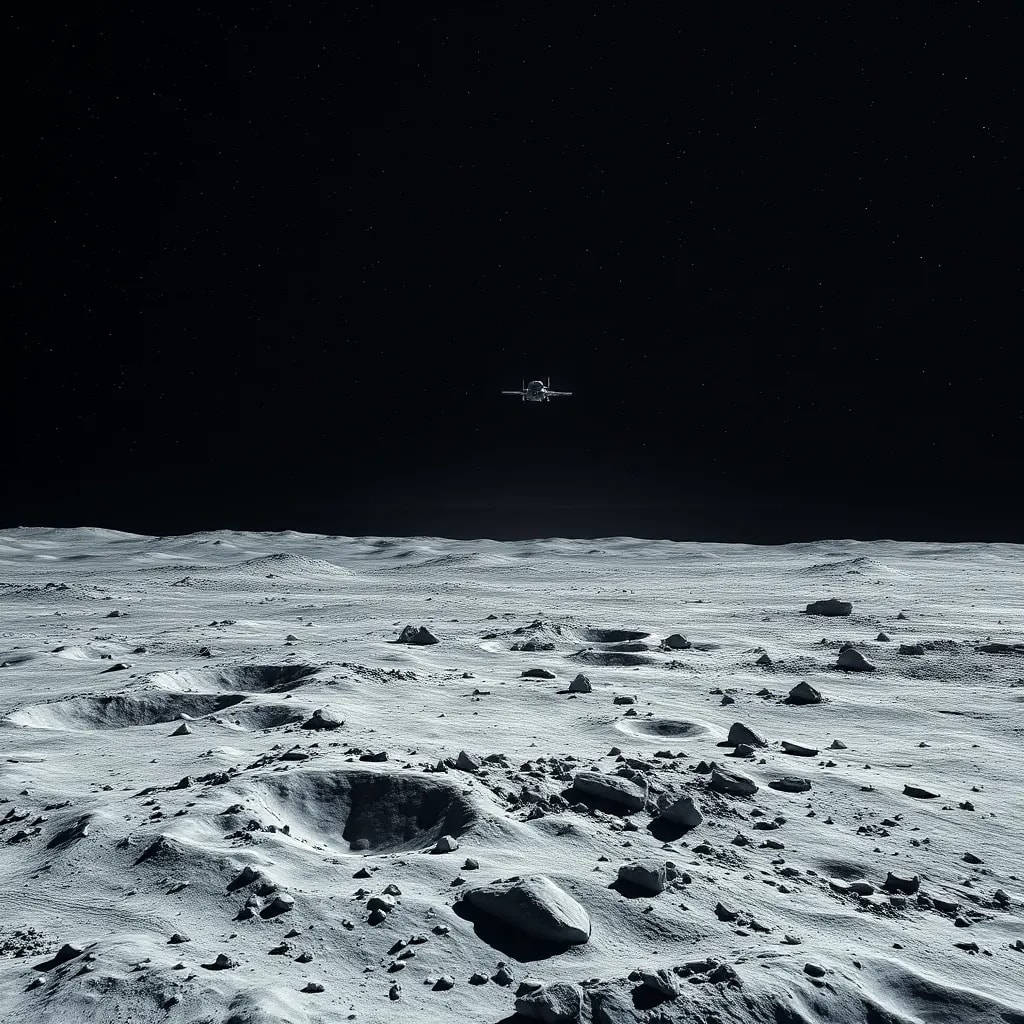
As space exploration accelerates and private companies eye the Moon not just as a destination but as a potential economic hub, one big question becomes increasingly relevant: Who owns the Moon?
It sounds like something out of science fiction, but the legal status of extraterrestrial property—especially the Moon—is a real and evolving topic in international law. Can a nation build a lunar base and claim it as its own? Can a private company extract resources and profit from them? And what happens when interests collide beyond Earth’s borders?
Let’s dive into this fascinating legal frontier.
Is the Moon up for grabs?
Surprisingly, the answer is no—or at least, not according to international law. In 1967, the Outer Space Treaty was signed by over 110 countries, including all major spacefaring nations like the United States, Russia, and China. Formally known as the Treaty on Principles Governing the Activities of States in the Exploration and Use of Outer Space, it laid the foundation for space law.
According to this treaty:
- Outer space, including the Moon, is not subject to national appropriation.
- No country can claim sovereignty over any part of outer space by occupation or any other means.
- Activities on the Moon must be carried out for peaceful purposes and in the interest of all humankind.
- International cooperation is strongly encouraged.
In short, the Moon legally belongs to everyone—or no one. It is part of the "global commons," just like international waters or Antarctica.
What about mining the Moon?
Here’s where things get tricky.
Imagine that SpaceX or Blue Origin sets up a base on the Moon and starts mining for helium-3 or extracting water ice from shadowed craters. Does that count as ownership? Are they breaking international law?
Under the Outer Space Treaty, the answer is nuanced. Using resources is not the same as claiming territory, as long as no sovereignty is declared. But here’s the catch: the treaty doesn’t clearly address who owns the resources once they're extracted. Can a company sell lunar water on Earth? Does it owe a share of profits to humanity?
To fill this legal vacuum, the 1979 Moon Agreement was proposed. It declared that:
"The Moon and its natural resources are the common heritage of mankind."
It also suggested creating an international regime to govern resource extraction and profit-sharing.
Sounds promising? The problem: none of the major space powers signed it. Only a handful of countries, like France and some developing nations, ratified the agreement. The United States, Russia, China, and most of Europe rejected it—rendering it largely symbolic.
Can you buy a piece of the Moon?
If you've ever seen websites offering to sell you a “plot on the Moon” for $50—congratulations, you've encountered one of the most popular space-themed gimmicks. Companies like Lunar Embassy claim they have the right to sell lunar real estate because “no nation owns the Moon,” implying that private individuals might.
Legally speaking, these “deeds” are worthless. The Outer Space Treaty prohibits both national and private appropriation of celestial bodies. So while the certificate might look nice on your wall, it won’t hold up in court—or help you build a lunar vacation home.
Trump's Lunar Executive Order and Modern Claims
In 2020, the U.S. government issued an executive order asserting that American companies have the right to explore, extract, and use space resources, including those on the Moon, and claim ownership of what they collect. Importantly, it emphasized that this does not amount to sovereignty over lunar territory.
The move sparked global debate. Critics argued that it violated the spirit of shared ownership outlined in the Outer Space Treaty. Supporters pointed to the lack of clear legal mechanisms and the need to incentivize innovation and investment in space.
Other countries followed suit. Luxembourg, Japan, and the United Arab Emirates have passed similar laws allowing their domestic companies to profit from space mining. A new era of resource-based space exploration is clearly underway.
A new lunar gold rush?
Why all the interest in the Moon? Besides its symbolic allure, the Moon offers tangible assets:
- Helium-3, a potential fuel for future fusion energy.
- Water ice, essential for sustaining human life and making rocket fuel.
- Unique locations for radio telescopes, shielded from Earth’s interference.
- And eventually, a springboard for Mars missions.
Without robust international regulations, competition could quickly escalate into conflicts or legal disputes. What’s at stake isn’t just rocks and minerals—but humanity’s ability to share, govern, and explore space responsibly.
So, who does own the Moon?
As of now—no one, officially. And at the same time, everyone. The Moon remains legally a domain of all humankind.
But as nations and corporations gear up for lunar missions and resource extraction, we are approaching a legal crossroads. Will we cooperate and create a fair, sustainable framework for space activity? Or will Earth’s geopolitics extend into the stars?
The Moon is more than just a bright object in the sky. It may become humanity’s first great legal test in space. How we answer this challenge could define our entire future beyond Earth.
About the Creator
Keep reading
More stories from Holianyk Ihor and writers in Futurism and other communities.
Space Energy: Solar Farms in Orbit and Beyond
Energy is the lifeblood of civilization. It powers our cities, fuels our technologies, and connects us through networks of light and data. On Earth, we’ve learned to harness the sun’s power through solar panels on rooftops, in deserts, and on satellites. But what happens when we think bigger—much bigger? What if the future of clean, limitless energy doesn’t lie on Earth at all, but above it?
By Holianyk Ihor8 months ago in Futurism
About Binding Prometheus
I want to start actively advocating on behalf of my own work, and the most valuable part of my canon is, without a doubt, Binding Prometheus, the play I have been working on since 2019 and only finished in 2023 as part of my MA. The play itself is an amalgamation of a million different inspirations. On one end, it evokes the Ancient Greek myth-play, deriving its own title from the earliest extant work of Western drama we have, Aeschylus’s Prometheus Bound. On the other end, it borrows significantly from the sci-fi bulwarks from over the years, namely Mary Shelley’s Frankenstein and Karel Capek’s Rossum’s Universal Robots. The play could be an episode of Black Mirror, I fear. I don’t know. I’ve only ever seen one episode of Black Mirror.
By Steven Christopher McKnight18 days ago in Futurism
Why Atlanta Businesses Are Investing in Mobile App Development?
A few years ago, many Atlanta companies treated mobile apps as supporting tools. Useful, but not urgent. In 2026, that mindset has shifted. Mobile apps are no longer experiments or side projects. For many businesses across Atlanta, they have become operational assets tied directly to revenue, customer experience, and internal efficiency.
By Mary L. Rodriquez4 days ago in Futurism



Comments (1)
The Outer Space Treaty makes the Moon a global commons. Mining's legal but resource ownership's murky.