
Where to Go If World War III Breaks Out: The Safest Places to Duck and Cover
Navigating Neutrality: The Safest Havens in a World on the Brink of War

Where to Go If World War III Breaks Out: The Safest Places to Duck and Cover
As tensions rise among global powers, the hypothetical question of World War III looms larger. In such a catastrophic scenario, survival depends on location. While no place on Earth is guaranteed safe, some regions offer better odds than others. Here's an exploration of the safest havens in case geopolitical tensions ignite into global conflict.
Understanding the Risks
World War I and II were vast in scale, but a third global war would surpass them due to advancements in missile technology and the interconnectivity of modern nations. Missiles can now travel thousands of miles in minutes, and the central battlefields of such a war—likely Eastern Europe, the Korean Peninsula, and parts of the Middle East—would be complemented by missile threats that span the globe.
To maximize safety, a location should ideally meet four conditions:
- Neutrality: Avoid involvement in global geopolitical rivalries.
- Irrelevance: Steer clear of strategic locations or valuable resources.
- Non-targeted: Be unlikely to host military installations or operations.
- Remoteness: Stay far from primary battlefronts to avoid collateral damage.
The Pacific Islands: Isolation in Paradise
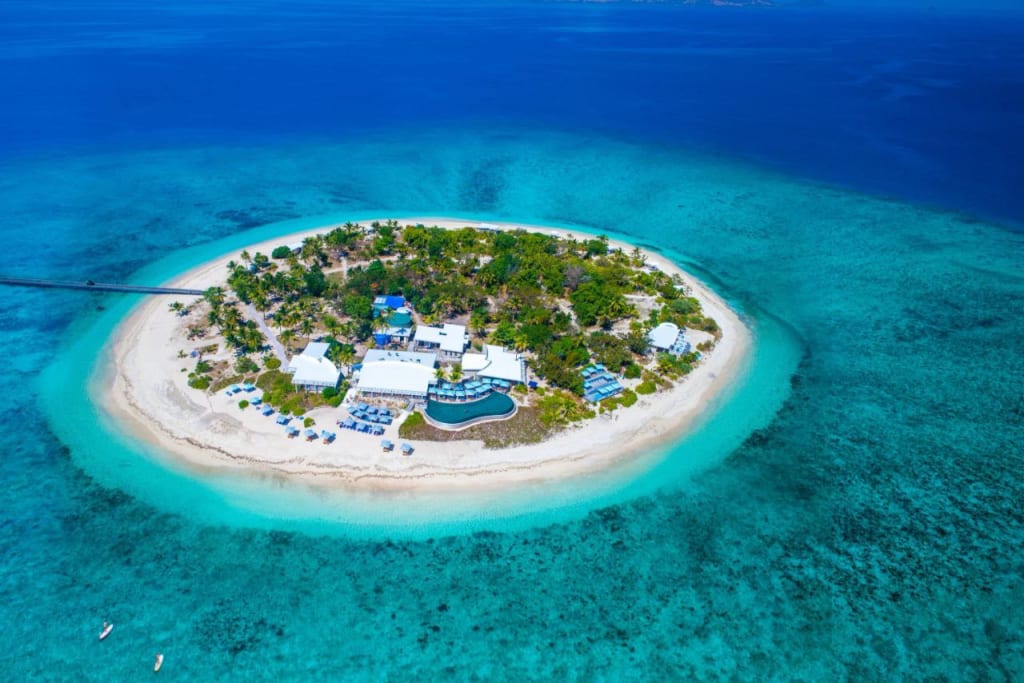
Certain tropical islands in the Pacific stand out as promising safe zones. Countries like Fiji and Tuvalu are far from potential battlefields and lack significant strategic importance.
- Fiji:
With its archipelago of 300 islands, Fiji offers ample space for relocation. Its minimal military presence and lack of alliances make it an unlikely target. Located over 1,900 miles from Australia, Fiji is well out of the way of major conflict zones.
- Tuvalu:
Even more remote, Tuvalu’s small population (about 11,000) and lack of strategic value ensure minimal interest from warring powers. Its isolation could be its greatest asset.
However, reaching these islands during wartime might require significant effort, as commercial air travel would likely be disrupted.
New Zealand: A Developed and Remote Haven
For those seeking a modern infrastructure and relative isolation, New Zealand offers an ideal middle ground. Positioned over 2,000 miles southeast of Australia, New Zealand is far from Indo-Pacific hot zones.
While New Zealand is part of security arrangements like the Five Eyes network, it is not as directly involved in military alliances as some of its peers. Its self-sufficiency in food production and resources like timber and hydroelectric energy bolster its appeal. Additionally, its vast rural areas and protected lands provide ample hiding spots if needed.
Iceland: A Northern Refuge
For those in the Northern Hemisphere, Iceland emerges as a viable option. Despite being a NATO member and its location near the strategic GIUK Gap (a key maritime chokepoint), Iceland’s isolation and lack of a standing military reduce its attractiveness as a target.
Iceland’s self-sufficiency in energy—thanks to geothermal and hydroelectric power—and abundant fishing resources further enhance its appeal. Staying clear of military installations, such as the Keflavik base, would increase your chances of avoiding collateral damage.
Greenland: Remote and Rugged
If you prefer extreme isolation, Greenland might be your best bet. As a Danish territory and part of NATO, Greenland could theoretically be drawn into conflict, but its vast size and low population density make it a low-priority target.
Heading north, away from the GIUK Gap and learning to live off the land and marine resources, would increase your chances of survival.
South America: The Far South
South America is generally detached from major global conflicts, making it a promising refuge. Chile stands out as a safe and relatively modern country.
- Chile:
Stretching along the Pacific Ocean, Chile is shielded by the Andes Mountains and is well-equipped to grow food locally. Its reliance on renewable energy and stable infrastructure add to its appeal.
For the truly adventurous, the Brazilian rainforest offers isolation, though surviving there without prior experience might pose significant challenges.
Africa: Safety in the South
Africa’s relative detachment from global conflicts makes it another viable option, particularly in the south.
- South Africa:
While South Africa has high crime rates and an ongoing energy crisis, it remains far from potential World War III battlefields. The country’s abundant seafood and vibrant cities, such as Cape Town, offer both sustenance and comfort.
Final Considerations
While these locations provide some safety, they are not foolproof. Even remote areas could experience secondary effects, such as disrupted supply chains and environmental consequences. A small-scale nuclear exchange, for instance, could trigger global climate shifts, making survival even in "safe zones" precarious.
The best plan involves preparation and adaptability. Stock up on essentials, learn basic survival skills, and remain informed about geopolitical developments. In an interconnected world, distance may offer some protection—but no place is completely immune to the consequences of global conflict.
About the Creator
Keep reading
More stories from Cherub Kane and writers in Futurism and other communities.
The Arctic Tensions: US Military Prepares as Russia and China Step Up Operations in the Region
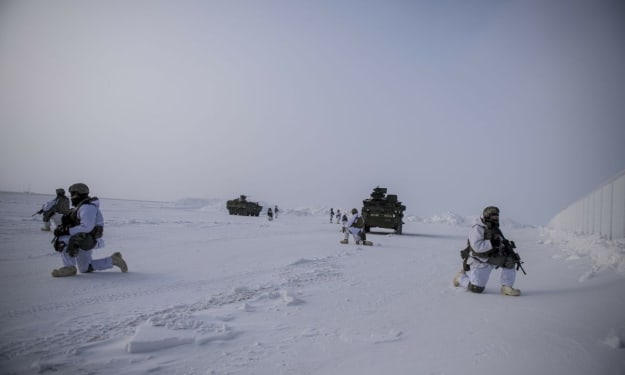
The Arctic Tensions: US Military Prepares as Russia and China Step Up Operations in the Region As global temperatures rise and the Arctic ice sheet continues to recede, a new geopolitical hotspot has emerged in the resource-rich region: the Arctic. This once-forgotten expanse of icy terrain is becoming a focal point of global tension, with Russia and China increasingly positioning themselves for strategic advantage. The United States, closely monitoring these developments, is ramping up its military presence in the region, aware of the growing risks of conflict as the area becomes more accessible and contested.
By Cherub Kaneabout a year ago in Futurism
About Binding Prometheus
I want to start actively advocating on behalf of my own work, and the most valuable part of my canon is, without a doubt, Binding Prometheus, the play I have been working on since 2019 and only finished in 2023 as part of my MA. The play itself is an amalgamation of a million different inspirations. On one end, it evokes the Ancient Greek myth-play, deriving its own title from the earliest extant work of Western drama we have, Aeschylus’s Prometheus Bound. On the other end, it borrows significantly from the sci-fi bulwarks from over the years, namely Mary Shelley’s Frankenstein and Karel Capek’s Rossum’s Universal Robots. The play could be an episode of Black Mirror, I fear. I don’t know. I’ve only ever seen one episode of Black Mirror.
By Steven Christopher McKnight19 days ago in Futurism
Packaged Food Market: Snacking Culture, On-the-Go Consumption & Industry Growth
According to IMARC Group's latest research publication, the global packaged food market size reached USD 2,618.2 Billion in 2024. Looking forward, IMARC Group expects the market to reach USD 4,709.0 Billion by 2033, exhibiting a growth rate of 6.68% during 2025-2033.
By Andrew Sullivan5 days ago in Futurism


Comments
There are no comments for this story
Be the first to respond and start the conversation.