
When code replace conscience
As machines grow smarter, are we letting morality go silent?
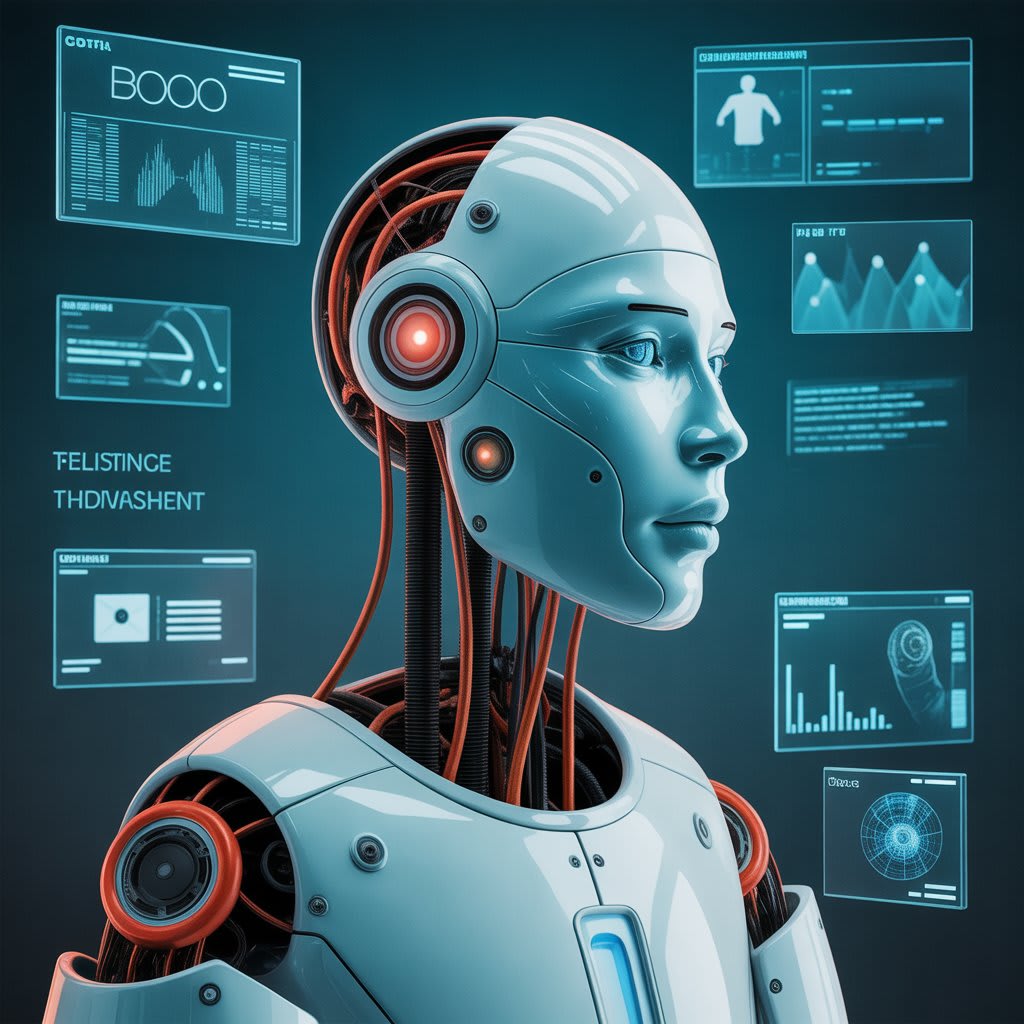
In a world racing toward automation, a quiet shift is taking place — one that has less to do with machines replacing humans and more to do with something deeper: machines replacing morality.
From algorithmic sentencing in courts to AI-generated news, decisions once guided by human judgment are increasingly made by code. On the surface, this seems efficient. After all, machines don’t tire, don’t carry bias (we assume), and never complain. But as we hand over complex responsibilities to AI systems, one troubling question emerges: What happens when code replaces conscience?
Take the case of predictive policing — software that scans historical crime data to determine where crimes are likely to occur or who might commit them. The idea sounds logical. But data reflects society’s existing inequalities. If neighborhoods of certain ethnic or socioeconomic backgrounds are over-policed, the algorithm learns to target them more, reinforcing cycles of suspicion and control. The machine doesn’t ask why. It just calculates.
In healthcare, algorithms now help doctors prioritize patients. But what if the code decides an elderly person is less “valuable” to save than a young one? What if insurance algorithms silently deny coverage based on unseen risk factors? Behind every line of code is a set of decisions, often invisible, that reflect the values — or lack thereof — of its creators.
This isn’t science fiction. It’s now.
When Facebook’s algorithm pushes sensational content because it drives more clicks, is it just doing its job — or is it quietly shaping public anger, fear, and division? When automated trading bots on Wall Street crash markets within seconds, who is accountable? The trader? The developer? The code itself?
What we’re seeing is a shift from ethical accountability to technical reliability. Instead of asking, “Is this right?” we ask, “Does it work?” The moral filter, once woven into leadership, journalism, healthcare, and education, is slowly being replaced by lines of code focused on performance, not principles.
But conscience isn’t something you can program. It’s not a function you can outsource to silicon and servers. It’s messy. It's emotional. It's deeply human. And yet, it’s what has always separated cold calculation from compassionate decision-making.
To be clear, this isn’t an argument against AI. Technology has the power to enhance life — streamline systems, uncover patterns, even save lives. But when we stop asking moral questions simply because a machine is answering for us, we risk building a world where efficiency trumps empathy, and logic ignores love.
In classrooms, when AI tutors replace teachers, do they notice when a child is too anxious to ask a question? In journalism, when bots write news, do they choose words carefully enough to protect lives in conflict zones? In war, when drones are programmed to strike, who carries the weight of that decision? Will any machine pause, hesitate, or forgive?
Even in everyday interactions, the trade-off is growing clear. Customer service bots don’t get frustrated — but they also don’t understand despair. Recommendation engines know what we like — but not what we need. AI can diagnose, calculate, optimize — but it cannot care. And a world that no longer cares is not just unkind; it’s dangerous.
Code is brilliant. But it does not care.
Conscience is flawed. But it does care.
The future will not just be shaped by the tools we build — but by the values we code into them, or fail to. Because someday soon, we may find ourselves in a world where everything works as it should… but no one stops to ask whether it should have.
And in that silence,
we might lose more than just control.
We might lose our humanity.
About the Creator
IHTISHAM UL HAQ
"I write to spark thought, challenge comfort, and give quiet voices a louder echo. Stories matter — and I’m here to tell the ones that often go unheard."
Keep reading
More stories from IHTISHAM UL HAQ and writers in Futurism and other communities.
DAD, I STILL NEED YOU
The gate squeaked the same way it always had. He paused before pushing it open, staring at the rusted bars like they might hold him back. The yard was overgrown, the grass taller than he remembered, and the old neem tree had lost half its leaves. It had been twelve years since he walked through this place as a son. Now, he walked in as a stranger — and an orphan.
By IHTISHAM UL HAQ6 months ago in Families
About Binding Prometheus
I want to start actively advocating on behalf of my own work, and the most valuable part of my canon is, without a doubt, Binding Prometheus, the play I have been working on since 2019 and only finished in 2023 as part of my MA. The play itself is an amalgamation of a million different inspirations. On one end, it evokes the Ancient Greek myth-play, deriving its own title from the earliest extant work of Western drama we have, Aeschylus’s Prometheus Bound. On the other end, it borrows significantly from the sci-fi bulwarks from over the years, namely Mary Shelley’s Frankenstein and Karel Capek’s Rossum’s Universal Robots. The play could be an episode of Black Mirror, I fear. I don’t know. I’ve only ever seen one episode of Black Mirror.
By Steven Christopher McKnight15 days ago in Futurism
Saudi Arabia Beauty and Personal Care Market: Rising Consumer Demand, Premiumization & Growth
According to IMARC Group's latest research publication, Saudi Arabia beauty and personal care market size was valued at USD 4.6 Billion in 2024. The market is projected to reach USD 6.4 Billion by 2033, exhibiting a growth rate of 3.7% during 2025-2033.
By Suhaira Yusuf7 days ago in Futurism


Comments
There are no comments for this story
Be the first to respond and start the conversation.