
What If Hotel Walls Could Feel You?
Designing Emotion-Driven AI Art for Hospitality Sector

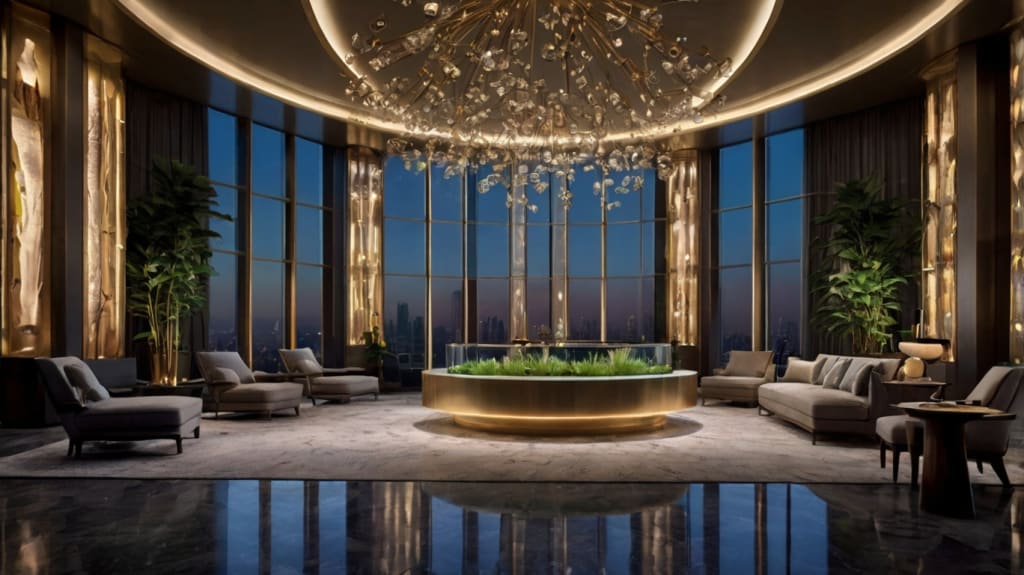
The hotel industry has long been a space of comfort, convenience, and design — a carefully curated blend of architecture, service, and ambiance. Yet, despite the billions invested in making hotel environments aesthetically pleasing, many travelers still describe hotel rooms as cold, impersonal, or lacking soul. The art on the walls is often generic, mass-produced, or disconnected from the human experience happening within those walls.
But what if hotel rooms could do more than just provide a place to sleep? What if the very walls, through art, could respond to the guest's emotions? What if the art on those walls could sense your mood and adapt accordingly, turning a cold hotel room into a personalized sanctuary?
This idea might sound like science fiction, but advances in AI-generated art and emotion-sensing technology are bringing this future closer to reality. By combining AI, art, and hospitality, we have the potential to redefine the guest experience — creating spaces that feel truly human, empathetic, and alive.
The Current State of Hotel Design and Art

Hotel design has traditionally focused on durable materials, easy maintenance, and broadly appealing aesthetics. While luxury hotels often invest in original artwork, the majority of hotels rely on mass-produced prints or generic decor that rarely changes. The art is static, impersonal, and disconnected from the guests’ individual needs or states of mind.
This disconnect leaves a gap: travelers come seeking rest, inspiration, or even healing, but the environment can feel sterile or uninspired. It’s a missed opportunity to engage guests on a deeper, emotional level.
How AI and Emotion-Sensing Technology Can Transform Hospitality
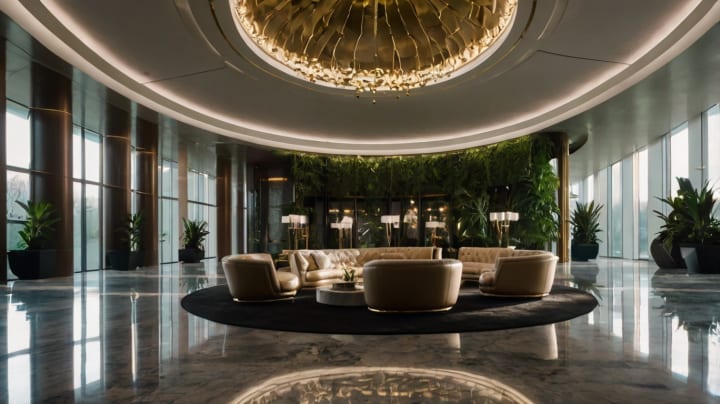

Emerging technologies in artificial intelligence and emotional analytics offer new possibilities for personalizing experiences in hospitality spaces.
Emotion-Sensing Tech
Various non-invasive technologies are now able to gauge human emotion with surprising accuracy. These include:
- Facial expression analysis: Using cameras to read micro-expressions
- Voice tone recognition: Detecting stress or calmness from speech patterns
- Wearable biometric sensors: Measuring heart rate variability or skin conductance
- Environmental inputs: Adjusting for time of day, weather, or guest activity
Integrating these inputs could allow a hotel room to have a dynamic understanding of how its occupant feels throughout the day.
AI-Generated Art


Generative AI models can create artwork in real time, guided by data inputs and creative parameters. This technology is no longer limited to static images; it can generate animations, morph colors and shapes, and evolve visuals continuously.
By linking AI art generation to emotion-sensing data, a hotel room could adapt its artwork based on the guest’s mood:
- Soothing waterfalls and gentle pastels when stress levels rise
- Vibrant abstract forms to energize and uplift during tired periods
- Calm night skies for relaxation before sleep
Personalizing the Hotel Experience Through Art


Imagine checking into a hotel after a long, exhausting flight. Instead of a sterile, unchanging room, the walls subtly shift their visual tone. AI-generated images of peaceful natural landscapes emerge, reflecting your fatigue and the need for calm.
Throughout your stay, the art adapts as your mood changes. Perhaps it brightens with vibrant colors after a good workout or softens to gentle waves as you prepare for rest. The environment becomes a silent companion — a form of empathy conveyed through visual art.
This is not only a technological innovation but an artistic one. Artists can collaborate with AI systems to design adaptable visual templates, setting the emotional tone and aesthetics that change fluidly. The art is no longer a fixed piece but a living, responsive element of the space.
Benefits for Hotels and Guests
For Guests
- Emotional support: Art that responds to mood can provide subtle comfort or motivation.
- Personalized experience: Every guest receives a unique, curated environment.
- Enhanced well-being: Studies have shown that engaging with art positively affects mental health, reducing stress and improving mood.
For Hotels
- Differentiation: Emotion-driven environments create memorable stays and improve guest satisfaction.
- Sustainability: Dynamic digital art reduces the need for physical replacements or multiple decor styles.
- Data insights: Understanding guest moods can inform service adjustments and innovations.
Challenges and Ethical Considerations
Implementing such systems requires careful thought around:
- Privacy: Collecting emotional data must be transparent, consensual, and secure.
- Artistic integrity: Balancing AI creativity with human artistry and cultural sensitivity.
- Technical reliability: Ensuring the system is responsive without being intrusive or overwhelming.
The Future of AI Art in Hospitality
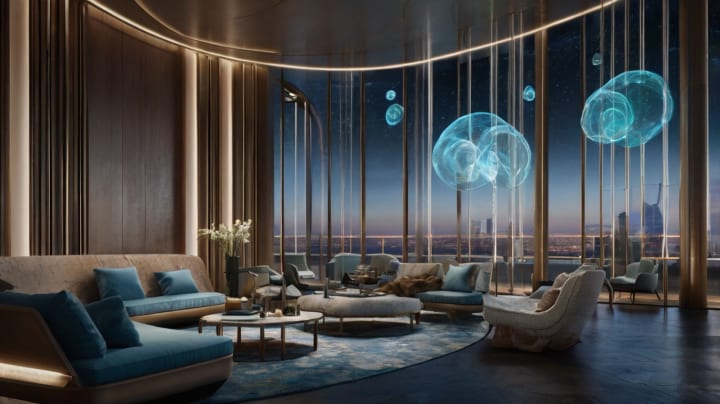

This convergence of AI, art, and hospitality hints at a future where spaces are more than physical structures — they become living, empathetic environments.
As an AI art creator, I am inspired by this potential to humanize technology and redefine hospitality design. I envision a world where every hotel room tells a story unique to its guest, where the walls themselves listen, reflect, and respond.
The idea of “emotion-driven art” might seem ambitious today, but the tools exist to start experimenting. The next step is collaboration between technologists, artists, and hospitality professionals to prototype these experiences.
Conclusion
Hotels have the opportunity to move beyond static aesthetics and embrace AI-generated, emotion-responsive art to create truly personalized and meaningful guest experiences. This new frontier not only enhances comfort but reconnects us to the human need for empathy and expression — even when we’re miles from home.
When a weary traveler looks up and sees art that mirrors their feelings, that room stops feeling like a generic space. It becomes a refuge. A companion. A place where they are seen.
And in that recognition, we find the future of hospitality — one where technology and creativity come together to make us feel less alone.
In a world of constant motion, the most revolutionary comfort is to be seen, felt, and understood — even by the walls around us.

About the Creator
Dishmi M
I’m Dishmi, a Dubai-based designer, writer & AI artist. I talk about mental health, tech, and how we survive modern life.
Subscribe for healing advice, human stories & future thoughts!
Reader insights
Outstanding
Excellent work. Looking forward to reading more!
Top insights
Compelling and original writing
Creative use of language & vocab
Easy to read and follow
Well-structured & engaging content
Excellent storytelling
Original narrative & well developed characters
Expert insights and opinions
Arguments were carefully researched and presented
Eye opening
Niche topic & fresh perspectives
Heartfelt and relatable
The story invoked strong personal emotions
Masterful proofreading
Zero grammar & spelling mistakes
On-point and relevant
Writing reflected the title & theme
The Ink Isn’t Dry on the iPhone 17e, and the 18e is Already “Finalized”
The Exhausting Speed of "New" It’s early March 2026, and if you’re reading this on a brand-new iPhone 17e, I have some unsettling news: your tech is already haunted by the ghost of its successor. We’ve reached a point where the "new" doesn't even have time to gather dust before the "next" starts taking up rent in our collective consciousness. It’s an exhausting, hyper-accelerated loop that keeps us perpetually looking past the glass in our hands toward a horizon that never actually arrives.
By Tech Horizonsabout 5 hours ago in Futurism
Why Didn't Anyone Tell Us
Men, move along. This is not for you. This is for the women. I was forty-five when I began menopause. It is pretty young for that to be going on in a woman’s life, but I had undiagnosed PCOS, my entire life. Thank you to all the gynecologists I had seen my entire life. That in itself should encourage women to keep seeking second opinions, especially when you are not getting correct answers or any at all.
By Alexandra Granta day ago in Humans


Comments (1)
Truly innovative. You're a genius at this!