
How AI is Redefining Fashion & Identity: From Mood-Adaptive Wearables to Algorithmic Runways
Exploring the intersection of artificial intelligence, self-expression, and the future of style.

Introduction: The Fusion of AI, Fashion, and Identity
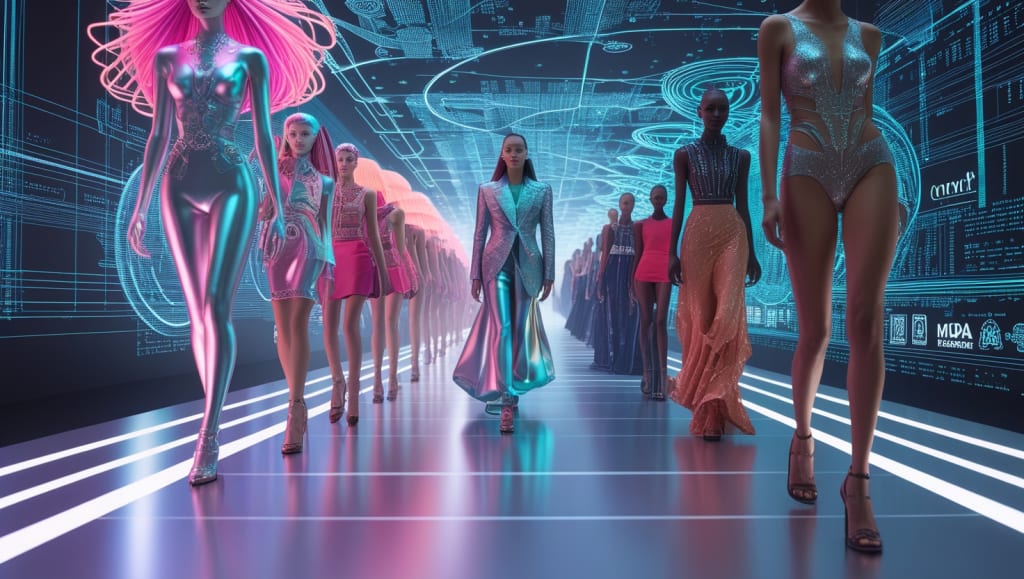
Fashion has always been more than just fabric—it’s a language, a canvas for self-expression, and a reflection of cultural identity. But as technology advances, so does our relationship with clothing. Enter artificial intelligence (AI), which is reshaping not only what we wear but also how we define ourselves through fashion.
Imagine garments that adapt to your emotions or digital runways curated entirely by algorithms. These innovations aren’t science fiction—they’re happening now. This article dives into two groundbreaking trends: wearable AI that evolves based on mood or environment, and digital fashion shows curated by algorithms. Together, they highlight how AI is revolutionizing fashion—and challenging us to rethink identity, creativity, and the very essence of style.
1. Wearable AI That Evolves Based on Your Mood or Environment
What Are Mood-Adaptive Wearables?
Mood-adaptive wearables are clothing and accessories embedded with AI sensors and actuators that respond dynamically to emotions, biometrics, or environmental conditions.
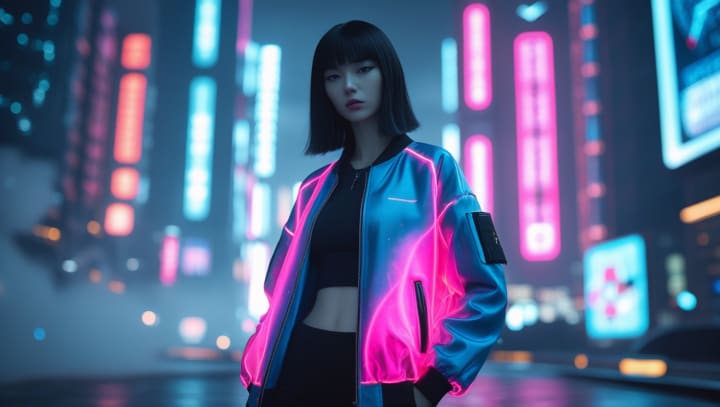
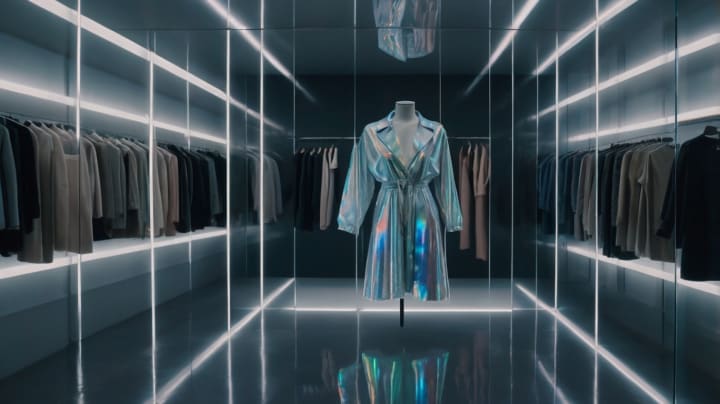
Picture this: a jacket that shifts colors when you feel anxious, a dress that glows brighter during moments of joy, or sneakers that adjust cushioning based on terrain. These pieces go beyond aesthetics—they interact with you, creating a seamless blend of functionality and personalization.
For example, brands like Vollebak have experimented with color-changing fabrics, while startups like CuteCircuit incorporate LED displays into garments. These innovations transform fashion into an active participant in our daily lives, responding to who we are at any given moment.
How It Works: The Tech Behind Adaptive Fashion
The magic lies in three key components:
- Sensors: Tiny devices track physiological data such as heart rate, skin conductivity, or even subtle muscle movements. For instance, a smart shirt might detect increased sweating as a sign of stress.
- Machine Learning: Algorithms analyze real-time inputs to interpret your emotional state or environmental context. Is your breathing rapid because you’re excited—or nervous?
- Actuators/Fabrics: Once analyzed, these systems trigger physical changes. Fabrics stretch, patterns shift, or LED lights illuminate, turning raw data into tangible transformations.
This tech isn’t limited to high-end labs; companies like Google’s Jacquard project are integrating AI into everyday items like denim jackets, making adaptive fashion accessible to the masses.
Why It Matters: Personalization Meets Self-Expression
Why should we care about mood-adaptive wearables? Because they represent a new frontier of personalization and self-expression.
Imagine clothes that don’t just fit your body but also align with your inner world. A grieving person might wear muted tones that gradually brighten as their mood improves. Or imagine walking into a meeting where your suit subtly shifts hues to convey confidence without saying a word.
Beyond individual empowerment, there’s a sustainability angle too. By adapting to different contexts, one garment can serve multiple purposes—reducing the need for excessive wardrobes and minimizing waste. It’s minimalism reimagined through the lens of AI.
Culturally, mood-adaptive wearables introduce a new form of communication. In a world increasingly dominated by screens, these garments allow us to express feelings physically, fostering deeper connections between individuals.
Challenges & Ethical Considerations
Of course, no innovation comes without challenges.
- Privacy is a major concern—do you really want your emotional state broadcasted via your clothes?
- Accessibility is another issue. High-tech wearables often come with hefty price tags, potentially excluding lower-income communities.
- Some critics argue that overreliance on AI could stifle human intuition and creativity. If machines dictate every aspect of design, do we lose something inherently human in the process?
Future Possibilities
Looking ahead, the possibilities are endless.
Entire wardrobes could be powered by AI, evolving alongside us as we age or experience life changes. Integration with augmented reality (AR) could take things further, allowing virtual overlays to enhance physical garments in real-time.
Imagine slipping on a plain white t-shirt, then using AR glasses to project intricate designs onto it—customizable and unique to each wearer.
2. Digital Fashion Shows Curated Entirely by Algorithms
The Rise of Algorithmic Creativity
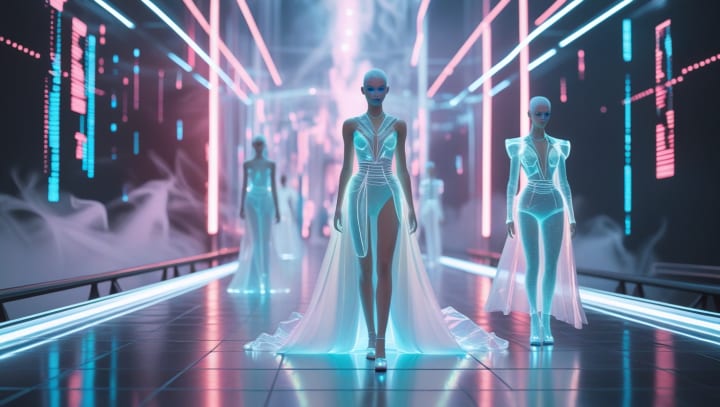
In recent years, traditional fashion shows have faced competition from a new player: algorithmically curated digital runways.
Brands like The Fabricant and DRESSX are leading the charge, designing collections that exist solely in the virtual realm. These shows challenge conventional notions of creativity, replacing human designers with AI-driven systems that generate everything from silhouettes to textures.
How Algorithms Curate Fashion Shows
How exactly do algorithms curate fashion shows?
- Data Analysis: AI analyzes vast amounts of data—from social media trends and consumer behavior to historical runway archives—to predict “what’s next” in fashion.
- Generative Design: Tools create original pieces based on parameters like color palettes, fabric types, and silhouette shapes.
- Virtual Staging: Entire shows are staged in immersive 3D environments or metaverse platforms, complete with avatars modeling the looks.
Why It Matters: Democratizing Fashion
Digital fashion shows offer several advantages over traditional formats:
- They break down barriers for emerging designers, who can showcase their work without needing industry connections or funding.
- Since nothing is physically produced, these events are inherently sustainable—a huge win for eco-conscious consumers.
- They democratize access for global audiences. Anyone with an internet connection can attend and interact, transforming fashion from an exclusive spectacle into a shared experience.
Challenges & Critiques
Despite its benefits, algorithmic curation raises important questions:
- Does removing human designers diminish authenticity?
- Can AI capture the nuances of cultural storytelling that give fashion its depth?
- Will consumers embrace purely digital designs over tangible items?
- Intellectual property is another gray area. Who owns AI-generated designs—the programmer, the brand, or no one at all? As this space evolves, clear legal frameworks will be crucial.
The Bigger Picture: Beyond Physicality
Digital-only fashion forces us to reconsider traditional concepts of ownership and identity.
In gaming or virtual worlds, avatars wearing exclusive NFT-based outfits blur the line between art and utility. If fashion becomes entirely digital, what does that mean for our sense of self? Do we value rarity differently when it exists only online?
3. Bridging the Two Concepts: AI as a Catalyst for Identity Evolution
At first glance, mood-adaptive wearables and algorithmic fashion shows may seem unrelated. But both share a common thread: empowering individuals to express themselves in unprecedented ways.
Whether it’s through dynamic garments that mirror our inner states or virtual designs that push creative boundaries, AI is redefining what it means to be seen—and understood.
As AI continues to blur lines between physical and digital realities, society must grapple with profound questions. Will AI enhance personal freedom—or homogenize creativity under data-driven formulas? The answer depends on how we choose to engage with these technologies.
Conclusion: The Future of Fashion is Fluid
Wearable AI and algorithmic fashion shows represent a seismic shift in how we engage with clothing and identity. These innovations invite us to reimagine not just what we wear—but who we are—and who we could become.
Whether you’re skeptical or excited, one thing is certain: AI is shaping the way we see ourselves—and the world around us.
Stay curious, stay engaged, and prepare to step boldly into the fluid future of fashion.
About the Creator
Dishmi M
I’m Dishmi, a Dubai-based designer, writer & AI artist. I talk about mental health, tech, and how we survive modern life.
Subscribe for healing advice, human stories & future thoughts!
Reader insights
Outstanding
Excellent work. Looking forward to reading more!
Top insights
Compelling and original writing
Creative use of language & vocab
Easy to read and follow
Well-structured & engaging content
Excellent storytelling
Original narrative & well developed characters
Expert insights and opinions
Arguments were carefully researched and presented
Eye opening
Niche topic & fresh perspectives
Masterful proofreading
Zero grammar & spelling mistakes
On-point and relevant
Writing reflected the title & theme
About Binding Prometheus
I want to start actively advocating on behalf of my own work, and the most valuable part of my canon is, without a doubt, Binding Prometheus, the play I have been working on since 2019 and only finished in 2023 as part of my MA. The play itself is an amalgamation of a million different inspirations. On one end, it evokes the Ancient Greek myth-play, deriving its own title from the earliest extant work of Western drama we have, Aeschylus’s Prometheus Bound. On the other end, it borrows significantly from the sci-fi bulwarks from over the years, namely Mary Shelley’s Frankenstein and Karel Capek’s Rossum’s Universal Robots. The play could be an episode of Black Mirror, I fear. I don’t know. I’ve only ever seen one episode of Black Mirror.
By Steven Christopher McKnight18 days ago in Futurism
Anti-Jamming Market Outlook: Strengthening Secure Communications Across Critical Sectors
Anti-Jamming Market Overview The global anti-jamming market is becoming increasingly critical as satellite-based navigation and communication systems face growing threats from intentional interference, signal spoofing, and electronic warfare. Anti-jamming solutions protect GPS and GNSS signals to ensure accuracy, reliability, and operational continuity across defense, aerospace, aviation, maritime, and critical infrastructure applications. Rising dependence on precision navigation, autonomous platforms, and secure communication networks is accelerating the adoption of advanced anti-jamming technologies. As governments and commercial operators prioritize resilience and security, the market is poised for sustained growth worldwide.
By James Smith6 days ago in Futurism




Comments (1)
I wish for future possibility of this one