
What Happens If an Astronaut Sneezes in a Spacesuit?
Space

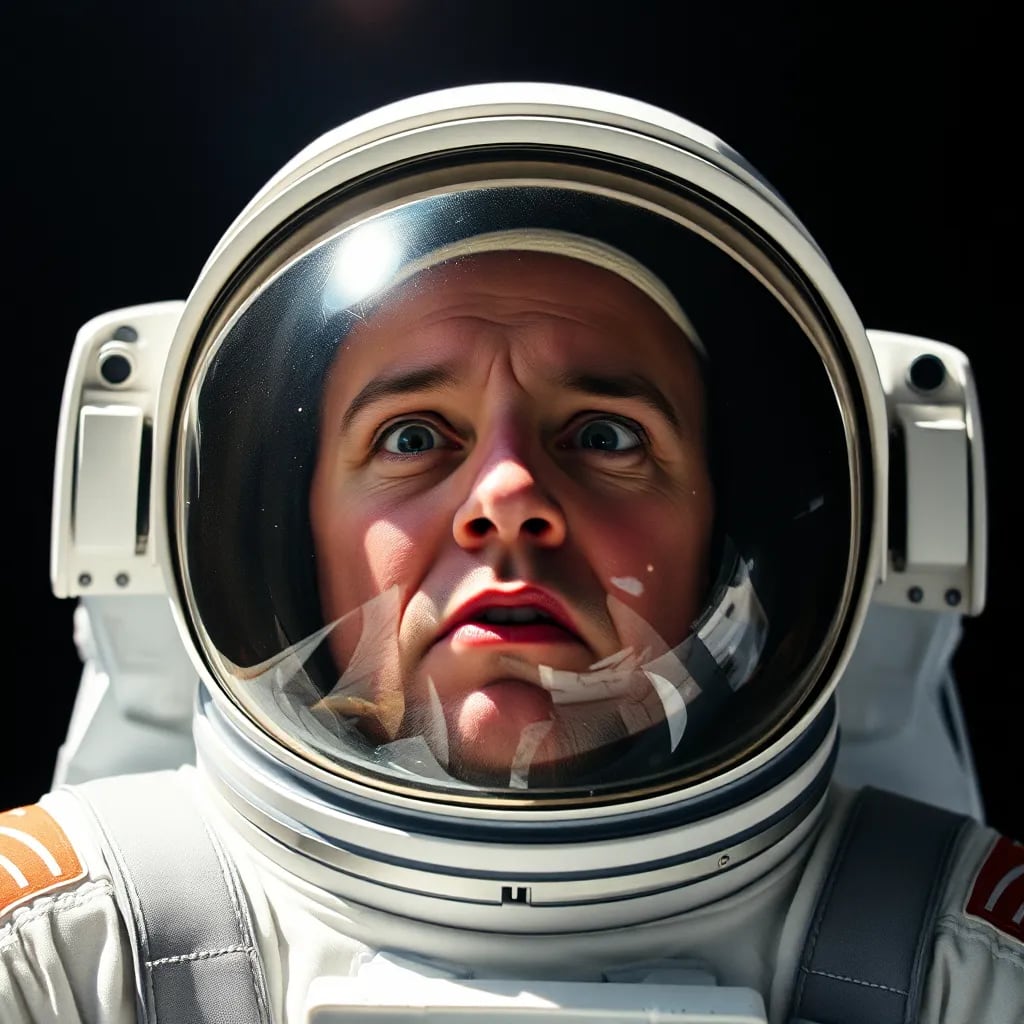
When we imagine astronauts, we tend to picture serious, highly trained professionals in white suits floating gracefully through the void, conducting vital experiments. But even in the vacuum of space, human biology doesn’t take a break. Astronauts, like anyone else, sneeze. And that brings us to an oddly amusing and surprisingly insightful question: what happens if an astronaut sneezes inside their helmet?
It might sound silly at first, but it’s a great entry point into understanding how advanced and carefully designed a spacesuit’s life support system really is.
The Sneeze: A Mini-Explosion in a Tiny Bubble
Sneezing is a powerful biological reflex a sudden blast of air traveling up to 100 mph (160 km/h) to clear irritants from the nasal passages. On Earth, the expelled air and microscopic droplets spread out into the surrounding environment. In space? Not so much.
Inside a spacesuit, the sneeze hits the visor and then... comes right back at you.
Astronauts can't turn their heads or raise a sleeve. All they can do is brace themselves for impact and wait for the onboard ventilation system to clean up the mess. It might be uncomfortable and a little embarrassing, but don’t worry it’s not dangerous.
Inside the Suit: A Tiny Ecosystem of Survival
A modern spacesuit isn’t just a thick layer of insulation; it’s a self-contained life-support ecosystem. Think of it as a miniature spacecraft molded to fit the human body.
Here’s what happens when an astronaut sneezes:
- Nothing escapes. The suit is fully sealed, so all the air (and everything in it) stays inside. That includes the moisture, particles, and force from a sneeze.
- Ventilation to the rescue. Internal fans and air channels immediately go to work. They pull exhaled air away from the astronaut’s face, filter out carbon dioxide and excess humidity, and recirculate clean air back in.
- Filters handle the mess. A sneeze generates a fine aerosol of droplets and mucus. Spacesuits are equipped with filters and absorbent systems that trap moisture and capture those tiny particles, keeping the air breathable.
- Foggy visor? Not for long. A sudden burst of moisture can cause the visor to fog up, but built-in temperature controls and air circulation quickly clear it up. Still, for a few seconds, the view might be blurry.
Inconvenient? Yes. Dangerous? Not at all.
From a physiological standpoint, sneezing inside a helmet is more of a nuisance than a threat. A wet face, some temporary condensation, and the inability to wipe your nose can make for an awkward few moments. But the suit is engineered to handle far worse.
That said, if an astronaut sneezes repeatedly, it’s not taken lightly. It could indicate the onset of a cold, allergies, or another condition that needs medical attention. Before any spacewalk, crew members undergo thorough health checks. Even something as “small” as a runny nose can be reason enough to postpone a mission — because in the vacuum of space, even small problems get magnified.
Straight from the Space Helmet: Astronaut Reactions
Astronaut Chris Hadfield, known for his sense of humor and transparency about space life, once described sneezing in a helmet as “a moment of complete helplessness.” You know it’s coming, you can’t stop it, and then you’re left blinking behind a fogged-up visor with no tissues in sight.
His advice? “Wipe your face thoroughly before heading out. At least then you’ll feel like it was a fair fight.”
Final Thoughts: The Humor in High Tech
It’s funny, but also kind of amazing a sneeze, one of the most basic human reflexes, becomes a way to appreciate the complexity and efficiency of life support systems in space. Every little detail, from air filtration to thermal regulation, is engineered with precision, so even the messiest moments are manageable.
So, if you ever find yourself in orbit and feel a sneeze creeping up don’t panic. Embrace it (figuratively), prepare for some momentary grossness, and trust that the technology wrapped around you can handle it.
After all, sneezing in space might be messy, but it's one more reminder that even among the stars, you're still very human.
About the Creator
Keep reading
More stories from Holianyk Ihor and writers in Futurism and other communities.
What If Earth Had a Ring Like Saturn?
An Imaginative Scenario with Surprisingly Real Consequences When we picture Saturn, one feature instantly steals the spotlight: its magnificent rings. Wide, glittering, and ethereal, they give the gas giant its signature look and make it one of the most iconic planets in our solar system. But what if Earth had rings too?
By Holianyk Ihor6 months ago in Futurism
About Binding Prometheus
I want to start actively advocating on behalf of my own work, and the most valuable part of my canon is, without a doubt, Binding Prometheus, the play I have been working on since 2019 and only finished in 2023 as part of my MA. The play itself is an amalgamation of a million different inspirations. On one end, it evokes the Ancient Greek myth-play, deriving its own title from the earliest extant work of Western drama we have, Aeschylus’s Prometheus Bound. On the other end, it borrows significantly from the sci-fi bulwarks from over the years, namely Mary Shelley’s Frankenstein and Karel Capek’s Rossum’s Universal Robots. The play could be an episode of Black Mirror, I fear. I don’t know. I’ve only ever seen one episode of Black Mirror.
By Steven Christopher McKnight16 days ago in Futurism
North America Generative AI Market Size and Forecast 2025–2033
The North America Generative AI Market is on the brink of a historic expansion. According to Renub Research, the market is expected to surge from US$ 6.19 billion in 2024 to US$ 84.27 billion by 2033, registering an exceptional CAGR of 33.67% from 2025 to 2033. This rapid acceleration reflects not only technological advancement but also the region’s deep-rooted digital infrastructure, concentration of skilled talent, and strong appetite for innovation across enterprises.
By Aaina Oberoi6 days ago in Futurism



Comments
There are no comments for this story
Be the first to respond and start the conversation.