
We Are What We Eat:
Nourishing Our Bodies and Shaping Our Futures


EThe age-old adage “We are what we eat” is more than a catchy phrase—it’s a powerful reminder that our dietary choices have a profound impact on every aspect of our lives. From the cellular level to our overall quality of life, the food we consume plays a central role in determining our physical health, mental well-being, and even our cultural identity. As we stand at the intersection of tradition and innovation, understanding the true meaning behind this saying can empower us to make choices that not only benefit our individual lives but also set the stage for a healthier, more sustainable future.
The Science Behind Our Food Choices
Modern nutritional science tells us that the foods we eat are the building blocks of our body. Proteins repair tissues, carbohydrates fuel our daily activities, and fats help absorb essential vitamins. Micronutrients like vitamins and minerals act as catalysts in countless bodily processes. Recent studies have shown that diets rich in whole foods—vegetables, fruits, lean proteins, and healthy fats—support not only physical health but also cognitive function and emotional well-being. Conversely, highly processed foods can lead to chronic conditions such as obesity, diabetes, and heart disease.
At the same time, emerging research into the gut-brain connection has revealed that what we eat can influence our moods and even our behavior. The microbiome—the collection of bacteria residing in our digestive tract—plays a critical role in regulating stress and mental health. In other words, nourishing our bodies properly isn’t just about preventing disease; it’s about enhancing our capacity for joy, creativity, and resilience.
Cultural Perspectives and the Identity of Food
Beyond its biological impact, food is deeply intertwined with culture and identity. What we eat is often a reflection of our heritage, our family traditions, and the environment in which we live. Traditional diets, passed down through generations, offer a window into the history and values of a people. Mediterranean, Asian, and Indigenous diets, for example, are celebrated not only for their flavors but also for their holistic approach to health and community.
Yet, as societies modernize and globalize, these dietary patterns face challenges. Fast food, processed meals, and artificial additives have become the norm in many parts of the world, often at the expense of nutritional quality and cultural heritage. Reclaiming traditional culinary wisdom is becoming an act of cultural preservation—a way of honoring our past while building a healthier future.
Futurism and Food: A New Paradigm
In today’s fast-changing world, futurism isn’t just about technology or space travel; it also offers a new way to think about food. Forward-thinking innovators are reimagining how we produce, distribute, and consume food. From vertical farming in urban centers to lab-grown meat and plant-based alternatives, the future of food is dynamic and full of promise.
Embracing this futuristic mindset means recognizing that our food systems must evolve to meet the challenges of a growing global population and a changing climate. By integrating sustainable practices with cutting-edge technology, we can reduce waste, lower environmental impact, and ensure that nutritious food is accessible to all. In this context, “we are what we eat” expands beyond individual health—it becomes a collective responsibility to shape a world where progress and nature coexist harmoniously.
Sustainable Choices for a Healthier Tomorrow
Every decision at the grocery store or dinner table has broader implications. Choosing organic produce, reducing meat consumption, and supporting local farmers can lead to significant environmental benefits. Sustainable agriculture practices not only reduce pollution and conserve resources but also help maintain biodiversity and protect ecosystems.
Moreover, educating ourselves and our communities about the origins and impacts of our food is a critical step toward systemic change. When consumers demand transparency and quality, businesses and governments are compelled to adopt policies that favor long-term health over short-term profits. In this way, each healthy choice becomes a vote for a sustainable, equitable future.
Conclusion
“We are what we eat” is not merely a statement about individual well-being—it is a call to action. It urges us to reflect on our choices, honor our cultural heritage, and embrace innovation to create a healthier, more sustainable world. As we look toward the future, let us remember that the power to shape our destiny lies not only in our dreams and ideas but also in the foods that fuel our lives. By choosing wisely today, we pave the way for a future where every meal contributes to a healthier body, a resilient mind, and a thriving planet.
About the Creator
Pure Crown
I am a storyteller blending creativity with analytical thinking to craft compelling narratives. I write about personal development, motivation, science, and technology to inspire, educate, and entertain.
Keep reading
More stories from Pure Crown and writers in Futurism and other communities.
AI in Healthcare:
AI is making waves in healthcare, helping doctors diagnose diseases faster, predict patient needs, and tailor treatments to individuals. It’s like having a super-smart assistant who never tires, analyzing medical images or patient data to spot issues humans might miss.
By Pure Crownabout a year ago in Futurism
IT Solutions Powering Modern Manufacturing Operations
Manufacturing has always been shaped by technology, from mechanized looms to assembly lines. Today, the transformation is less about physical machinery alone and more about the digital systems that connect, monitor, and optimize every step of production. Information Technology (IT) solutions now sit at the center of modern manufacturing operations, quietly enabling factories to work faster, smarter, and with greater resilience.
By Davin Convay7 days ago in Futurism
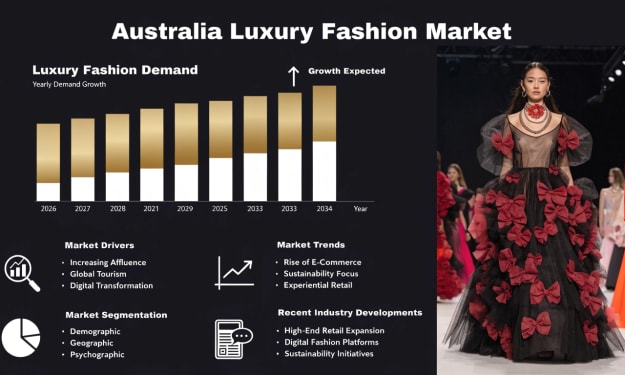
Australia Luxury Fashion Market: Rising Affluent Demand, Digital & Retail Expansion & Sustainability Trends
According to IMARC Group, the Australia luxury fashion market reached USD 5.2 Billion in 2025 and is projected to grow to USD 6.8 Billion by 2034, exhibiting a compound annual growth rate (CAGR) of 2.95% during 2026–2034. The steady expansion of the market reflects rising disposable incomes, growing affluent consumer segments, and evolving lifestyle aspirations across Australia. Luxury apparel, footwear, handbags, and accessories are increasingly viewed as lifestyle investments rather than occasional indulgences. As digital retail channels expand and sustainability becomes central to brand positioning, Australia luxury fashion market share continues to evolve within a competitive global landscape.
By Kevin Cooper6 days ago in Futurism
Who is your "Person"?
It's important to recognize that you cannot go through life as easily on your own. My name is Elizabeth and I'm a survivor of child abuse and horrific trauma. Healing from trauma is not a quick fix and recognizing that it will take time, is part of the struggle.
By Elizabeth Woods6 days ago in Psyche



Comments
There are no comments for this story
Be the first to respond and start the conversation.