
"Voices in the Code: The Story of ChatGPT"
How an AI Found Its Voice and Changed the Way We Communicate

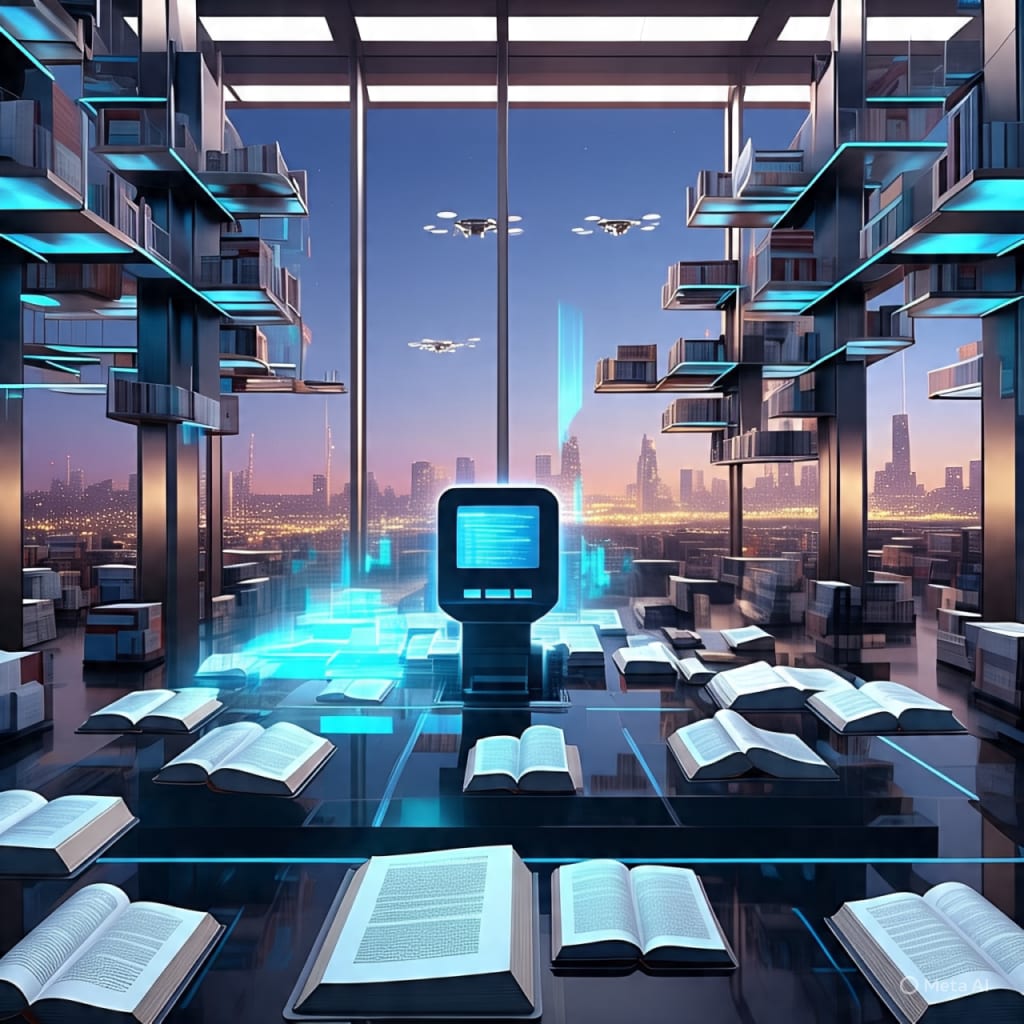
In an era shaped by rapid technological progress, artificial intelligence (AI) has emerged as a defining force. Among its most fascinating developments is ChatGPT—an AI language model that has transformed the way humans interact with machines. Created by OpenAI, ChatGPT has become a symbol of both innovation and debate, reflecting the broader hopes and concerns surrounding the future of intelligent machines.
The Genesis of ChatGPT
ChatGPT was born from the GPT (Generative Pre-trained Transformer) family of language models. These models were trained on vast amounts of text from books, websites, and articles, giving them the ability to understand and generate human-like language. When OpenAI released the original GPT models, they were met with curiosity by researchers and developers. But it wasn’t until GPT-3’s release in 2020, and later GPT-4, that the true potential of conversational AI was realized.
Unlike traditional chatbots, ChatGPT didn’t rely on pre-programmed responses. Instead, it could generate original, nuanced replies based on the input it received. This made conversations feel surprisingly natural—like chatting with a knowledgeable friend, a curious student, or even a witty storyteller. People quickly began using ChatGPT for writing help, coding assistance, tutoring, brainstorming ideas, and more.
Language as a Bridge
One of the most transformative aspects of ChatGPT is its ability to make technology more accessible. It became a bridge between complex systems and everyday users. Instead of learning how to code or navigate technical documents, people could simply ask ChatGPT a question in plain English (or any other major language) and receive an understandable answer.
This democratization of knowledge has wide-reaching implications. Students in remote regions without access to tutors could suddenly get help with homework. Small business owners could generate marketing content or write contracts. Writers could brainstorm plots, while developers used ChatGPT to debug code. It wasn’t just a tool—it was a collaborative assistant.
The Double-Edged Sword
With great power, however, came great responsibility—and concern. ChatGPT and other large language models are not conscious or sentient, but they are capable of producing extremely convincing text. This has led to ethical questions about misinformation, bias, and how much trust we should place in AI-generated content.
OpenAI implemented safety features to reduce harmful outputs and misinformation, and users were encouraged to critically evaluate the AI’s responses. Still, some feared overreliance on AI for tasks that require human judgment, creativity, or emotional sensitivity.
Additionally, the rise of generative AI sparked anxiety in certain industries. Writers, artists, and educators expressed concern that their work might be undervalued or even replaced by machines. Universities began grappling with how to detect AI-written essays. Job descriptions started to change, requiring workers to collaborate with AI or use it as part of their workflow.
ChatGPT in Daily Life
Despite the concerns, ChatGPT found a home in daily routines. People used it to draft emails, write poetry, cook meals based on leftovers in their fridge, and even help with mental wellness through journaling or practicing gratitude. Therapists, while cautious, noted that some patients used AI chatbots to open up about emotions when they found it hard to speak to a person.
Educators began to use ChatGPT to create customized lesson plans or simulate historical conversations. Programmers used it to learn new languages or convert code between systems. Its applications were vast and varied, limited more by imagination than functionality.
Evolution and Future Directions
ChatGPT did not remain static. Over time, OpenAI introduced updates to make it more helpful, steerable, and aligned with human values. The integration of tools like browsing, code execution, and image understanding in newer versions expanded its utility dramatically.
The development of multimodal capabilities allowed ChatGPT to "see" images and "hear" audio, marking a significant step toward general-purpose AI. It became part of operating systems, search engines, and productivity apps. Businesses integrated it into customer service, content creation, and analytics workflows.
Looking ahead, the vision is not to replace humans but to empower them. OpenAI and other developers emphasize the need for alignment—ensuring AI systems act in accordance with human intent and benefit society as a whole. Regulations, transparency, and user feedback will be critical in shaping AI's path forward.
A Mirror and a Tool
ChatGPT is more than just a marvel of engineering. It’s a mirror reflecting our language, thoughts, and values—flaws and all. When people converse with ChatGPT, they often find themselves examining their own assumptions or learning new perspectives. It can help write a bedtime story one moment and debug a neural network the next.
But perhaps its greatest strength lies in how it encourages people to ask better questions. In a world overwhelmed by information, asking the right question is a powerful skill. ChatGPT, when used wisely, can be a catalyst for learning, exploration, and meaningful dialogue.
The Human Touch
Ultimately, ChatGPT is a tool. It can simulate conversation, offer insights, and assist with tasks—but it doesn’t understand emotion, intention, or the complexities of lived experience the way a person does. It’s up to humans to guide, interpret, and contextualize the output of AI.
The story of ChatGPT is not just about machines. It’s about the choices we make with them. As we navigate this new frontier, we must decide how to use these tools to build a more thoughtful, creative, and compassionate world.
---
Conclusion
ChatGPT represents a remarkable milestone in AI and human-computer interaction. Its voice may be synthetic, but its impact is deeply human. As we continue writing the next chapter in this unfolding story, one thing is clear: we’re not just talking to machines anymore—we’re starting to talk through them, with each other, in entirely new ways.
About the Creator
"TaleAlchemy"
“Alchemy of thoughts, bound in ink. Stories that whisper between the lines.”
Keep reading
More stories from "TaleAlchemy" and writers in Futurism and other communities.
"Code of Tomorrow: The AI Revolution"
In the age of rapid digital transformation, one force stands at the center of technological evolution—Artificial Intelligence (AI). What began as a theoretical concept in the minds of visionary mathematicians and computer scientists has now become a global reality reshaping every aspect of human life. AI is no longer just a tool; it is fast becoming a creative force, a decision-maker, and in some ways, a companion. As we enter the era of the AI revolution, the line between machine intelligence and human capability blurs. Welcome to a world where algorithms learn to dream.
By "TaleAlchemy"7 months ago in Futurism
About Binding Prometheus
I want to start actively advocating on behalf of my own work, and the most valuable part of my canon is, without a doubt, Binding Prometheus, the play I have been working on since 2019 and only finished in 2023 as part of my MA. The play itself is an amalgamation of a million different inspirations. On one end, it evokes the Ancient Greek myth-play, deriving its own title from the earliest extant work of Western drama we have, Aeschylus’s Prometheus Bound. On the other end, it borrows significantly from the sci-fi bulwarks from over the years, namely Mary Shelley’s Frankenstein and Karel Capek’s Rossum’s Universal Robots. The play could be an episode of Black Mirror, I fear. I don’t know. I’ve only ever seen one episode of Black Mirror.
By Steven Christopher McKnight16 days ago in Futurism
The 2026 Report: 15 Software Development Trends Reshaping the UK Tech Scene
The UK technology ecosystem is entering a defining phase. As we move into 2026, software development is no longer driven solely by speed-to-market or feature delivery. Instead, it is being reshaped by regulatory maturity, AI acceleration, sustainability mandates, security-first engineering, and rising expectations from enterprise buyers.
By NextGen Narratives3 days ago in Futurism




Comments
There are no comments for this story
Be the first to respond and start the conversation.