
US Army Students’ Hypersonic Rocket Smashes Altitude Record with 93 Mile Flight
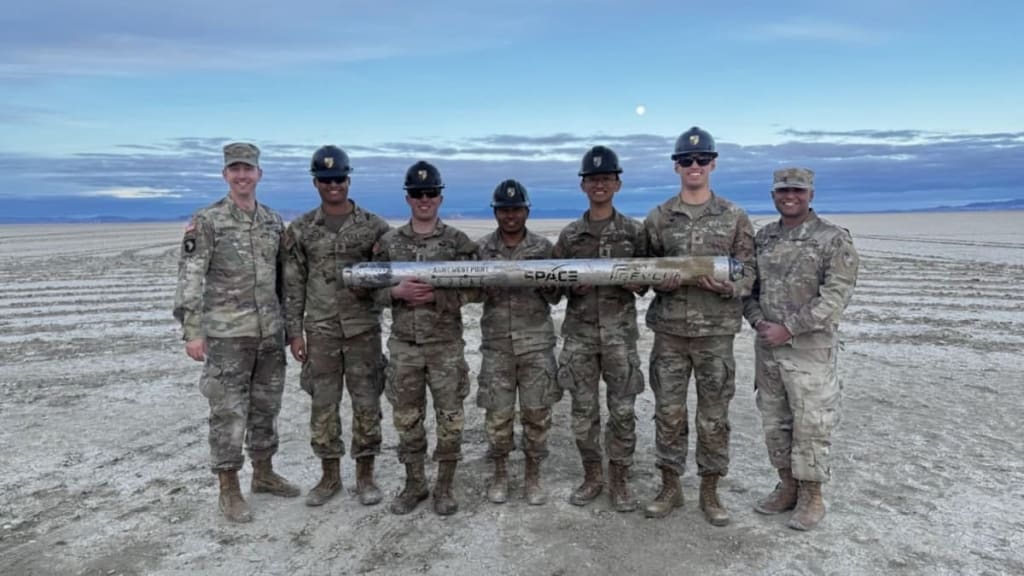
West Point cadets cross the boundary of space with a student built hypersonic rocket setting a new amateur altitude record at 93 miles

US Army Students’ Hypersonic Rocket Smashes Altitude Record with 93 Mile Flight
In a historic achievement that combines education innovation and cutting edge technology a group of U.S. Army students from West Point has set a new world record in amateur rocketry. The cadet led team successfully launched a hypersonic rocket to an altitude of 93 miles approximately 149.5 kilometers surpassing the previous amateur record and crossing the Kármán line the internationally recognized boundary of space. The rocket designed and built by the West Point Hypersonic Research Team known as SPEAR Space Engineering and Applied Research was launched on January 11, 2025 at Black Rock Desert in Nevada. The site famous for its open terrain and use in high altitude experimental launches provided the ideal location for this monumental flight.
This record breaking launch was not an overnight success. The SPEAR program began nearly six years ago as a hands on learning opportunity for cadets interested in aerospace engineering space exploration and defense technologies. The program is part of the Department of Civil and Mechanical Engineering at the U.S Military Academy with support from various defense partners. Cadets participating in SPEAR work on real world problems often tackling design challenges associated with speed altitude propulsion and reentry. The goal is to give students practical experience in engineering while preparing them for careers that may involve advanced weapons systems and space based technologies.
The Record Breaking Rocket
The rocket used in the record setting flight was a two stage hypersonic vehicle built with precision engineered parts. It utilized a solid fuel propulsion system and was designed to minimize drag while maximizing thrust and stability. Reaching Mach 5+ speeds the rocket soared vertically to an altitude of 93 miles well above the previous amateur rocketry record of 87 miles. Achieving this altitude wasn’t just a matter of raw power. The engineering team had to account for extreme environmental conditions including high temperatures from air friction structural stresses during flight and precision timing for stage separation. Sensors and onboard telemetry equipment tracked the entire flight path confirming the record breaking result.
While breaking a record is a notable achievement the mission had broader educational and strategic goals. According to team leaders and faculty advisors the primary purpose was to challenge cadets to apply classroom knowledge to complex aerospace problems. This kind of experiential learning enhances their critical thinking teamwork and technical skills. Additionally the project reflects the growing emphasis the U.S military places on hypersonic technologies. Hypersonic vehicles those that travel at speeds greater than Mach 5 are seen as the future of both offensive and defensive military capabilities. By engaging cadets in these technologies early in their careers the Army is preparing future leaders for roles in advanced weapons development space defense and high speed reconnaissance.
Real World Defense Applications
The implications of this record go beyond academia. Hypersonic technology is a priority in the global defense arena, with the U.S China and Russia all investing heavily in the development of hypersonic missiles and defense systems. The success of the SPEAR rocket demonstrates not only the technical capabilities of U.S military students but also the strategic potential of academic defense collaboration. Moreover the data gathered from the launch will contribute to ongoing research in materials science aerodynamics and propulsion. This kind of empirical testing is crucial to refining hypersonic technology for both military and potentially commercial applications such as ultra fast travel. Following their successful launch the SPEAR team isn’t slowing down. Plans are already underway for more advanced rocket designs including reusable systems and potentially guided hypersonic vehicles. The team is also looking at ways to further miniaturize components and improve telemetry for better real time data during future missions. Faculty members believe that the project not only builds great engineers but also cultivates leaders who can innovate under pressure a critical trait for the future battlefield. As the importance of space and high speed technology grows the value of such educational programs cannot be overstated. The 93 mile rocket flight by the West Point cadets is more than a technological achievement it is a symbol of what young minds can accomplish with the right resources training and determination. By breaking the amateur rocketry altitude record these U.S Army students have not only reached the edge of space but also propelled themselves into the forefront of aerospace innovation. Their accomplishment proves that the future of defense space travel and hypersonic research lies in the hands of today’s students future scientists engineers and military leaders ready to take the next giant leap.
About the Creator
Adnan Rasheed
Author & Creator | Writing News , Science Fiction, and Worldwide Update| Digital Product Designer | Sharing life-changing strategies for success.
Keep reading
More stories from Adnan Rasheed and writers in Futurism and other communities.
Elon Musk Warns of China’s Rise in Robotics But Claims Tesla Will Remain No. 1 in the World
Elon Musk Warns of China’s Rise in Robotics But Claims Tesla Will Remain No. 1 in the World Elon Musk the visionary CEO of Tesla is no stranger to competition. But his recent comments about the rise of Chinese robotics companies signal growing concern over the shifting landscape in one of tech’s most ambitious frontiers. As the world moves rapidly toward automation and AI-driven robotics Musk warns that China may soon dominate the global top 10 list of robot makers. Despite that he remains confident that Tesla will continue to lead the pack.
By Adnan Rasheed11 months ago in Futurism
Seeing Is No Longer Believing
It started with a frantic FaceTime call at 2:00 AM. A mother in Arizona picked up her phone to see her teenage daughter crying, surrounded by dark shadows. The girl begged for help, saying she had been in an accident and the other driver was threatening her. The mother saw her daughter’s face—the specific way her lip quivers when she’s terrified—and heard the exact pitch of her scream. She was ready to pay any ransom, to do anything.
By Alex Sterling 6 days ago in Futurism


Comments
There are no comments for this story
Be the first to respond and start the conversation.