
United States Wireless Mouse Market Size & Forecast 2025–2033
How Technology, Gaming, and Remote Work Are Redefining the Future of Wireless Peripherals in America


The United States Wireless Mouse Market is entering a phase of remarkable expansion, rising from US$ 635.11 million in 2024 to an estimated US$ 1,083.07 million by 2033, according to Renub Research. This reflects a CAGR of 6.11% during 2025–2033, fueled by technological advances, the sustained popularity of remote work, and the rapid growth of gaming culture.
From offices and classrooms to gaming arenas and living rooms, the wireless mouse has become an indispensable tool. Its evolution represents the broader shifts in consumer behavior—toward mobility, comfort, aesthetic minimalism, and productivity-driven computing.
A Market Built on Mobility, Precision, and Comfort
A wireless mouse operates using radio frequency (RF) or Bluetooth to communicate with a computer, eliminating the need for cables. What began as a convenience-oriented accessory has now become a standard peripheral across countless applications.
Users today demand workspaces free of clutter, more ergonomic accessories, and devices that function seamlessly with laptops and tablets. Whether in corporate boardrooms, creative studios, or university dorms, the wireless mouse has secured its place as a must-have accessory.
Why the Wireless Mouse Has Become Essential
Mobility: No cords, easy portability
Ergonomics: Better posture, reduced hand strain
Precision: High DPI tracking for work and gaming
Compatibility: Works across devices, surfaces, and operating systems
Aesthetic appeal: Minimalist setups now dominate home and office environments
The American consumer is increasingly design-oriented and productivity-focused—two trends that play in favor of wireless peripherals.
Key Growth Drivers of the U.S. Wireless Mouse Market
1. The Remote Work & Digital Learning Boom
The shift toward remote and hybrid work models continues to boost sales. Laptops alone cannot provide the ergonomic comfort or precision required for long hours of digital work. A wireless mouse fills this gap seamlessly.
The U.S. education landscape has also transformed. According to the National Center for Education Statistics, nearly:
7.5 million students enrolled in online classes at public colleges in 2022
2.6 million enrolled in online programs at private institutions
1.1 million students attend online-only universities
With millions operating from home or hybrid spaces, the demand for comfortable, reliable computing accessories has surged.
Wireless mice are now a standard component of both student and professional tech kits—becoming as essential as keyboards and headphones.
2. Continuous Wireless Technology Innovations
Rapid advancements in wireless communication have resolved many of the performance concerns that once discouraged users from going wireless.
Key innovations include:
Bluetooth 5.0 and beyond
2.4GHz low-latency connectivity
Rechargeable Li-ion batteries
Advanced optical and laser sensors
Ergonomic and customizable designs
Modern wireless mice now provide near-zero latency, matching and often surpassing wired alternatives.
Manufacturers are introducing features such as:
USB-C fast charging
Multi-device pairing
Long battery standby modes
Adaptive surface tracking
The August 2025 announcement by SuperMobile, which launched the first 5G-Advanced network slice with integrated satellite-to-mobile capabilities, highlights the broader improvements in U.S. telecommunications infrastructure—benefiting all wireless device categories, including mice.
As the wireless ecosystem becomes more sophisticated, adoption among consumers only accelerates.
3. Growth of Gaming and E-Sports in the United States
The booming U.S. gaming and e-sports industry is one of the strongest growth engines for the wireless mouse market.
Gamers demand:
High DPI (12,000+ DPI sensors)
Programmable buttons
Ultra-low latency switches
Lightweight, customizable designs
RGB lighting and personalization
Modern wireless gaming mice deliver performance metrics previously exclusive to professional wired gaming peripherals.
In March 2025, M80 and IMG Academy announced a professional e-sports camp in Florida—training the next generation of competitive gamers in Valorant, Rocket League, and League of Legends. This initiative signals the growing mainstream status of gaming, boosting demand for premium wireless mice nationwide.
As gaming becomes further embedded in American culture—from competitive leagues to casual home setups—the wireless gaming mouse segment will continue its upward trajectory.
Key Challenges in the U.S. Wireless Mouse Market
1. Intense Competition & Price Pressure
Competition is fierce. From high-end brands like Logitech and Razer to low-cost manufacturers offering mass-produced alternatives, the market is flooded with choices.
This creates challenges such as:
Price sensitivity among mainstream buyers
Difficulty in differentiating feature sets
Margin pressure for mid-range brands
While premium users seek advanced features, the general consumer base often prioritizes affordability—forcing brands to balance innovation with competitive pricing.
2. Dependence on Battery Power
Despite improvements, battery life remains a point of frustration for many users.
Challenges include:
Disposable battery usage (environmental concerns)
Devices dying during critical use
Limited lifespan of rechargeable batteries
Although USB-C charging and smart power management are improving reliability, battery dependence still makes some users prefer wired devices—particularly heavy users like gamers and designers.
Market by Product Type
Laser Wireless Mouse Market
Laser mice are gaining traction due to:
Superior precision
Better performance on different surfaces
Higher sensitivity for creative professionals
Users engaged in CAD modeling, 3D design, engineering, and professional gaming gravitate toward laser-based devices. Though priced higher, they offer unmatched tracking quality, boosting their adoption across high-end U.S. segments.
Optical Wireless Mouse Market
Optical mice continue to dominate entry-level and mid-range categories. They are:
Affordable
Power-efficient
Ideal for personal and casual use
These devices perform well in everyday applications like browsing, office work, and school assignments—ensuring strong demand across American households.
Market by End Use
Personal Use Segment
This is the largest consumer segment due to:
Remote work
Student adoption
Casual computing
Light gaming
Lightweight, portable, and affordable wireless mice appeal most to this category. With American households now owning multiple devices—laptops, tablets, mini-PCs—the need for multiple mice drives repeat purchase patterns.
Professional Use Segment
Professionals in fields like graphic design, data analysis, engineering, and software development increasingly rely on high-precision wireless devices.
Popular features among professionals:
Ergonomic vertical designs
Multiple programmable buttons
High DPI sensors
Rechargeable batteries
Seamless multi-device connectivity
Corporate adoption of wireless mice is rising as companies standardize hybrid work setups.
Market by Distribution Channel
Offline Retail Continues to Lead
Despite e-commerce growth, offline channels remain important:
Electronics showrooms
Department stores
Office supply chains
Tech retail boutiques
Consumers still prefer testing grip, comfort, and responsiveness before buying premium mice. Brick-and-mortar stores also enable instant purchase and easy returns—crucial factors for tech accessories.
Online Sales Are Expanding Rapidly
E-commerce platforms like Amazon, Best Buy, and Walmart benefit from:
Wide selection
Competitive pricing
User reviews
Fast delivery
Online retail is especially strong for budget devices and gaming-grade models.
Regional Market Insights
California: The Innovation Hub
California tops the U.S. wireless mouse market due to:
High concentration of tech workers
Vibrant gaming culture
Strong student base
Early adoption of premium devices
Silicon Valley consumers prefer innovative, feature-rich accessories, driving high adoption of ergonomic and gaming mice.
New York: Corporate and Academic Influence
New York's demand is driven by:
Financial sector professionals
Media industry
University students
Hybrid work adoption
With dense urban populations and strong retail networks, New York remains a high-potential wireless mouse market.
Texas: Growing Tech and Gaming Ecosystem
Texas cities like Austin, Dallas, and Houston fuel demand due to:
Expanding tech corridors
Large student populations
Strong e-sports presence
Texas is emerging as one of the fastest-growing states for both personal and gaming wireless mouse sales.
Market Segmentations
Product
Optical Mice
Laser Mice
End Use
Personal Use
Professional Use
Distribution Channel
Offline
Online
Top States
California, Texas, New York, Florida, Illinois, Pennsylvania, Ohio, Georgia, New Jersey, Washington, North Carolina, Massachusetts, Virginia, Michigan, Maryland, Colorado, Tennessee, Indiana, Arizona, Minnesota, Wisconsin, Missouri, Connecticut, South Carolina, Oregon, Louisiana, Alabama, Kentucky, Rest of the U.S.
Leading Companies (Each With 5 Viewpoints Covered)
Logitech
Razer Inc.
Microsoft Corporation
Hewlett Packard Enterprise Development LP
Apple Inc.
Dell Inc.
Lenovo
Samsung
(Including Overviews, Key Persons, Recent Developments, SWOT Analysis, and Revenue Analysis.)
Final Thoughts
The United States Wireless Mouse Market is primed for strong, sustained growth through 2033. With a forecasted value of US$ 1,083.07 million, the market is being shaped by the country’s evolving digital lifestyle—remote work, gaming culture, professional computing, and technological upgrades.
As wireless technology becomes more reliable, precise, and ergonomic, adoption will only deepen across households, schools, enterprises, and gaming communities. The next decade promises a wave of innovative designs, eco-friendly power solutions, and advanced sensors—positioning wireless mice as core tools in America’s digital journey.
About the Creator
Sushant. Renub Research
I’m Sushanta Halder, Digital Marketing Manager at Renub Research with 15+ years in SEO, content, PPC & lead generation. Passionate about data-driven growth strategies.
Keep reading
More stories from Sushant. Renub Research and writers in Futurism and other communities.
North America Tilt Sensor Market Size & Forecast 2025–2033
The North America tilt sensor market is entering one of its most transformative phases, expanding from US$ 96.47 million in 2024 to US$ 236.55 million by 2033, according to Renub Research. This reflects a robust CAGR of 10.48% from 2025 to 2033 — a rate that underscores the region’s growing appetite for advanced sensing technologies across construction, aerospace, electronics, defense, and telecommunications.
By Sushant. Renub Research2 months ago in Futurism
About Binding Prometheus
I want to start actively advocating on behalf of my own work, and the most valuable part of my canon is, without a doubt, Binding Prometheus, the play I have been working on since 2019 and only finished in 2023 as part of my MA. The play itself is an amalgamation of a million different inspirations. On one end, it evokes the Ancient Greek myth-play, deriving its own title from the earliest extant work of Western drama we have, Aeschylus’s Prometheus Bound. On the other end, it borrows significantly from the sci-fi bulwarks from over the years, namely Mary Shelley’s Frankenstein and Karel Capek’s Rossum’s Universal Robots. The play could be an episode of Black Mirror, I fear. I don’t know. I’ve only ever seen one episode of Black Mirror.
By Steven Christopher McKnight16 days ago in Futurism
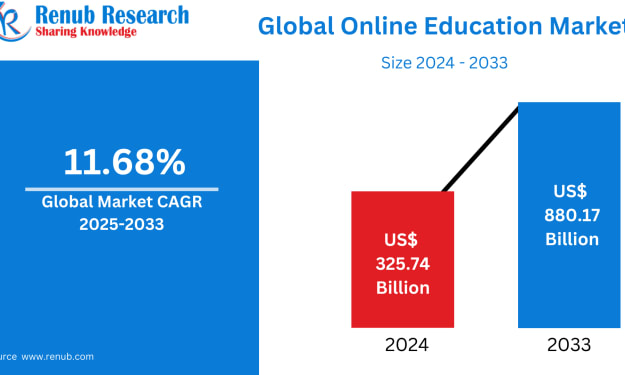
Online Education Market Size & Forecast 2025–2033
Introduction: A Digital Transformation of Education The education sector is undergoing one of the most significant transformations in modern history. Driven by advances in digital infrastructure, changing learner expectations, and the growing demand for flexible skill development, online education has evolved from a supplemental learning method into a global education ecosystem. From professional certifications and virtual classrooms to full-scale online universities and enterprise training platforms, digital learning now touches millions of learners across borders and socioeconomic backgrounds.
By Renub Research3 days ago in Futurism



Comments
There are no comments for this story
Be the first to respond and start the conversation.