
United States Lawn Mowers Market Size and Forecast 2025–2033
Driving the Green Revolution: Smart, Sustainable, and Connected Lawn Care Solutions


The United States Lawn Mowers Market is projected to reach US$ 15.91 billion by 2033, growing from US$ 9.64 billion in 2024, at a CAGR of 5.73% (2025–2033), according to Renub Research. This robust growth reflects Americans’ increasing passion for well-maintained outdoor spaces, sustainable living, and advanced lawn care technologies.
From suburban homeowners to large commercial landscapers, the demand for efficient, eco-friendly, and smart lawn mowers is reshaping the market landscape. Innovations such as robotic automation, battery power, and IoT integration are leading this transformation—offering precision, convenience, and sustainability in one powerful package.
🌿 United States Lawn Mowers Industry Overview
Lawn mowers—ranging from traditional push models to advanced ride-on and robotic types—are now indispensable in maintaining residential, commercial, and public green spaces. They play a crucial role in enhancing aesthetic appeal, hygiene, and outdoor usability.
As Americans increasingly value outdoor living and landscape aesthetics, modern mowers now blend engineering precision with environmental responsibility. The latest generation of models feature smart sensors, self-propulsion systems, customizable cutting settings, and battery-based power that minimizes emissions and noise.
In the U.S., landscaping, home improvement, and sustainable outdoor practices are propelling strong market expansion. Manufacturers are prioritizing automation and energy efficiency, while professional landscapers are investing in high-performance, low-maintenance equipment to boost productivity.
🚀 Growth Drivers of the United States Lawn Mowers Market
1. Technological Advancement and Automation
The biggest transformation in the U.S. lawn mower industry comes from technological innovation.
Smart, battery-powered, and robotic mowers are revolutionizing traditional lawn care by combining sustainability, precision, and convenience.
Robotic mowers with AI-powered sensors, GPS navigation, and mobile app connectivity enable homeowners to maintain perfect lawns with minimal manual effort. The integration of IoT and predictive maintenance systems allows for efficient energy use and real-time monitoring.
Manufacturers like John Deere, Husqvarna, and Bosch are developing fast-charging batteries, stronger materials, and ergonomic designs—making mowers safer, quieter, and more durable.
Automation is not just a luxury anymore—it’s becoming the future standard of lawn care across both residential and commercial sectors in the U.S.
2. Landscaping and Home Improvement Boom
The U.S. home improvement wave continues to fuel demand for lawn care tools. Homeowners—especially in suburban and affluent areas—are investing heavily in landscaping, garden care, and outdoor décor.
Well-kept lawns are seen as a symbol of beauty, health, and community pride. This social and cultural importance, combined with rising disposable incomes, is driving purchases of advanced and easy-to-use lawn mowers.
Moreover, public parks, resorts, sports facilities, and commercial complexes require high-performance equipment to maintain expansive lawns. These institutions increasingly prefer electric or hybrid mowers that align with green building and sustainability goals.
3. Shift Toward Eco-Friendly and Smart Solutions
Environmental consciousness is deeply influencing consumer behavior in the U.S. lawn mower market.
Gasoline-powered mowers are gradually being replaced by electric, cordless, and robotic alternatives that emit fewer pollutants and produce less noise.
Consumers today seek sustainable convenience—mowers that are rechargeable, recyclable, connected, and intelligent. Manufacturers are responding with low-emission models, recyclable components, and energy-efficient designs.
Smart features such as Bluetooth control, scheduling automation, and weather-based adjustments enhance the user experience while aligning with national sustainability standards.
The result? A cleaner, quieter, and smarter future for American lawns.
⚠️ Challenges in the U.S. Lawn Mowers Market
1. High Initial Costs and Maintenance
Despite technological progress, cost remains a key barrier to widespread adoption—especially for robotic and high-end battery-powered mowers.
While these models promise long-term savings and sustainability, their upfront prices and maintenance costs—like battery replacement or software updates—can deter budget-conscious buyers.
Simplifying operation, offering financing options, and reducing maintenance burdens will be critical for ensuring broader market adoption in the coming years.
2. Environmental and Regulatory Challenges
The U.S. is tightening its environmental regulations on emissions, energy efficiency, and noise pollution, affecting the production and sale of traditional gas-powered models.
Manufacturers must adapt to evolving state-level laws—notably in California, New York, and Washington—which are enforcing stricter emission limits.
While this shift accelerates innovation, it also increases production costs and requires redesigns in materials, batteries, and manufacturing processes.
Sustainable compliance is no longer optional—it’s a strategic necessity for long-term resilience in the U.S. lawn mower market.
🌎 State-Wise Market Insights
California
A pioneer in environmental regulation, California leads the transition toward electric and robotic mowers.
Its sustainability policies and outdoor culture make it a testbed for smart landscaping tools. The region’s eco-conscious consumers and innovation-driven manufacturers drive rapid adoption of emission-free mowing solutions.
Texas
Texas has one of the largest markets due to its vast residential lawns, active landscaping sector, and year-round mowing needs.
While gas-powered models remain popular, rising awareness of sustainability is boosting sales of electric and high-performance battery mowers.
New York
Urban landscaping and noise regulations are shaping New York’s shift toward compact, quiet, and robotic mowers.
Public parks, municipalities, and facilities prefer low-maintenance, energy-efficient solutions that support the state’s green policies.
Florida
Florida’s tropical climate ensures constant grass growth and year-round landscaping demand.
Residential homeowners, resorts, and golf courses drive sales of durable, weather-resistant models.
Tourism and property management sectors further boost commercial demand for premium, efficient mowers.
🧠 Recent Developments in the U.S. Lawn Mowers Market
January 2025 – John Deere launched a fully electric, autonomous zero-turn mower featuring a 60-inch deck, advanced navigation cameras, and GPS technology. It operates both autonomously and manually—offering quiet, emission-free performance for commercial operators.
September 2023 – John Deere & EGO (Chervon Group) announced a strategic partnership, allowing Deere dealers to sell EGO’s battery-powered mowers, strengthening its electric lineup.
May 2023 – AriensCo introduced the IKON ONYX, a premium zero-turn mower blending comfort, precision, and durability for residential and professional users.
March 2022 – AriensCo collaborated with country singer and veteran Craig Morgan to promote its Gravely commercial mower line, highlighting its reliability and American craftsmanship.
📊 Market Segmentation Overview
By Offering:
Hardware
Software
By Propulsion Type:
Electric
Internal Combustion Engine (ICE)
By Type:
Riding Lawn Mowers
Walk-Behind Lawn Mowers
Robotic Lawn Mowers
By Lawn Size:
Small
Medium
Large
By Level of Autonomy:
Autonomous
Non-Autonomous
By Distribution Channel:
Online
Retail
By End Use:
Residential
Commercial
By States (29 Viewpoints):
California, Texas, New York, Florida, Illinois, Pennsylvania, Ohio, Georgia, New Jersey, Washington, North Carolina, Massachusetts, Virginia, Michigan, Maryland, Colorado, Tennessee, Indiana, Arizona, Minnesota, Wisconsin, Missouri, Connecticut, South Carolina, Oregon, Louisiana, Alabama, Kentucky, and the Rest of the U.S.
🏢 Key Players and Competitive Landscape
Major companies are investing heavily in smart and eco-friendly innovations, partnerships, and product diversification.
Top players include:
American Honda Motor Co., Inc.
Ariens Company
Briggs & Stratton
Deere & Company
Falcon Garden Tools
Fiskars
Husqvarna Group
MTD Products
Robert Bosch GmbH
Robomow (Friendly House)
Each is focusing on AI integration, battery efficiency, and user-centric design, while expanding retail and online channels to reach a tech-savvy customer base.
💬 Final Thoughts: The Smart Green Frontier
The United States Lawn Mowers Market stands at the crossroads of technology, sustainability, and lifestyle evolution.
As American homeowners and landscaping professionals embrace automation, battery innovation, and digital connectivity, the humble lawn mower is transforming into a smart outdoor machine—one that aligns with the country’s environmental goals and changing consumer habits.
Future growth will hinge on how well manufacturers can balance cost-efficiency, innovation, and eco-compliance. From smart sensors to zero-emission engines, the next decade of U.S. lawn care promises to be greener, smarter, and more efficient than ever before.
About the Creator
Sushant. Renub Research
I’m Sushanta Halder, Digital Marketing Manager at Renub Research with 15+ years in SEO, content, PPC & lead generation. Passionate about data-driven growth strategies.
Keep reading
More stories from Sushant. Renub Research and writers in Futurism and other communities.
United States Socks Market Size and Forecast (2025–2033): Comfort, Fashion, and Sustainability Drive Market Expansion
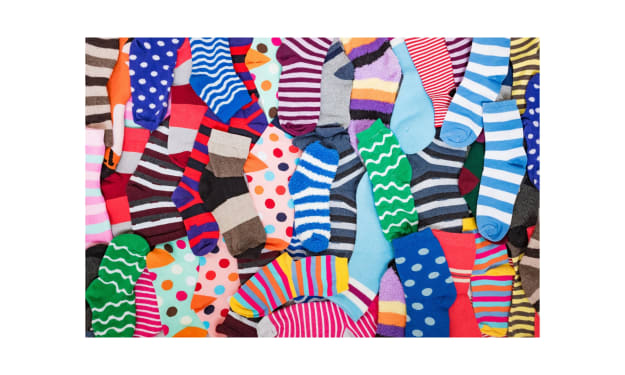
United States Socks Market Overview The United States Socks Market is projected to rise from US$ 2.58 billion in 2024 to US$ 8.69 billion by 2033, registering a CAGR of 5.34% from 2025 to 2033. This growth is attributed to the increasing demand for athleisure wear, heightened health consciousness, innovations in textile technology, and the strong presence of e-commerce platforms. Socks have transitioned from being merely a comfort essential to becoming a fashion statement and a symbol of personal expression.
By Sushant. Renub Research2 months ago in Futurism
About Binding Prometheus
I want to start actively advocating on behalf of my own work, and the most valuable part of my canon is, without a doubt, Binding Prometheus, the play I have been working on since 2019 and only finished in 2023 as part of my MA. The play itself is an amalgamation of a million different inspirations. On one end, it evokes the Ancient Greek myth-play, deriving its own title from the earliest extant work of Western drama we have, Aeschylus’s Prometheus Bound. On the other end, it borrows significantly from the sci-fi bulwarks from over the years, namely Mary Shelley’s Frankenstein and Karel Capek’s Rossum’s Universal Robots. The play could be an episode of Black Mirror, I fear. I don’t know. I’ve only ever seen one episode of Black Mirror.
By Steven Christopher McKnight11 days ago in Futurism
Injection Molded Plastics Market: Cost Efficiency, Mass Production & Growth Outlook
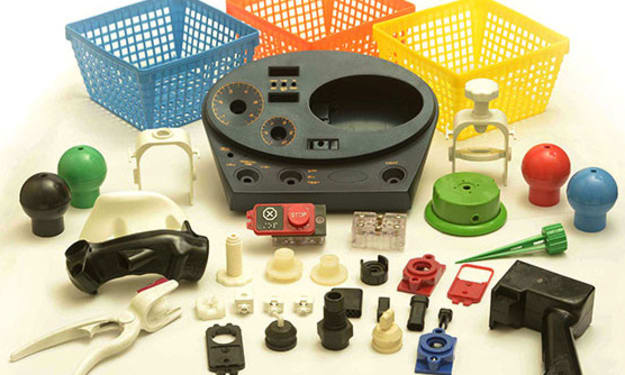
According to IMARC Group's latest research publication, The global injection molded plastics market size reached USD 314.7 Billion in 2024. Looking forward, IMARC Group expects the market to reach USD 430.7 Billion by 2033, exhibiting a growth rate (CAGR) of 3.37% during 2025-2033.
By James Whitman5 days ago in Futurism


Comments
There are no comments for this story
Be the first to respond and start the conversation.