
United States DIY Furniture Market Size and Forecast 2025–2033
Customization, affordability, and sustainability drive a new era in home furnishing


United States DIY Furniture Market
The United States DIY Furniture Market is expected to reach US$ 59.13 billion by 2033, rising from US$ 34.64 billion in 2024, at a CAGR of 6.12% from 2025 to 2033, according to Renub Research. This steady expansion reflects shifting consumer attitudes toward furniture that offers personalization, affordability, and environmental responsibility. As American households increasingly embrace hands-on home improvement and flexible interior design, DIY furniture has moved from a niche category to a mainstream furnishing solution.
DIY furniture—often delivered in flat-pack formats and assembled by consumers—offers an appealing blend of cost savings, modularity, and creative control. From compact urban apartments to suburban family homes, homeowners and renters alike are turning to furniture they can build, modify, and adapt over time. With the influence of social media, digital design tools, and a booming e-commerce ecosystem, the DIY furniture industry is redefining how Americans furnish their living spaces.
United States DIY Furniture Industry Overview
The United States DIY Furniture Market is witnessing notable growth as consumers increasingly embrace self-assembly, modularity, and customizable designs. Changing lifestyle trends, rising urbanization, and the popularity of home improvement projects have significantly influenced demand. DIY furniture offers cost-effective and flexible furnishing solutions, enabling individuals to personalize living spaces according to their functional and aesthetic needs.
The growing influence of e-commerce platforms, online configuration tools, and augmented reality (AR) visualization has further simplified the buying and assembly process. These digital innovations allow customers to preview furniture in their homes before purchase and access easy-to-follow installation guides, making DIY furniture more accessible to first-time buyers, renters, and younger consumers.
Sustainability has become a defining theme across the industry. Eco-conscious buyers increasingly prioritize furniture made from recyclable, responsibly sourced, or low-impact materials. In response, manufacturers are focusing on modular and environmentally friendly designs using sustainable wood, recycled composites, metal, and lightweight materials. Additionally, the rising trend of small-space living, especially in metropolitan areas, has accelerated demand for multifunctional and space-saving furniture.
The U.S. market also benefits from the presence of both global giants and regional manufacturers offering diverse design aesthetics, price ranges, and materials. Continuous innovation in packaging, hardware, and assembly mechanisms has improved durability and customer experience. Although challenges such as raw material price volatility and competition from ready-to-use furniture remain, strong consumer interest, online retail growth, and product innovation are expected to sustain long-term expansion in the DIY furniture sector.
Key Factors Driving the United States DIY Furniture Market Growth
Rising Demand for Affordable and Customizable Furniture Solutions
Affordability and personalization are two of the strongest drivers shaping the U.S. DIY furniture landscape. As housing costs rise and living spaces become more compact, consumers seek furniture that maximizes utility without exceeding budgets. DIY furniture eliminates assembly labor costs and typically comes at lower price points than pre-assembled alternatives.
Customization further enhances its appeal. Modular designs allow users to select configurations, colors, finishes, and layouts that align with personal tastes. Consumers can expand or modify furniture over time, making DIY solutions particularly attractive to renters, young professionals, and first-time homeowners. Flat-pack formats and clear assembly instructions also ensure accessibility for a wide demographic, including individuals with minimal technical skills.
Growing Popularity of Online Retail and E-Commerce Platforms
The rapid growth of e-commerce has transformed furniture retail in the United States, and DIY furniture has been a major beneficiary. Online platforms provide access to extensive product catalogs, price comparisons, customer reviews, and interactive design tools. Retailers increasingly integrate AR visualization, enabling shoppers to preview furniture placement and sizing in their homes before making purchasing decisions.
Direct-to-consumer (DTC) brands are further reshaping the market by offering affordable, design-forward, and eco-friendly products with transparent pricing. These digital-first strategies have intensified competition, expanded consumer choice, and enhanced convenience. As online shopping continues to dominate retail behavior, digital channels will remain a core growth engine for the DIY furniture industry.
Increasing Focus on Sustainability and Eco-Friendly Materials
Environmental consciousness has become a powerful force in purchasing decisions. Consumers increasingly prefer furniture that reflects responsible sourcing, minimal waste, and long-term usability. DIY furniture aligns naturally with these values, particularly through flat-pack shipping, which reduces transportation costs and carbon emissions.
Manufacturers are introducing products made from certified wood, bamboo, recycled plastics, and composite materials, responding to the demand for sustainable interiors. Modular designs that allow for repair, reconfiguration, and reuse further extend product life cycles and reduce landfill waste. These sustainability-driven innovations have strengthened the appeal of DIY furniture among environmentally aware consumers and positioned the industry for long-term resilience.
Challenges in the United States DIY Furniture Market
Quality and Durability Concerns
Despite its advantages, DIY furniture faces persistent concerns regarding quality and durability. Some consumers associate self-assembled furniture with lower structural strength compared to traditional, pre-built alternatives. Frequent assembly, disassembly, or relocation can affect stability, particularly in budget products made from lightweight materials.
Negative customer experiences related to difficult assembly, unclear instructions, or material wear can impact brand trust. Manufacturers must therefore strike a balance between affordability and durability by investing in better materials, ergonomic design, and simplified assembly mechanisms. Improving product reliability is essential to retaining long-term consumer confidence in the DIY category.
Supply Chain and Raw Material Volatility
Fluctuating prices of wood, metal, and other construction materials continue to challenge manufacturers. Global supply chain disruptions, transportation costs, and environmental regulations on sourcing have increased operational complexity. These pressures can raise production expenses, affecting retail pricing and profit margins.
To remain competitive, companies are diversifying suppliers, adopting sustainable sourcing practices, and optimizing logistics networks. However, managing cost fluctuations while maintaining price-sensitive offerings remains a significant hurdle for sustained market growth.
United States DIY Furniture Market Overview by States
The DIY furniture market exhibits strong regional diversity across the United States, influenced by urbanization, housing trends, sustainability awareness, and digital retail adoption.
California DIY Furniture Market
California stands out as a major growth hub, driven by urban density, environmental awareness, and strong design culture. Consumers favor space-saving, modular, and eco-friendly furniture that complements compact living spaces. Home renovation trends, remote work setups, and high e-commerce adoption further boost demand. Sustainability plays a central role, with buyers preferring recyclable materials and low-impact production. California continues to lead innovation in DIY furniture design and consumer adoption.
Texas DIY Furniture Market
Texas benefits from population growth, housing development, and rising homeownership. Consumers value functional, affordable furniture that accommodates larger homes and diverse design preferences. Strong online retail penetration and a growing do-it-yourself culture support widespread adoption of modular furniture. Sustainability awareness is also increasing, prompting manufacturers to offer eco-conscious product lines. As residential construction expands, demand for budget-friendly, customizable furniture is expected to remain strong across both urban and suburban markets.
New York DIY Furniture Market
New York’s dense urban population drives demand for compact, multifunctional furniture solutions. Limited apartment space encourages the use of modular and space-efficient designs. Consumers prioritize modern aesthetics, minimalist functionality, and easy assembly. Robust digital retail channels and a culture of home personalization further support growth. Younger professionals and renters increasingly choose DIY furniture for cost efficiency and adaptability, making New York a key market for innovation-driven growth.
Florida DIY Furniture Market
Florida’s market is shaped by real estate growth, home renovation activity, and rental property demand. Lightweight, stylish, and functional furniture suits the state’s diverse housing styles and climate. Tourism-driven rental properties also create demand for affordable, replaceable furnishings. Rising eco-consciousness and expanding online furniture platforms further support growth. With urban development and home décor trends gaining momentum, Florida remains a vital contributor to national market expansion.
Market Segmentation
By Material
Metal
Plastic
Wood
Glass
Others
Wood remains dominant due to its natural appeal and sustainability credentials, while metal and composites are gaining popularity for modern and industrial-style designs.
By Product Type
Storage & Organization
Seating
Tables & Desks
Shelving Units
Beds & Bedroom Furniture
Kitchen & Dining
Others
Storage, desks, and modular shelving are experiencing strong growth, driven by remote work trends and demand for flexible interiors.
By End User
Individual Consumers
Retailers
Contractors
Interior Designers
Others
Individual consumers account for the largest share, while designers and contractors increasingly integrate DIY elements into cost-effective project solutions.
By Distribution Channel
Offline
Online
Online channels dominate due to convenience, customization tools, and extensive product availability.
By States
California, Texas, New York, Florida, Illinois, Pennsylvania, Ohio, Georgia, New Jersey, Washington, North Carolina, Massachusetts, Virginia, Michigan, Maryland, Colorado, Tennessee, Indiana, Arizona, Minnesota, Wisconsin, Missouri, Connecticut, South Carolina, Oregon, Louisiana, Alabama, Kentucky, and Rest of the United States.
Competitive Landscape and Key Players
The United States DIY Furniture Market features a mix of multinational corporations and specialized manufacturers. Key players include:
Global Upholstery
Herman Miller
Steelcase
IKEA
Wipro Furniture
Godrej & Boyce
Williams-Sonoma
Creative Wood
Kinnarps
Kokuyo
These companies focus on product innovation, sustainability, and digital retail strategies. Competitive differentiation is increasingly based on modular design, eco-friendly materials, and user-friendly assembly systems. Recent developments across the industry emphasize lightweight materials, improved packaging, and digital configuration tools to enhance customer experience.
Renub Research Market Outlook
According to Renub Research, the United States DIY Furniture Market will grow from US$ 34.64 billion in 2024 to US$ 59.13 billion by 2033, registering a CAGR of 6.12% from 2025 to 2033. This growth is underpinned by:
Rising preference for customizable and affordable furniture
Expansion of e-commerce and direct-to-consumer platforms
Growing sustainability awareness
Increasing popularity of home improvement and personalization trends
Despite challenges related to quality perception and supply chain volatility, the industry’s adaptability, innovation, and alignment with evolving consumer values position it for sustained long-term expansion.
Final Thoughts
The United States DIY Furniture Market is no longer just about assembling furniture—it represents a broader shift toward personalized living, budget-conscious choices, and sustainable consumption. As consumers seek furniture that adapts to changing lifestyles, smaller living spaces, and evolving design preferences, DIY solutions offer a powerful combination of flexibility, affordability, and environmental responsibility.
With strong backing from digital retail platforms, material innovation, and rising eco-awareness, the industry is well-positioned to thrive through 2033. While manufacturers must continue addressing durability concerns and supply chain complexities, the market’s alignment with modern consumer values ensures continued relevance. For homeowners, renters, and designers alike, DIY furniture is shaping the future of interior living in the United States—one customizable piece at a time.
About the Creator
Keep reading
More stories from Aaina Oberoi and writers in Futurism and other communities.
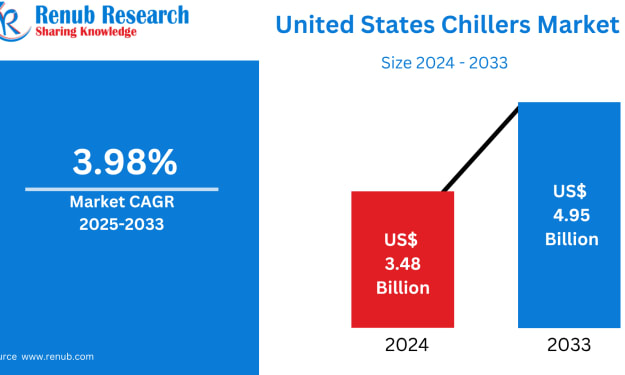
United States Chillers Market Size and Forecast 2025–2033
United States Chillers Market at a Glance The United States Chillers Market is projected to reach US$ 4.95 billion by 2033, rising from US$ 3.48 billion in 2024, at a CAGR of 3.98% from 2025 to 2033, according to Renub Research. This steady growth reflects the increasing importance of efficient cooling solutions across commercial buildings, industrial processes, healthcare facilities, and emerging digital infrastructure such as data centers.
By Aaina Oberoi2 days ago in Futurism
About Binding Prometheus
I want to start actively advocating on behalf of my own work, and the most valuable part of my canon is, without a doubt, Binding Prometheus, the play I have been working on since 2019 and only finished in 2023 as part of my MA. The play itself is an amalgamation of a million different inspirations. On one end, it evokes the Ancient Greek myth-play, deriving its own title from the earliest extant work of Western drama we have, Aeschylus’s Prometheus Bound. On the other end, it borrows significantly from the sci-fi bulwarks from over the years, namely Mary Shelley’s Frankenstein and Karel Capek’s Rossum’s Universal Robots. The play could be an episode of Black Mirror, I fear. I don’t know. I’ve only ever seen one episode of Black Mirror.
By Steven Christopher McKnight11 days ago in Futurism
Who Controls Earth’s Orbit?
At first glance, Earth’s orbit seems like a lawless void — a vast, silent expanse where no one truly holds power. Space is often imagined as infinite and free, untouched by politics or borders. Yet in reality, the space surrounding our planet has become one of the most crowded, strategic, and contested environments of the modern world. The question “Who controls Earth’s orbit?” is no longer philosophical. It is political, technological, economic, and increasingly existential.
By Holianyk Ihor5 days ago in Futurism
Bruce Lee and The God of War: Kuan Ti
It starts with love.. The Power to the God Of War and Wealth Walk into a Chinese restaurant (even in Oklahoma, USA), a Chinese police station, a kung fu martial arts studio or even a Chinese temple and you often see a red faced warrior holding a heavy quan-do (spear like weapon).
By WILD WAYNE : The Dragon King4 days ago in Chapters


Comments
There are no comments for this story
Be the first to respond and start the conversation.