
United States Conference, Concert and Event Market Size and Forecast 2025–2033
How Live Experiences, Hybrid Events, and Corporate Gatherings Are Powering America’s $670 Billion Event Economy


United States Conference, Concert and Event Market Overview
The United States conference, concert, and event market stands as one of the most dynamic and economically significant segments of the country’s service and entertainment economy. Encompassing everything from music concerts and sports events to trade exhibitions, corporate conferences, festivals, webinars, and hybrid experiences, this market reflects the nation’s deep-rooted culture of connection, entertainment, and business collaboration.
According to Renub Research, the United States Conference, Concert and Event Market is expected to reach US$ 670.56 billion by 2033, rising from US$ 429.29 billion in 2024, growing at a compound annual growth rate (CAGR) of 5.08% from 2025 to 2033. This growth is being fueled by rising consumer demand for live experiences, increasing disposable incomes, rapid technological advancements, expanding business travel, and the growing popularity of hybrid event models that blend in-person and digital participation.
The U.S. market benefits from a strong infrastructure of world-class venues, professional event organizers, advanced ticketing platforms, and sophisticated audiovisual technologies. Major cities such as New York, Las Vegas, Los Angeles, Chicago, Orlando, and San Francisco continue to serve as global hubs for large-scale conferences, concerts, and exhibitions, attracting millions of domestic and international attendees each year.
As Americans increasingly prioritize experiences over material goods, live events have become essential cultural, social, and business touchpoints—positioning the United States as the world’s largest and most influential events marketplace.
Post-Pandemic Revival and the Return of Live Experiences
The resurgence of the events industry in the United States has been nothing short of remarkable. After the COVID-19 pandemic temporarily halted live gatherings, consumers returned with renewed enthusiasm for concerts, festivals, and conferences. People now place higher value on face-to-face interactions, shared moments, and immersive experiences that digital platforms alone cannot replicate.
Music concerts and festivals have seen record-breaking attendance, while business conferences and trade exhibitions are once again filling convention centers. At the same time, the pandemic permanently changed the way events are delivered, leading to the widespread adoption of hybrid models—a combination of physical and virtual attendance that extends reach and improves flexibility for both organizers and participants.
This structural shift has made the U.S. event industry more resilient, more accessible, and better equipped to scale in the years ahead.
Key Growth Drivers of the United States Conference, Concert and Event Market
1. Growing Consumer Demand for Live Experiences
One of the most powerful growth drivers in the U.S. event market is the growing desire for authentic, in-person experiences. Consumers are increasingly seeking emotional connection, entertainment, and social engagement through concerts, festivals, and live gatherings. This trend spans all age groups, from Gen Z music fans to professionals attending business conferences and trade shows.
A clear example of this momentum is HYBE America’s acquisition of Confirmed360 in March 2025, a Los Angeles–based events concierge company. The move signals the global entertainment industry’s strong confidence in the U.S. live events market and highlights the growing demand for premium, personalized event experiences. Such investments underscore the long-term value of live engagement and experiential entertainment.
2. Rising Disposable Income and Leisure Spending
Rising disposable income across the United States is directly supporting market growth. As households gain greater financial flexibility, spending on leisure activities such as concerts, festivals, sports events, and conferences continues to rise. Live events are no longer viewed as occasional luxuries but as essential components of lifestyle and recreation.
Similarly, corporations are allocating larger budgets to business events, including leadership summits, sales conferences, training sessions, and product launches. These events are seen as strategic tools for brand building, innovation, and employee engagement, further strengthening market demand.
3. Expansion of Corporate and Business Events
Corporate events remain a cornerstone of the U.S. events industry. Conferences, exhibitions, trade fairs, investor meetings, and internal company events play a critical role in business development and networking. Companies increasingly rely on large-scale events to strengthen customer relationships, showcase innovations, and foster industry collaboration.
Major sporting and entertainment events also generate enormous corporate investment. In March 2025, NBC agreed to pay approximately US$ 3 billion to retain broadcasting rights for the Olympic Games in the United States beyond 2032, highlighting the massive commercial value of large-scale events. Such investments ripple through the broader events ecosystem, boosting sponsorships, travel, hospitality, media, and technology services.
4. Technological Advancements and Hybrid Event Adoption
Technology is transforming the way events are organized and experienced. Advanced ticketing platforms, mobile apps, data analytics, AI-powered networking tools, and immersive technologies such as augmented reality (AR) and virtual reality (VR) are elevating the attendee experience.
Hybrid events have become a standard format for conferences and exhibitions, allowing organizers to reach global audiences while maintaining the benefits of in-person interaction. Live streaming, virtual exhibition halls, and interactive digital networking tools are enabling higher engagement and improved return on investment for both organizers and sponsors.
Challenges Facing the U.S. Conference, Concert and Event Market
Rising Operational Costs
Inflation and rising operational expenses pose significant challenges to event organizers. Venue rentals, labor, security, logistics, insurance, and technology costs have all increased, putting pressure on profit margins. Smaller and mid-sized organizers often struggle to maintain affordability while delivering high-quality experiences, which may limit innovation and scalability.
Uncertainty and Event Disruptions
The industry remains vulnerable to external disruptions, including economic slowdowns, extreme weather events, health emergencies, and geopolitical uncertainties. These disruptions can lead to cancellations, reduced attendance, or financial losses, making long-term planning difficult. As a result, flexibility and risk management have become essential strategies for event organizers across the United States.
Segment Analysis of the United States Conference, Concert and Event Market
By Type
The market includes a wide range of event formats:
Music Concerts – One of the fastest-growing segments, driven by touring artists and large-scale live performances
Festivals – Cultural, food, music, and community festivals attract millions annually
Sports Events – Professional and amateur sporting events remain major revenue generators
Exhibitions & Conferences – Key drivers of business travel and corporate spending
Webinars – Continue to serve niche audiences and professional training needs
Hybrid Events – Rapidly expanding due to flexibility and scalability
Others – Includes private events, charity fundraisers, and community gatherings
By Revenue Source
Ticket Sales – The primary revenue stream for concerts, sports, and festivals
Sponsorship – Critical for corporate and large-scale events, providing brand visibility
Others – Includes merchandise, concessions, advertising, and digital access fees
By Organizer
Corporate – Conferences, meetings, and product launches
Sports – Leagues, teams, and associations
Education – Academic conferences, seminars, and campus events
Entertainment – Concert promoters and festival organizers
Others – Non-profits, government bodies, and community organizations
By Age Group
Below 20 Years – Youth-driven concerts, festivals, and cultural events
21–40 Years – The largest and most active segment, attending concerts, festivals, and business events
Above 41 Years – Corporate conferences, exhibitions, and premium cultural events
Company Analysis: Key Players in the U.S. Events Market
The U.S. conference, concert, and event market is supported by a diverse ecosystem of technology providers, event organizers, and service companies. Leading players include:
Mixhalo Inc. – Enhancing live event audio experiences through mobile streaming technology
Live Nation Worldwide, Inc. – The largest concert promoter and live entertainment company in the world
Ticket City, Inc. – A major ticket resale and distribution platform
Bizzabo – A leading event management and experience platform for corporate events
Eventbrite – A global self-service ticketing and event technology platform
InEvent, Inc. – Specializing in hybrid and virtual event solutions
Maritz Holdings Inc. – A major player in corporate meetings and incentive travel
Creative Group, Inc. – Providing event staffing and production services
Each of these companies plays a critical role in shaping the future of the U.S. events industry through innovation, technology integration, and service excellence.
Future Outlook: A Strong Decade Ahead for Live and Hybrid Events
The outlook for the United States conference, concert, and event market remains highly optimistic. As technology continues to enhance experiences and consumers increasingly prioritize meaningful connections, the industry is expected to expand steadily through 2033.
Hybrid models will dominate corporate events, while live concerts and festivals will continue to draw massive audiences. Investments in venue modernization, sustainable event practices, and immersive technologies will further strengthen market growth. The industry’s ability to adapt, innovate, and deliver memorable experiences ensures that it will remain a vital contributor to the U.S. economy for years to come.
Final Thoughts
The United States conference, concert, and event market is entering a new era of growth—one driven by human connection, technological innovation, and a renewed appreciation for shared experiences. With the market projected to reach US$ 670.56 billion by 2033, the next decade will redefine how Americans gather, celebrate, and collaborate.
As live events continue to evolve into immersive, hybrid, and highly personalized experiences, the U.S. will remain the global benchmark for innovation and excellence in the events industry.
About the Creator
Janine Root
Janine Root is a skilled content writer with a passion for creating engaging, informative, and SEO-optimized content. She excels in crafting compelling narratives that resonate with audiences and drive results.
Keep reading
More stories from Janine Root and writers in Futurism and other communities.
Wood and Timber Products Market Size and Forecast 2025–2033: Sustainable Growth Shapes a Trillion-Dollar Industry
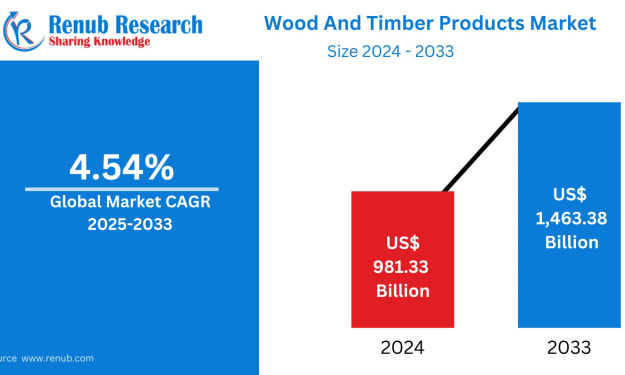
Global Wood and Timber Products Market Outlook The global Wood and Timber Products Market is undergoing a steady transformation as sustainability, urbanization, and infrastructure development reshape material choices worldwide. According to Renub Research, the market is expected to grow from US$ 981.33 billion in 2024 to US$ 1,463.38 billion by 2033, expanding at a CAGR of 4.54% from 2025 to 2033.
By Janine Root 3 days ago in Futurism
About Binding Prometheus
I want to start actively advocating on behalf of my own work, and the most valuable part of my canon is, without a doubt, Binding Prometheus, the play I have been working on since 2019 and only finished in 2023 as part of my MA. The play itself is an amalgamation of a million different inspirations. On one end, it evokes the Ancient Greek myth-play, deriving its own title from the earliest extant work of Western drama we have, Aeschylus’s Prometheus Bound. On the other end, it borrows significantly from the sci-fi bulwarks from over the years, namely Mary Shelley’s Frankenstein and Karel Capek’s Rossum’s Universal Robots. The play could be an episode of Black Mirror, I fear. I don’t know. I’ve only ever seen one episode of Black Mirror.
By Steven Christopher McKnight21 days ago in Futurism
UAE Board Games Market: Board Game Cafés, Imported Titles & Rising Popularity
According to IMARC Group's latest research publication, The UAE board games market size was valued at USD 101.66 Million in 2025 and is projected to reach USD 227.1 Million by 2034, growing at a compound annual growth rate of 9.34% from 2026-2034.
By Abhay Rajput7 days ago in Futurism



Comments
There are no comments for this story
Be the first to respond and start the conversation.