
United States Canned Food Market Size and Forecast 2026–2034
Convenience, Clean Labels, and Crisis Readiness Shape the Next Decade of Shelf-Stable Foods

Introduction: A Quietly Essential Food Category
Canned foods have long been part of the American pantry, but their relevance in modern life has evolved far beyond basic food storage. In a country shaped by fast-paced lifestyles, emergency preparedness, and shifting dietary values, canned products now balance convenience with nutrition, sustainability, and innovation. Once viewed primarily as budget staples, today’s canned foods include organic vegetables, gourmet soups, sustainably sourced seafood, and plant-based protein meals—products that align with the expectations of health-conscious and time-pressed consumers alike.
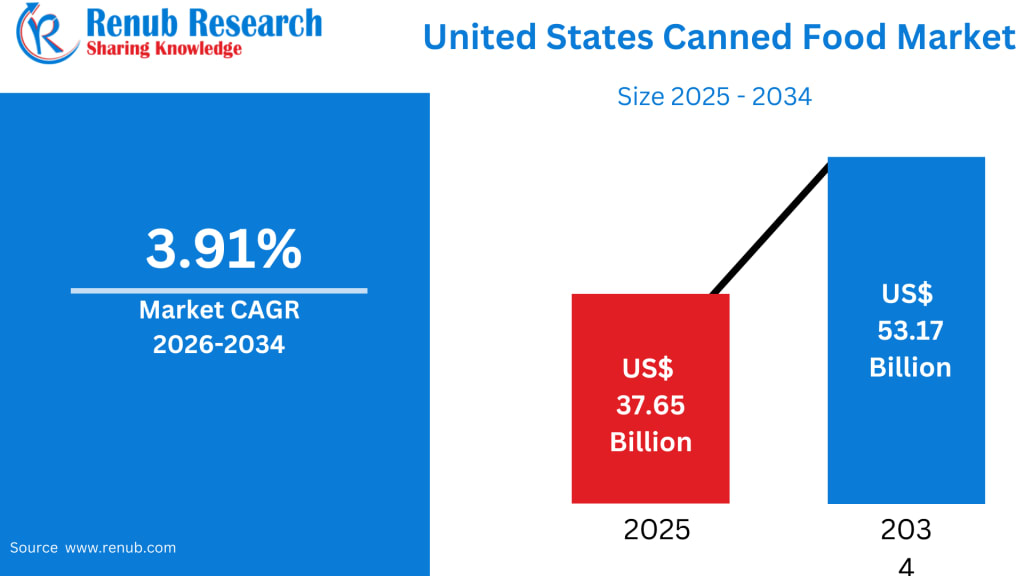
According to Renub Research, the United States Canned Foods Market is projected to grow from US$ 37.65 billion in 2025 to US$ 53.17 billion by 2034, registering a CAGR of 3.91% during 2026–2034. This steady expansion reflects more than rising consumption; it highlights how packaging innovation, clean-label reformulation, and evolving retail channels are reshaping a traditional industry.
United States Canned Food Market Outlook
Canned foods are food products processed and sealed in airtight metal containers to preserve freshness, taste, and nutritional value. The canning process involves heat treatment that eliminates harmful microorganisms, ensuring safety and extended shelf life without the need for refrigeration. Common examples include canned vegetables, fruits, beans, soups, meats, seafood, sauces, and complete ready-to-eat meals.
In the United States, canned foods have always played a role in food security, affordability, and emergency preparedness. However, consumer expectations are changing. Shoppers increasingly seek products that are low in sodium and sugar, free from artificial preservatives, and aligned with clean-label and organic standards. Innovations in processing now better retain nutrients and texture, helping the category shed outdated perceptions of being unhealthy or inferior to fresh alternatives.
With growing concern around food waste, supply chain resilience, and sustainability, canned foods continue to serve as a practical, reliable solution in American households, institutions, and foodservice operations.
Growth Drivers in the United States Canned Food Market
1. Rising Demand for Convenience and Ready-to-Eat Foods
Convenience remains the most powerful driver of the U.S. canned foods market. Busy schedules, dual-income households, and urban lifestyles have increased demand for food that requires minimal preparation. Canned products offer ready-to-eat or ready-to-cook options, making them ideal for quick meals, meal prep, and emergency storage.
Soups, beans, vegetables, and complete meals are staples in homes, college dorms, offices, and foodservice operations. Their long shelf life reduces grocery trips and minimizes spoilage—an increasingly attractive feature for cost-conscious and sustainability-minded consumers.
Industry innovation also supports this trend. For instance, in February 2025, APPLEGATE expanded its breakfast portfolio with new ready-to-eat options, signaling how even premium brands are embracing shelf-stable convenience.
2. Improved Nutrition, Clean-Label Formulations, and Product Innovation
Health-focused innovation has transformed the canned foods aisle. Manufacturers now emphasize low-sodium, low-sugar, organic, and preservative-free variants. Advances in canning technology allow products to retain nutrients, flavor, and texture more effectively, helping reframe canned foods as part of balanced diets.
Clean-label formulations, transparent ingredient lists, and eco-friendly sourcing have boosted consumer confidence. Categories such as gourmet soups, plant-based protein meals, and sustainably harvested seafood are expanding rapidly.
In February 2024, Ingredion Incorporated introduced NOVATION® Indulge 2940, a clean-label texturizer supporting natural and non-GMO food formulations—an example of how ingredient innovation underpins healthier canned food development.
3. Food Security, Emergency Preparedness, and Sustainability
Canned foods play a crucial role in emergency preparedness and long-term food storage. Their durability, non-perishable nature, and ability to withstand harsh conditions make them essential for disaster response, military supply chains, and household stockpiling.
Sustainability is another key driver. Canned foods reduce food waste through extended shelf life and utilize recyclable metal packaging, aligning with growing environmental awareness. Government initiatives further reinforce this role. In June 2024, the U.S. Department of Agriculture, Environmental Protection Agency, Food and Drug Administration, and the White House announced a National Strategy for Reducing Food Loss and Waste, supporting circular economy principles that favor shelf-stable and recyclable packaging.
Challenges in the United States Canned Food Market
1. Perception of Lower Quality Compared to Fresh Alternatives
Despite advancements, some consumers still associate canned foods with high sodium, preservatives, and reduced freshness. This perception, particularly among younger and health-conscious shoppers, remains a barrier. While manufacturers have significantly improved nutritional profiles, altering long-standing consumer attitudes requires ongoing education, marketing, and product transparency.
2. Competition from Fresh, Frozen, and Alternative Packaging
The canned food sector faces intense competition from fresh produce, frozen meals, refrigerated products, and newer formats such as pouches and meal kits. Frozen foods emphasize freshness and nutrition, while alternative packaging attracts consumers seeking portability and modern aesthetics. To remain competitive, canned food producers must continue innovating in packaging design, health positioning, and product variety without compromising affordability.
Key Market Segments
United States Canned Meat & Seafood Market
Canned meat and seafood remain vital segments due to rising demand for shelf-stable protein. Tuna, salmon, chicken, beef, and luncheon meats are widely consumed in households, foodservice, and institutional settings. Increased awareness of protein intake and omega-3 benefits has driven demand for canned seafood, particularly sustainably sourced varieties. As affordability and nutrition continue to shape purchasing decisions, this segment will remain a cornerstone of the U.S. canned food market.
United States Ready Meals Canned Food Market
Ready-to-eat canned meals—soups, stews, pasta dishes, and chili—are increasingly popular among working professionals, students, and seniors. The introduction of low-sodium, plant-based, and fortified options has reinvigorated consumer interest. Convenience, consistency of taste, and time savings ensure that canned ready meals remain a critical growth segment.
United States Conventional Canned Food Market
Conventional canned foods dominate the market due to affordability and widespread availability. Price-sensitive consumers continue to favor standard vegetables, fruits, and proteins sold through supermarkets, wholesale clubs, and foodservice channels. While premium and organic categories are growing, conventional products remain the backbone of the industry.
United States Convenience Store Canned Food Market
Convenience stores play a significant role in canned food distribution. Single-serve soups, meals, and protein items cater to on-the-go consumers. Low storage requirements and long shelf life make canned products ideal for this channel. As snacking and immediate consumption trends grow, convenience-specific canned offerings are expanding.
United States E-commerce Canned Food Market
Online grocery platforms are increasingly important in the canned foods market. Consumers appreciate the ease of home delivery, bulk purchasing, subscription models, and access to specialty products. Discounts, automated reordering, and product variety continue to drive growth in online canned food sales across the U.S.
State-Level Market Dynamics
California
California leads in health-focused, natural, and low-sodium canned products, including vegetables, beans, fruits, and plant-based meals. Diverse consumer preferences encourage ethnic flavors and premium offerings, while sustainability concerns drive recyclable packaging and responsible sourcing. Emergency preparedness and dense urban populations further support demand.
Texas
Texas represents a high-volume market driven by population size and dietary preferences. Canned beef, beans, vegetables, soups, and chili are popular. Emergency preparedness, bulk purchasing, and widespread supermarket and warehouse club distribution sustain consistent demand. Flavor innovation, including Tex-Mex variants, continues to expand the category.
New York
In New York, canned soups, seafood, beans, and ready-to-serve meals are favored by busy urban consumers. Demand is rising for organic, international, and premium canned products that minimize cooking time. Strong online grocery adoption and convenience-driven retail channels reinforce market growth.
Washington
Washington’s market is shaped by sustainability, nutrition, and local sourcing. Canned seafood—especially salmon and tuna—remains a major segment. Environmentally conscious consumers drive demand for recyclable packaging and organic offerings, while outdoor recreation and disaster preparedness encourage stockpiling.
Market Segmentation
By Product Type:
Canned Meat & Seafood
Canned Fruits & Vegetables
Canned Ready Meals
Others
By Type:
Organic
Conventional
By Distribution Channel:
Supermarkets & Hypermarkets
Convenience Stores
E-commerce
Others
By Top States:
California, Texas, New York, Florida, Illinois, Pennsylvania, Ohio, Georgia, New Jersey, Washington, North Carolina, Massachusetts, Virginia, Michigan, Maryland, Colorado, Tennessee, Indiana, Arizona, Minnesota, Wisconsin, Missouri, Connecticut, South Carolina, Oregon, Louisiana, Alabama, Kentucky, and Rest of the United States.
Competitive Landscape
Renub Research’s analysis covers major players using five key viewpoints: Overview, Key Personnel, Recent Developments, SWOT Analysis, and Revenue Analysis.
Leading Companies:
Ayam Sarl
Bonduelle
Campbell Soup Company
CHB Group
Danish Crown AmbA
Del Monte Foods Inc.
Nestlé S.A.
Thai Union Group PCL
The Bolton Group
These companies compete through product innovation, sustainability initiatives, health-focused reformulation, and expansion across digital and convenience channels.
Final Thoughts
The United States Canned Food Market is no longer defined solely by affordability and shelf life. Between 2026 and 2034, the market’s projected growth—from US$ 37.65 billion to US$ 53.17 billion—will be shaped by evolving consumer values around convenience, nutrition, sustainability, and food security.
As manufacturers continue to invest in clean-label innovation, recyclable packaging, and ready-to-eat solutions, canned foods will retain their relevance in American households. From emergency preparedness to gourmet meal solutions, the category is reinventing itself for a modern food economy—proving that even the most traditional food formats can thrive through innovation.
About the Creator
jaiklin Fanandish
Jaiklin Fanandish, a passionate storyteller with 10 years of experience, crafts engaging narratives that blend creativity, emotion, and imagination to inspire and connect with readers worldwide.
Keep reading
More stories from jaiklin Fanandish and writers in Futurism and other communities.
Japan Personal Computer Market Size & Forecast 2025–2033
Japan Personal Computer Market Overview Japan’s personal computer market is entering a renewed phase of expansion, supported by evolving work habits, digital education programs, and increasing demand for high-performance computing. According to Renub Research, the Japan Personal Computer Market is projected to grow from US$ 7.25 billion in 2024 to US$ 13.44 billion by 2033, registering a Compound Annual Growth Rate (CAGR) of 7.11% during 2025–2033.
By jaiklin Fanandish4 days ago in Futurism
About Binding Prometheus
I want to start actively advocating on behalf of my own work, and the most valuable part of my canon is, without a doubt, Binding Prometheus, the play I have been working on since 2019 and only finished in 2023 as part of my MA. The play itself is an amalgamation of a million different inspirations. On one end, it evokes the Ancient Greek myth-play, deriving its own title from the earliest extant work of Western drama we have, Aeschylus’s Prometheus Bound. On the other end, it borrows significantly from the sci-fi bulwarks from over the years, namely Mary Shelley’s Frankenstein and Karel Capek’s Rossum’s Universal Robots. The play could be an episode of Black Mirror, I fear. I don’t know. I’ve only ever seen one episode of Black Mirror.
By Steven Christopher McKnight11 days ago in Futurism
Junction Box Manufacturing Plant Setup Cost: Complete Guide to Layout, Machinery, Raw Materials, and Business Plan
The electrical components industry continues to experience robust growth as infrastructure development, renewable energy projects, and smart building technologies expand globally. Junction boxes, essential for protecting electrical connections and ensuring safety in residential, commercial, and industrial applications, represent a lucrative manufacturing opportunity for entrepreneurs and established businesses alike.
By Andrew Sullivan6 days ago in Futurism
If You Love Me, You'll Do It
I met Jason when I was five years old. I could say that I loved him from the moment I saw him. He was so handsome to me and I felt in awe by his presence. When they introduced him as the new kid in school, I wanted to be his friend right away. I remember it like it was yesterday. I remember his smile and how he didn't seem shy. He appeared confident and ready to learn. I waved at him and said "hello," before anyone else could even say a word. He sat next to me, and I asked him if he wanted to be friends. He looked so happy as he said, "Yes!"
By Sidney Smith (Sid Smith)6 days ago in Fiction




Comments
There are no comments for this story
Be the first to respond and start the conversation.