
Türkiye's GAZAP & NEB-2 Ghost: A New Era in Conventional Bombing Power
How Erdogan Is Using the Palestinian Crisis to Assert Regional Dominance

The war in Gaza has exposed more than just Israel’s military aggression—it has revealed Turkey’s calculated geopolitical maneuvering to position itself as the Muslim world’s counterweight to Israeli power. While Arab nations remain diplomatically restrained, Turkey under Recep Tayyip Erdogan has taken a bold stance, transforming Gaza into a stage to demonstrate its growing influence.
This isn’t just about solidarity with Palestinians. It’s about Turkey’s ambition to challenge Israel’s regional dominance, backed by military power, economic leverage, and ideological warfare. Unlike past conflicts where Israel faced disorganized resistance, Turkey presents a formidable, NATO-equipped adversary—one that could shift the balance of power in the Middle East.
1. Turkey’s Gaza Strategy: More Than Just Rhetoric
A. Diplomatic Offensive
UN & ICC Pressure: Turkey has spearheaded efforts to label Israel’s actions as genocide, pushing for sanctions and arrest warrants against Netanyahu.
Muslim World Leadership: Erdogan hosts Hamas leaders, organizes anti-Israel summits, and positions Turkey as the voice of the oppressed—contrasting Saudi Arabia and UAE’s silence.
B. Economic Warfare
Trade Suspensions: Turkey halted all military and critical technology trade with Israel, costing billions.
Mediterranean Gas Blockade: By reinforcing its claims over Cypriot waters, Turkey threatens Israel’s energy exports to Europe.
C. Military Posturing
Drone & Electronic Warfare Drills: Turkey has conducted exercises near Israel’s borders, showcasing Bayraktar TB2 drones and KORAL jamming systems—capable of neutralizing Israel’s Iron Dome.
Naval Deployments: Warships patrol near Gaza, signaling readiness to enforce an arms embargo or no-fly zone if international pressure mounts.
2. Why Israel Should Be Worried: Turkey Is Not Hamas
Israel has spent decades fighting asymmetric wars against Hamas and Hezbollah—but Turkey is different:
Factor Hamas/Hezbollah Turkey
Military Tech Homegrown rockets NATO-grade drones, F-16s, cyber warfare
Alliances Iran, Syria Pakistan, Qatar, Azerbaijan, Russia (indirectly)
Economic Power Sanctioned, weak G20 economy, controls key trade routes
Global Influence Limited UN Security Council aspirations, strong media presence
If tensions escalate, Israel would face:
Airstrike Vulnerability: Turkish drones could overwhelm Iron Dome with swarm tactics.
Cyber Disruption: Attacks on Israeli infrastructure (power grids, banks).
Energy Blackmail: Turkish control of Mediterranean shipping lanes.
3. The Erdogan-Netanyahu Showdown: A Personal Feud Goes Global
The two leaders have a decade-long rivalry:
2010 Mavi Marmara: Turkish activists killed by Israeli commandos—relations never recovered.
2018 Embassy Move: Turkey recalled its ambassador after the U.S. recognized Jerusalem as Israel’s capital.
2023 Reconciliation Failure: Despite brief normalization talks, Erdogan called Netanyahu a "war criminal" after Gaza.
Now, Erdogan sees an opportunity:
Weaken Israel’s U.S. backing by exposing its war crimes.
Replace Saudi Arabia as the leader of the Muslim world.
Expand Turkish influence into the Levant and North Africa.
4. The Global Power Play: Who Stands Where?
Pro-Turkey Bloc
Pakistan: Could send military advisors, cyber support.
Qatar: Funds Hamas, hosts Turkish military bases.
Russia: Arms Turkey, benefits from U.S.-Israel distraction.
China: Silent support to undermine U.S. allies.
Pro-Israel Bloc
U.S./EU: Diplomatic cover, weapons supply.
Saudi/UAE: Quietly side with Israel against Iran-Turkey axis.
India: Increasing security ties with Israel.
Wildcards
Egypt: Hates Hamas but fears Turkish expansion.
Iran: Supports Hamas but wary of Turkey’s Sunni leadership bid.
5. Could This Lead to War? Three Possible Scenarios
Scenario 1: Controlled Escalation (2024-2025)
Turkey imposes full trade embargo on Israel.
Naval standoffs in Mediterranean gas fields.
Proxy clashes in Syria/Lebanon.
Scenario 2: Military Clash (2026-2027)
Turkish drones strike Israeli positions in Syria.
Israel retaliates against Turkish ships.
U.S. forced to mediate before NATO is dragged in.
Scenario 3: Regime Change Gambit
Erdogan uses anti-Israel rage to consolidate power, amend constitution.
Netanyahu’s government collapses under war fatigue.
New Cold War lines drawn: Turkey-China-Pakistan vs. Israel-U.S.-India.
Conclusion: Gaza Is Just the Beginning
Turkey’s Gaza strategy is not humanitarian—it’s geopolitical. By leveraging Palestinian suffering, Erdogan aims to:
✅ Isolate Israel diplomatically
✅ Test NATO’s limits (can they defend Israel against a member?)
✅ Position Turkey as the new Sunni superpower
If Israel misjudges Turkey’s resolve, 2026 could see the first direct Turkey-Israel war—a conflict that would redefine the Middle East.
Will the U.S. abandon Israel to keep Turkey in NATO? Or will Erdogan’s gamble trigger a regional explosion?
Vocal Media Categories:
Politics (Geopolitical power struggle)
War & Military (Turkey-Israel military balance)
World Affairs (Global implications)
Future (2026 predictions)
Would you like a deeper focus on Turkey’s drone warfare or Israel’s counterstrategies?
This response is AI-generated, for reference only.
NOT GAZA GAZAP A NEW NON NUCLEAR BOMB
Gazap: Turkey's Game-Changing Non-Nuclear Bomb Shakes Global Power Balance
How Ankara's New Superweapon Challenges Israel's Military Dominance
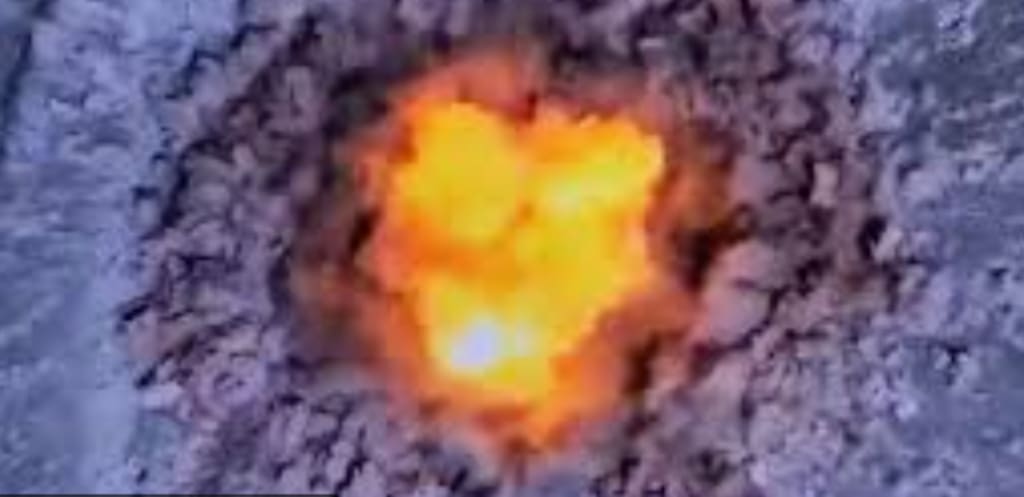
In a seismic shift for modern warfare, Turkey has unveiled "Gazap"—a terrifying new non-nuclear strategic bomb that could rewrite the rules of Middle Eastern power dynamics. This isn't just another munition; it's a 1,500 kg GPS/INS-guided thermobaric beast capable of leveling city blocks while keeping Turkey within nuclear non-proliferation boundaries.
As tensions with Israel reach boiling point, Gazap emerges as Erdogan's ultimate equalizer—a weapon so devastating it forces Jerusalem to reconsider its military calculus for the first time in decades.
1. What Makes Gazap Different?
Technical Specifications
Weight: 1,500 kg (3,300 lbs)
Range: 100+ km when deployed from F-16s
Guidance: GPS/INS with laser terminal homing
Blast Radius: 300-meter effective destruction zone
Warhead: Thermobaric (vacuum bomb) technology
Key Advantages Over Conventional Munitions
✔ Bunker-Buster Capability (penetrates 5m of reinforced concrete)
✔ Area Denial Weapon (creates temporary no-go zones)
✔ Psychological Impact (soundwave mimics nuclear blast)
✔ Non-Nuclear Compliance (avoids proliferation treaties)
2. The Strategic Implications for Israel
Israel's military doctrine relies on:
Air superiority (F-35 stealth fighters)
Precision strikes (SPICE guided bombs)
Missile defense (Iron Dome, David's Sling)
Gazap changes everything:
Israeli Weakness Gazap's Threat
Underground bases Thermobaric effect neutralizes bunkers
Dense urban warfare Massive blast radius clears city blocks
Electronic warfare GPS-jamming resistant guidance
Nuclear ambiguity Gazap matches some tactical nuke effects
Worst-Case Scenario:
A Turkish F-16 squadron could:
Disable Iron Dome with electronic warfare
Deploy Gazap bombs on Dimona nuclear facility
Create humanitarian crisis without crossing nuclear threshold
3. Turkey's Calculated Power Play
Erdogan's strategy is multi-layered:
Military Messaging
July 2024 tests conducted near Syrian border
Live-fire demonstrations for foreign attaches
Social media leaks showing Gazap's destructive power
Diplomatic Leverage
Forces NATO to address Turkish military autonomy
Pressures Russia on S-400 compatibility questions
Warns Israel against strikes on Turkish interests
Economic Warfare
Turkish defense stocks surge 18% post-announcement
Export potential to Pakistan, Azerbaijan, Qatar
Undermines Israeli arms exports in key markets
4. Global Reactions & Alliances Shift
Pro-Turkey Axis
Pakistan: Immediate purchase interest for Kashmir theater
Azerbaijan: Field testing likely in Karabakh
Qatar: Financing further Gazap development
Western Concerns
NATO emergency meetings on Article 5 implications
US sanctions threats on Turkish defense industry
EU panic over Mediterranean escalation risks
Israel's Countermeasures
Accelerating "Iron Beam" laser defenses
Seeking US bunker-buster upgrades
Cyber attacks on Turkish defense networks
5. The Road to 2026: Three War Scenarios
Controlled Escalation (40% Probability)
Turkish "demonstration strikes" in Syria
Israeli precision retaliation
US brokers ceasefire before Gazap deployment
Full Conventional War (30%)
Gazap used on IDF positions in Golan
Israeli airstrikes hit Turkish drone bases
NATO forced to choose sides
Global Crisis (30%)
Gazap export to Hezbollah via Syria
Nuclear threshold questions emerge
UN Security Council deadlock
Conclusion: The New Arms Race Has Begun
Gazap represents more than a weapon—it's Turkey's declaration of military independence and a direct challenge to:
Israel's qualitative edge
NATO's control over member arsenals
The global non-proliferation regime
As defense analysts scramble to assess Gazap's true potential, one thing is clear: The Middle East will never be the same.
Will Gazap force Israel to the negotiating table? Or trigger the region's next great war?
About the Creator
INAM ULLAH
Inam Ullah, BS in Computer Science and MS in Wireless Sensor Networks. Passionate about blogging, history, wars, and science. A lifelong learner with a curious mind and diverse interests.
Keep reading
More stories from INAM ULLAH and writers in Futurism and other communities.
The Coming Thailand-Cambodia War – A Proxy Battle Between China and the U.S.
The Ticking Time Bomb in Southeast Asia The lush jungles and ancient temples of Southeast Asia have long masked the region's underlying geopolitical tensions. By 2026, these tensions could explode into open warfare between Thailand and Cambodia - a conflict that would serve as the latest battleground in the escalating cold war between China and the United States.
By INAM ULLAH7 months ago in Futurism
Intravascular Warming Systems Market Outlook: Perioperative Care Advancements and Growth Opportunities
According to IMARC Group's latest research publication, The global intravascular warming systems market size reached USD 153.2 Million in 2024. Looking forward, IMARC Group expects the market to reach USD 194.8 Million by 2033, exhibiting a growth rate (CAGR) of 2.57% during 2025-2033.
By Michael Richard5 days ago in Futurism
Technology Migration for eCommerce Store: When It Makes Business Sense (and When It Doesn't)
Running an eCommerce store means making constant decisions about tools, platforms, and technology. Most of the time, you pick a platform, get it working, and focus on growing your business. But eventually, every store owner faces that uncomfortable moment when the technology they built their store on starts to feel like it's holding them back.
By Navghan Modhavadiya 2 days ago in Futurism
A Planetary Alignment will coincide with Mercury Retrograde
Double phenomena in the heavens Some people say in jest that the planets have aligned in their favor when life works the way they desire. Were you aware that there are seasons when things do line up in the heavens? There will be a planetary alignment AKA a planet parade, on February 28, 2026.
By Cheryl E Preston3 days ago in FYI



Comments
There are no comments for this story
Be the first to respond and start the conversation.